 Visit Edinburgh Guide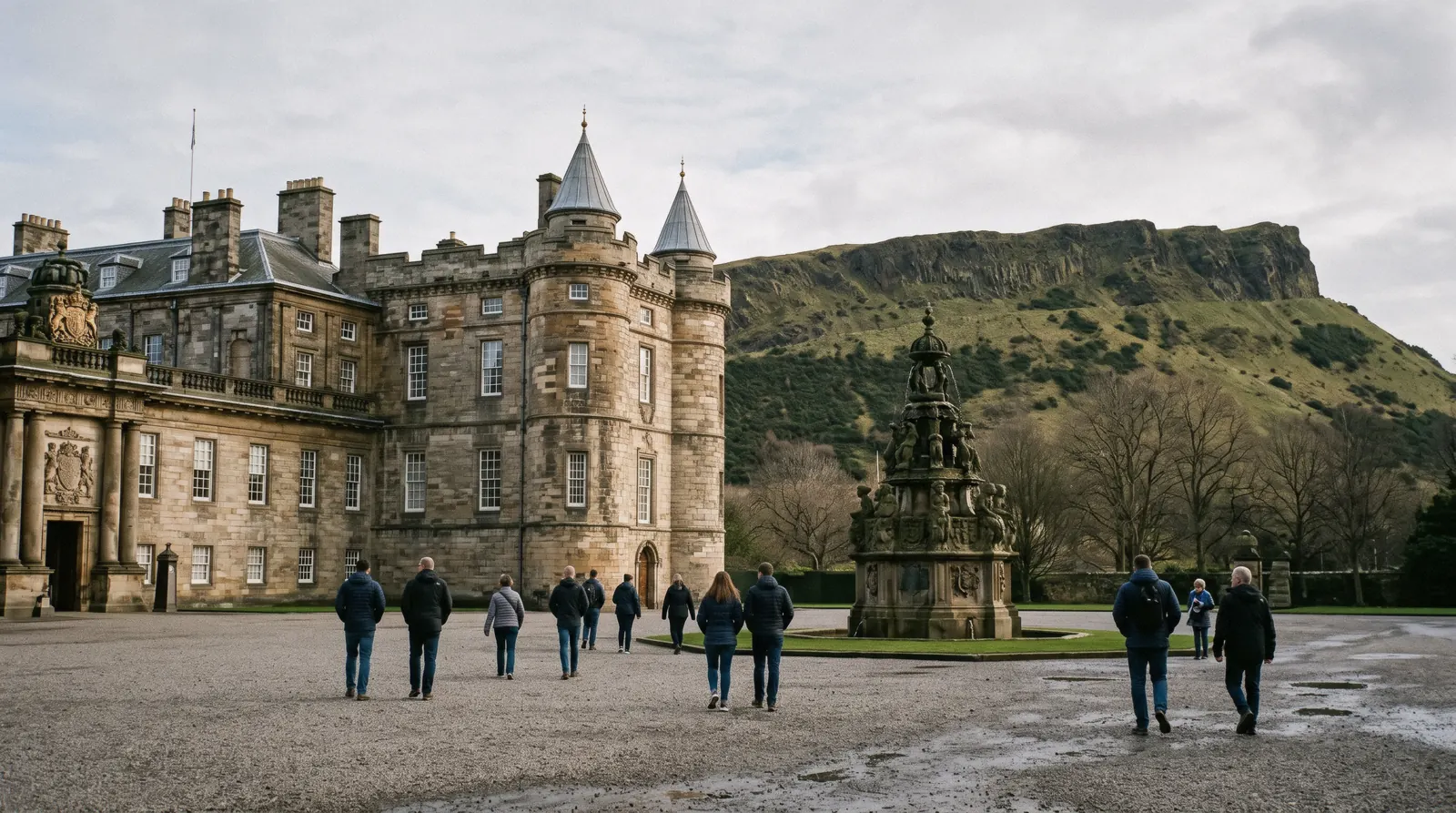
Palace of Holyroodhouse
The Palace of Holyroodhouse is the King's official residence in Scotland, standing at the foot of the Royal Mile where the ridge runs out into Holyrood Park. It is a working royal house rather than a museum, which is why it closes more often than anything else on the street: usually on Tuesdays and Wednesdays outside the summer, and completely whenever the King is in residence. This page covers the hours, the closures, what the ticket includes and what the seventeen public rooms actually hold. For the wider plan, start with things to do in Edinburgh.
Quick answer Hours, the closed days, the price, how long to allow
The Palace of Holyroodhouse opens daily at 09:30 and closes at 18:00 from 1 April to 31 October, 16:30 from 1 November to 31 March, with last admission 16:30 in summer and 15:15 in winter. Outside 21 May to 14 September 2026 it is normally closed on Tuesdays and Wednesdays, and it shuts entirely when the King is in residence.
Key takeaways
- Advance tickets are cheaper at every tier — £22.00 against £26.00 on the day (about $30 against $35) — and the ticket comparison sets the official shop beside the only pass that includes the Palace
- Historic Scotland membership and the Explorer Pass do not get you into Holyrood Abbey: the abbey stands inside the Palace grounds and is sold by the Royal Collection Trust, not by Historic Environment Scotland
- The 48-hour Royal Edinburgh Ticket is the one product that bundles this Palace with the fortress at the top of the Royal Mile and the yacht at Leith
Key facts
Opening hours
| 1 April – 31 October | 09:30–18:00 |
|---|---|
| 1 November – 31 March | 09:30–16:30 |
Closed Usually Tuesdays and Wednesdays outside 21 May – 14 September 2026; announced 2026 closures 26 June – 3 July, 24–26 December; Holyrood Abbey also closed 6 July 2026; the whole site shuts when the King is in residence
Admission
- Adult
- £22.00 in advance (about $30); £26.00 on the day (about $35)
- Reduced
- Young Person 18–24 £14.00 advance (about $19); Child 5–17 £11.00 advance (about $15); Disabled Person £11.00 advance (about $15)
- Free
- Under 5s; one access companion per disabled visitor; £1 tickets (about $1) for visitors on Universal Credit and other named UK benefits
Planning it
- Time needed
- Not stated as a total by the Royal Collection Trust; the complimentary multimedia guide lasts approximately one hour, and the abbey and gardens add 30–45 minutes
- Book ahead
- Recommended — a few days
- Address
- Canongate, The Royal Mile, Edinburgh EH8 8DX
The ways in, read from the Royal Collection Trust's own booking pages and from GetYourGuide on 30 August 2026. The official rows link straight to rct.uk with no tracking on them; the Royal Edinburgh Ticket is a bus-company pass sold through a platform.
One question decides the row: is the date fixed, or are you? Advance is £4 cheaper at every tier and converts free into a 1-Year Pass, but it is a timed slot on a site that closes at short notice when the King is in residence.
| Ticket | Price | What it covers | Booking | Book |
|---|---|---|---|---|
| Palace admission, officialThe standard route in, and the only row that turns into a year's admission | £22.00 advance (about $30); £26.00 on the day (about $35) | State Apartments, Mary's rooms, abbey, gardens, multimedia guide | Timed entry; converts free to a 1-Year Pass | Official site |
| £1 ticket on named UK benefitsFor visitors on the named UK benefits the Trust lists; booked online, same access | £1.00 (about $1) | The same admission as the full-price ticket | Booked online through the official shop | Official site |
| Palace + The Edwardians exhibitionOnly while the exhibition runs, and only if you would pay for it separately | £29.70 advance (about $40); £33.30 on the day (about $45) | Palace admission plus the exhibition, 10% off both | 17 June – 6 December 2026 only | Official site |
| Exclusive Guided TourFor anyone who wants the rooms without the public, on a day the Palace is shut | £55.00 per person (about $75) | Guided, maximum 25 people | Runs on days the Palace is closed to the public | Official site |
| Royal Edinburgh Ticket, 48 hoursFor a 48-hour blitz of all three royal sites, not for the Palace alone | £81 (about $110) | This Palace, the castle, the royal yacht, three bus routes | Guaranteed entry, but not a timed slot | Check Availability |
Official figures read from rct.uk on 30 August 2026; the pass price from GetYourGuide the same day. The Royal Edinburgh Ticket's operator states it guarantees castle entry even when the castle's own site is sold out, but also that this cannot be arranged in advance — so it is guaranteed admission, not a reserved time. No refund is given for an included attraction you skip. The guided tour is the only guided option inside the building, and it deliberately runs on days the Palace is shut to everyone else.
Tours that reach the Palace
Every card links to the operator's own page, where the calendar shows what is still open. Prices in pounds as listed on 30 August 2026. Only the first of these includes admission to the Palace; the walking tours end at the gates, because the Royal Collection Trust runs the only guided visits inside the building itself.
 from £81
Edinburgh: Royal Attractions with Hop-On Hop-Off Bus Tours
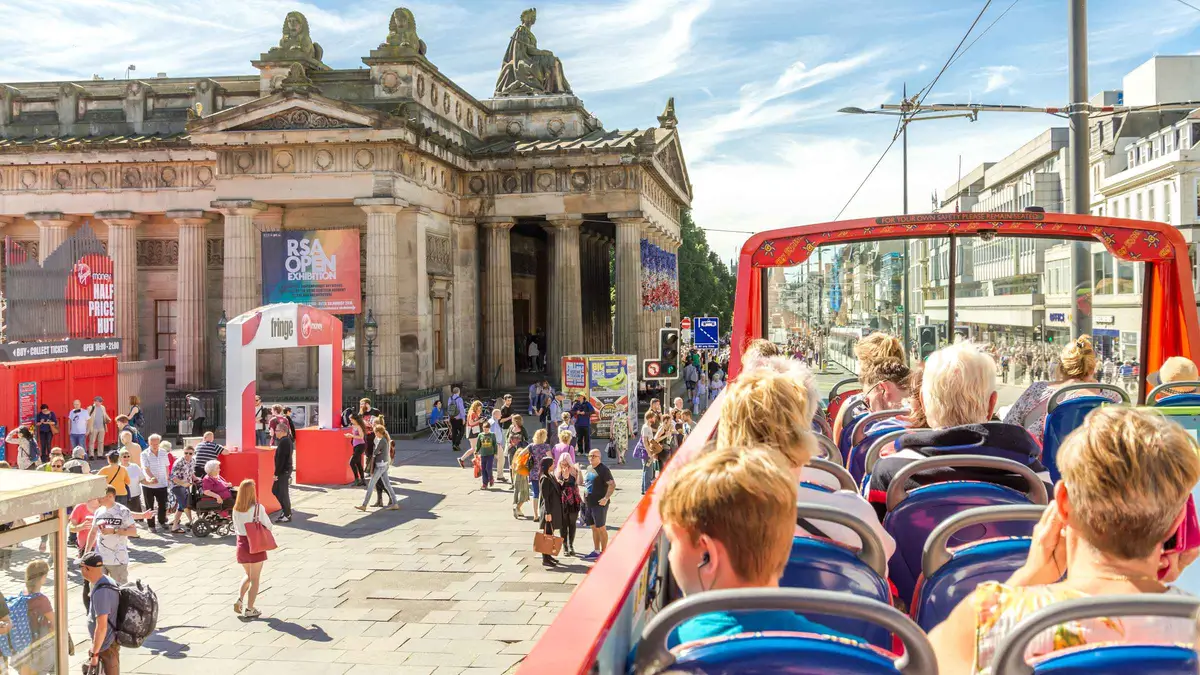
Three attractions and 48 hours of buses on one ticket, covering the castle, Britannia and Holyroodhouse. Holyroodhouse closes Tuesdays and Wednesdays outside high summer, with no alternative offered.
Check Availability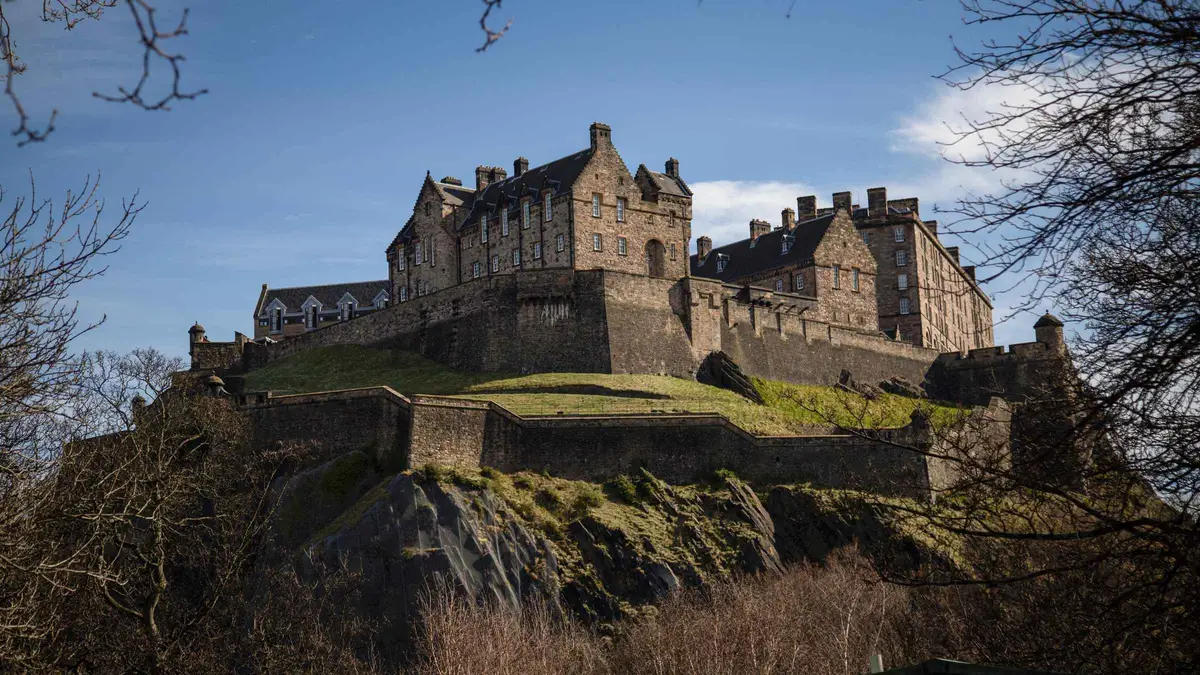 from £51
Edinburgh Castle & Royal Mile Walking Tour - Ticket Included
The only castle option here that first walks the Royal Mile, with stops at St Giles', Victoria Street and the Grassmarket before 45 minutes inside the castle. Runs 135 minutes.
Check Availability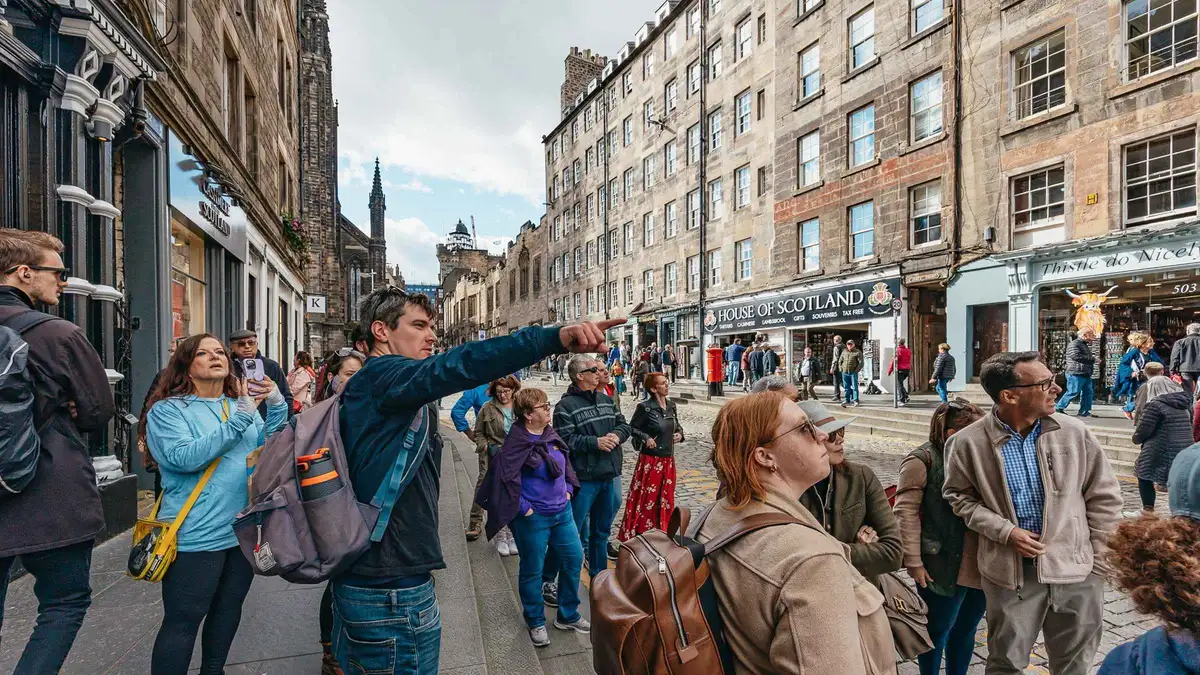 from £18
Edinburgh: Old Town History and Tales Walking Tour
Two hours through the UNESCO Old Town covering Mercat Cross, St Giles' and the Grassmarket, plus the Harry Potter locations. Ends in the centre near bars and transport; English only.
Check Availability from £16
Edinburgh: Old Town History Walking Tour
The cheapest Old Town walk on the site, two hours past St Giles', Victoria Street and Greyfriars Kirkyard with the Greyfriars Bobby statue. Runs in four languages rather than English only.
Check AvailabilityPrices, ratings and details are the platform's own. Pound figures are the listed prices. The platform bills in your account's currency.
How Much Time To Give The Palace Of Holyroodhouse
The Royal Collection Trust publishes no total visit length. What it does publish is that the complimentary multimedia guide runs about an hour, and that the admission centre is busiest from opening through the morning, with a recommendation to book ahead and arrive after 11:00 — the opposite of the advice for the fortress at the other end of the street.
Seventeen rooms are open out of the palace's 289, on a fixed one-way route, so the walking is short and the variable is how long you listen. The abbey and gardens are the part people cut when they are late, and they are also the only part where photography is allowed — which is a poor trade. Note the winter gap between the 15:15 last admission and the 16:30 close: a 15:00 ticket in January buys an hour and a half for a guide that runs an hour.
| Routing | Inside | Door to door from Waverley | What you give up |
|---|---|---|---|
| State Apartments only, guide skipped | 45 min–1 h | About 1 h 45 | The abbey, the gardens and most of the explanation; you will walk past the Great Gallery without knowing what the 96 portraits are |
| The full visit: apartments, Mary's rooms, abbey and gardens | 2–2 h 15 | 3 h | Nothing. The multimedia guide is an hour, Mary's tower and the Rizzio room another twenty minutes, the abbey and gardens 30–45 |
| The Exclusive Guided Tour | About 2 h | 3 h | Your choice of date — it runs on days the Palace is closed to the public, at £55 a head against £22 advance, capped at 25 people |
Fold the walk into the arithmetic. It is about 25 minutes down the Royal Mile from the castle and downhill the whole way; the climb back is the part people underestimate. The Scottish Parliament stands opposite the gates and Holyrood Park begins immediately behind, so the three are one stop rather than three.
What the Palace of Holyroodhouse is, and why it keeps closing
It began as an abbey guesthouse, became a Stuart palace, burned, was rebuilt to a single design in the 1670s and is now the King's residence in Scotland. That last fact is the one that affects your visit.
From an abbey of 1128 to a palace of 1671
David I founded the Augustinian abbey of Holyrood in 1128, either after a vision of a cross or to house a relic of the True Cross that had belonged to his mother, Saint Margaret. Kings began lodging in the abbey guesthouse, and by the later fifteenth century they had dedicated royal lodgings. Between 1501 and 1505 James IV built a Gothic palace beside the cloister, in time for his marriage to Margaret Tudor in the abbey in August 1503.
The English armies of the Earl of Hertford wrecked palace and abbey in 1544 and 1547; Cromwell's troops burned much of what was left in November 1650. What you walk through today is the reconstruction: Sir William Bruce, Surveyor General of the King's Works, and the master mason Robert Mylne began building in July 1671 and had the palace substantially finished by 1679. Bruce kept James V's sixteenth-century north-west tower and gave it a matching twin, which is why the west front has two turreted towers of different ages that look like a pair.
The building is a quadrangle roughly 230 feet square, covering 87,120 square feet of floor and containing 289 rooms. Seventeen of them are open to visitors.
A working residence, not a museum
The monarch spends one week a year here, known as Royal Week, and investitures, audiences, receptions and garden parties happen in the rooms you queue to see. When the King is in residence the site closes to visitors, the Scottish version of the Royal Standard flies instead of the Royal Banner of Scotland, and the Royal Company of Archers forms the bodyguard.
That is the honest reason this Palace is harder to plan than the fortress at the other end of the street. Public access is managed by the Royal Collection Trust, which publishes a closure list a season at a time; the building itself is maintained by Historic Environment Scotland on behalf of the Scottish Government. The Trust's own wording is that closures can happen at short notice. Check the date you intend to come before you fix anything else around it.
Holyrood In Nine Dates
An abbey of 1128 that a king moved into, was twice wrecked and once burned, and was rebuilt as the palace you walk through. The dates below explain why almost nothing you see is medieval except the one tower.
-
1128
David I founds the abbey
An Augustinian house, founded either after a vision of a cross or to hold a relic of the True Cross that belonged to his mother, Saint Margaret. Kings begin lodging in its guesthouse.
-
1256–1410
A seat of government, not just a church
The Parliament of Scotland meets at the abbey seven times; Robert the Bruce signs the Treaty of Edinburgh–Northampton in the King's Chamber in 1328.
-
1501–1505
James IV builds a palace beside the cloister
A Gothic palace, finished in time for his marriage to Margaret Tudor in the abbey in August 1503.
-
9 March 1566
Rizzio is murdered in Mary's outer chamber
Darnley and several nobles come up the private stair, drag the queen's secretary out of her supper room and stab him to death. The floor stain shown to visitors is a tradition, not a dated record.
-
1544, 1547, 1650
Wrecked twice, then burned
The Earl of Hertford's armies destroy palace and abbey in 1544 and 1547; Cromwell's troops burn much of what remains in November 1650.
-
1671–1679
The palace you walk through is built
Sir William Bruce and the master mason Robert Mylne start work in July 1671 and finish by 1679, keeping James V's sixteenth-century tower and giving it a matching twin — which is why the west front's two towers are a century and a half apart.
-
1684–1686
96 kings on one wall
Jacob de Wet paints 111 portraits of Scottish monarchs for Charles II, beginning with the legendary Fergus I; 96 survive in the 150-foot Great Gallery, real kings and invented ones treated identically to argue an unbroken line.
-
1687–1688
The abbey's last function, and its end
James VII makes the abbey the chapel of his Order of the Thistle in 1687; a mob destroys the interior in December 1688. The choir and transepts had gone in 1570.
-
2018
A £10m restoration finishes
A Royal Collection Trust project restores the abbey, grounds, forecourt and the Abbey Strand buildings, which now hold a learning centre.
Sources: the Royal Collection Trust's own palace, abbey and history pages at rct.uk. Read on 30 August 2026.
Palace of Holyroodhouse opening times and the days it is shut
Two seasonal bands, two normally closed weekdays for most of the year, and a published 2026 closure list on top of that. All of it from the Royal Collection Trust's plan-your-visit page, read on 30 August 2026.
The single most common wasted journey in this part of Edinburgh is walking down the whole Royal Mile on a Tuesday. Out of season the Palace is normally closed on Tuesdays and Wednesdays both, and the abbey ruins close with it, because they stand inside the grounds.
| Period | Opens | Closes | Last admission | Closed days |
|---|---|---|---|---|
| 1 April – 31 October | 09:30 | 18:00 | 16:30 | Normally Tuesday and Wednesday, except 21 May – 14 September |
| 21 May – 14 September 2026 | 09:30 | 18:00 | 16:30 | None — open seven days a week |
| 1 November – 31 March | 09:30 | 16:30 | 15:15 | Normally Tuesday and Wednesday |
| 26 June – 3 July 2026 | — | — | — | Palace closed, announced in advance |
| 6 July 2026 | 09:30 | 18:00 | 16:30 | Holyrood Abbey closed; Palace open |
| 24 – 26 December 2026 | — | — | — | Palace closed |
Which hour to take
The Trust publishes its own crowding advice, and it is unusually specific: the admission centre is busiest from opening and throughout the morning, and the official recommendation is to book in advance and arrive after 11:00. That is the opposite of the standing advice for the castle at the top of the street, where the early slot is the quiet one.
In winter, note the gap between the 16:30 closing time and the 15:15 last admission. A ticket bought for 15:00 in January gives you an hour and a half, and the multimedia guide alone runs about an hour. In summer the last admission at 16:30 against an 18:00 close is more comfortable.
What you see inside: the State Apartments, the Great Gallery and Mary's rooms
Seventeen rooms, on a fixed route, with a multimedia guide included in the price. Three of them are what people actually remember.
The State Apartments and the King's Bedchamber
Bruce laid the first floor out as two suites of royal apartments: the Queen's Apartments in the west range, built for Catherine of Braganza, and the King's Apartments in the south and east, linked along the north by the Great Gallery. The King's Antechamber, Bedchamber and Closet run along the east side. The Bedchamber, at the centre of the east front, has the finest of the seventeenth-century plaster ceilings, with paintings of Hercules by Jacob de Wet II above it; the State Bed has stood in the palace since 1684.
The plasterwork throughout was done by the English plasterers John Houlbert and George Dunsterfield, the carpentry by the Dutchmen Alexander Eizat and Jan van Santvoort. The internal quadrangle carries the three classical orders stacked by importance — Doric for the service floor, Ionic for the State Apartments, Corinthian for the royal apartments above.
The Great Gallery: 96 portraits of kings, most of them invented
At 150 feet the Great Gallery is the largest room in the palace, running the whole north side from the King's Closet to the Queen's Lobby in James V's Tower. On its walls hang 96 of the original 111 portraits of Scottish monarchs, beginning with the legendary Fergus I, who is supposed to have ruled from 330 BC. Charles II commissioned the Dutch painter Jacob de Wet to paint the series, and he completed it between 1684 and 1686 — real kings and mythical ones given the same treatment, to argue for an unbroken Scottish royal line.
The room has been used for almost everything since: the election of Scotland's representative peers to the House of Lords until 1963, Bonnie Prince Charlie's balls in 1745, a barracks for the government troops who damaged the portraits in 1746, a Catholic chapel while the exiled Comte d'Artois lived here from 1796 to 1803, and the State Dining Room in the early twentieth century. It holds investitures and banquets today. In it stands the Tam o' Shanter Chair, made by John Underwood of Ayr from roof timbers of Alloway Auld Kirk and presented to George IV in 1822.
James V's Tower: Mary, Queen of Scots, and the Rizzio bloodstain
The second floor of the oldest tower holds the rooms Mary occupied from her return to Scotland in 1561 until her forced abdication in 1567. Her Outer Chamber is where she received visitors and where her famous audiences with John Knox took place. It is also where David Rizzio, her private secretary, was murdered on 9 March 1566: Darnley and several nobles came up the private stair from his apartments below, burst in on the queen at supper, dragged Rizzio through the bedchamber into the outer chamber and stabbed him to death — allegedly fifty-seven dagger wounds. The alleged bloodstain is pointed out on the floor where the body was left.
Treat that stain as a story rather than forensic evidence: no dating or analysis of it is published by the Royal Collection Trust, and a stain kept visible on a much-restored floor for four and a half centuries is a tradition, not a record. The room around it is real enough. The bedchamber's compartmented oak ceiling dates from Mary's own time and carries the monograms IR and MR — Jacobus Rex and Maria Regina, her parents James V and Mary of Guise. The Darnley Jewel, bought by Queen Victoria in 1842, and the Memorial to Lord Darnley are displayed here with other Stuart and Jacobite relics.
Holyrood Abbey and the gardens — and the pass that does not work here
The abbey ruins are attached to the north-east corner of the palace and are included in the admission price. The gardens run out towards Holyrood Park behind them.
The abbey David I founded in 1128 became an important administrative centre: a papal legate was received here in 1177, the Parliament of Scotland met at it seven times between 1256 and 1410, and Robert the Bruce signed the Treaty of Edinburgh–Northampton in the King's Chamber in 1328. David II was buried here in 1371; James II was born, crowned, married and buried at Holyrood. James IV married Margaret Tudor in the abbey in 1503, Anne of Denmark was crowned in it in 1590, and Charles I was crowned in it in 1633.
What you see is a fragment. The choir and transepts were pulled down in 1570 after the Reformation, and the nave was kept as the parish church of the Canongate. James VII made the abbey the chapel of his new Order of the Thistle in 1687; an anti-Catholic mob destroyed its interior in December 1688. A £10m Royal Collection Trust project completed at the end of 2018 restored the abbey, grounds, forecourt and the Abbey Strand buildings, which now hold a learning centre.
The abbey closes when the palace closes
Because the ruins stand inside the palace grounds, every palace closure closes them: the Tuesdays and Wednesdays out of season, the 26 June to 3 July shutdown in 2026, and 24 to 26 December. The abbey had one closure of its own in 2026, on Monday 6 July, when the palace stayed open. There is no separate abbey ticket and no separate abbey entrance.
Five Things Most Visitors Do Not Know About Holyroodhouse
Facts that change how the building reads, each with where it comes from.
- You see seventeen rooms out of 289. The quadrangle is roughly 230 feet square and covers 87,120 square feet of floor; the visitor route is a thin slice of a working residence. (Royal Collection Trust) - Most of the kings on the Great Gallery wall never existed. Jacob de Wet painted 111 portraits for Charles II between 1684 and 1686, starting with the legendary Fergus I, said to have ruled from 330 BC — real and invented monarchs given identical treatment to argue an unbroken Scottish line. (Royal Collection Trust) - The two towers on the west front are 170 years apart. Bruce kept James V's sixteenth-century north-west tower and built it a matching twin in the 1670s, which is why a deliberately symmetrical facade has one genuinely old half.
(Royal Collection Trust) - Government troops were billeted in the Great Gallery and damaged the portraits. The room has also held the election of Scotland's representative peers until 1963, Bonnie Prince Charlie's balls in 1745, and a Catholic chapel for the exiled Comte d'Artois from 1796 to 1803. (Royal Collection Trust) - The ceiling in Mary's bedchamber is hers. The compartmented oak dates from her own time and carries the monograms IR and MR — her parents, James V and Mary of Guise. (Royal Collection Trust)
What the ticket costs, and the two discounts most people miss
Every figure here comes from the Royal Collection Trust's own booking pages, read on 30 August 2026. Dollar equivalents are approximations at £1 = $1.36 and are never what you are charged.
Advance is cheaper at every single tier, which is not true of every attraction in this city, and the gap is the same £4 whether you are an adult or a child. Dollar figures below are approximations at £1 = $1.36 and are never what you are charged.
- No family ticket figure is published by the Royal Collection Trust
- Your ticket converts free to a 1-Year Pass with unlimited re-admission — but a £2 transaction fee (about $3) applies each time you pre-book a return visit
- The Edwardians combined ticket, 17 June to 6 December 2026, takes 10% off both parts: £29.70 in advance (about $40) against £33.30 on the day (about $45)
- The Queen Elizabeth II Private Apartments Tour ran 21 May to 10 September 2026 at £71.00 in advance (about $97) — a date-limited product, not a standing option
| Who | In advance | On the day | Notes |
|---|---|---|---|
| Adult | £22.00 (about $30) | £26.00 (about $35) | Timed entry; multimedia guide included |
| Young Person 18–24 | £14.00 (about $19) | £17.00 (about $23) | Photo ID may be asked for |
| Child 5–17 | £11.00 (about $15) | £13.00 (about $18) | Under 5 free |
| Disabled Person | £11.00 (about $15) | £13.00 (about $18) | One access companion free |
| On named UK benefits | £1.00 (about $1) | Not sold on the day | Booked through the official shop |
Is a pass better value?
Only if you are doing all three royal sites in two days. The 48-hour Royal Edinburgh Ticket at £81 (about $110) covers this Palace, the fortress at the top of the Royal Mile and the royal yacht at Leith, plus unlimited hop-on hop-off on three bus routes. Bought separately at advance rates those three admissions come to £68.50 (about $93), which is £12.50 less than the pass — so what the extra £12.50 buys is the three bus routes and a guaranteed castle entry, not a discount on the entries.
The pass is also 48 hours from first use, and one weather day wastes it. The tickets hub sets it against the city passes, and the Edinburgh costs page works out what a fortnight of admissions comes to.
Getting there, the rules inside, and access
The address is Canongate, at the foot of the Royal Mile, EH8 8DX. Walking down the Mile from the castle takes about 25 minutes and is downhill the whole way; walking back up is the part people underestimate. The Scottish Parliament stands opposite the gates and Holyrood Park begins immediately behind, so the palace, Arthur's Seat and the Parliament are a single stop rather than three.
Two rules catch visitors out at the door. Photography and filming are not permitted anywhere inside the palace — the abbey and gardens are fine — and bags are checked on arrival. The multimedia guide is included in the ticket and runs about an hour; it exists in British Sign Language and with subtitles, and there is an audio-descriptive version for blind and partially sighted visitors.
- Access: largely accessible, with restrictions in Mary, Queen of Scots' rooms. AccessAble guides are published for the palace, café and shop
- Companion: disabled visitors pay the concessionary rate and a free access-companion ticket is bookable online
- Parking: accessible bays on Horse Wynd outside the palace, first come first served — there is no visitor car park
- Toilets: accessible toilets in the Café at the Palace, which you can enter without a ticket
- Seating: bench seating inside is limited; assistance dogs are welcome
By bus, and why not by tram
The trams do not come near the Old Town ridge — they run through the New Town — so the palace is reached on foot or by bus. A Lothian single is £2.40 (about $3.26), a City DAY ticket £6.00 (about $8.16), and tapping in and out with Tap Tap Cap caps the day at £5.70 (about $7.75). Plain contactless on board buys a single and does not cap, and cash fares must be the exact amount because drivers give no change.
The getting around page has the full fare table and the live service links.
Eating At The Palace Gate
There is one café on site, and it is on the free side of the barrier.
The palace café can be entered without a ticket, and the site's accessible toilets are with it — useful if you are meeting someone who is not going in, or walking Holyrood Park afterwards. The Royal Collection Trust publishes an AccessAble guide for the café and the shop as well as the palace itself, so step-free routes and facilities are documented rather than guessed at. No menu prices were published on rct.uk on 30 August 2026, so none are printed here.
If you want a proper meal rather than a coffee, walk back up the Canongate: the eating page names the kitchens, and the Royal Mile has the sandwich end of it every hundred metres.
Is it worth it, and how it compares with the other end of the street
They are not the same kind of visit and they do not compete for the same hour. The fortress at the top of the Mile is an outdoor site on a rock: a climb, a garrison, crowns and a gun, and you can spend three hours on it in the open air. Holyroodhouse is seventeen indoor rooms on a fixed route, done comfortably in an hour and a half with the abbey and gardens added, and it is the only place in the city where you stand in rooms a monarch used last summer.
Pick Holyroodhouse if the Stuarts, Mary, or state rooms with their furniture still in them are what you came for; pick the fortress if you want the view and the sweep of Scottish military history. If you have three days you will do both, and the guide post comparing them sets the two visits side by side on price, time and what you actually see.
One practical asymmetry decides it for a lot of people: the fortress opens every day except 25 and 26 December, and this palace does not. If your only free day is a Tuesday in November, the choice has been made for you.
Dos And Don'ts At The Palace Of Holyroodhouse
The short version of everything above, for the day you go.
Do
- Check the date before you fix anything else around it — out of season the Palace is normally shut on Tuesdays and Wednesdays, and it closes entirely when the King is in residence
- Book advance rather than on the day: it is £4 cheaper at every tier and converts free into a 1-Year Pass
- Arrive after 11:00, which is the Trust's own advice — the admission centre is busiest from opening through the morning
- Give the abbey and gardens 30 to 45 minutes; they are the only part of the site where photography is allowed
- Take the multimedia guide, which is included and runs about an hour, and exists in BSL, subtitled and audio-descriptive versions
- Check whether you qualify for the £1 ticket on the named UK benefits, or for the Edinburgh pass arithmetic if you are doing all three royal sites
Don't
- Don't walk the whole Royal Mile down on a Tuesday out of season — that is the most common wasted journey in this part of the city
- Don't expect to photograph the State Apartments; photography and filming are not permitted anywhere inside, and bags are checked on arrival
- Don't buy a 15:00 ticket in winter and expect a relaxed visit — the last admission is 15:15 and the doors shut at 16:30
- Don't plan the abbey as a separate stop; it stands inside the grounds, has no ticket and no entrance of its own, and closes whenever the Palace does
- Don't come by tram — the line runs through the New Town and nowhere near this end of the ridge; it is a bus or a walk
- Don't treat the Rizzio bloodstain as evidence — no dating or analysis of it is published, and the room around it is the real thing
Palace of Holyroodhouse map: the gates, the abbey and what is next door
The palace forecourt, the abbey ruins inside the grounds, and the four things within five minutes of the gates. Coordinates from the Royal Collection Trust, Historic Environment Scotland and Wikidata.
Next stop from the Palace
Walk minutes are our estimates from the GPS distances; everything below starts from the palace forecourt.
The Royal Mile
The street runs uphill from here to the castle rock, and the two free council museums are five minutes up it. The Royal Mile in walking order lists every stop with its hours; walking it downhill from the top and finishing here is the better direction.
Starts at the gatesArthur's Seat
Holyrood Park begins beside the palace, and the hill above it is free and open at any hour. If you arrive on a Tuesday and find the gates shut, this is the replacement — Arthur's Seat has the routes and how long each takes.
2 min to the park gateCalton Hill
The other free viewpoint, with the Nelson Monument on it. Note the two prices there: £3 (about $4) admits you to the monument without the tower, £7.50 (about $10) includes the climb and the view — Calton Hill explains which one you want.
15 min walk northPalace of Holyroodhouse questions
What are the Palace of Holyroodhouse opening times?
09:30 to 18:00 from 1 April to 31 October with last admission at 16:30, and 09:30 to 16:30 from 1 November to 31 March with last admission at 15:15. It is open seven days a week only from 21 May to 14 September 2026; the rest of the year Tuesday and Wednesday are normally closed days. The full closure calendar above lists the 2026 dates the Royal Collection Trust has announced.
Why is the Palace of Holyroodhouse famous?
It is the King's official residence in Scotland and the place where Mary, Queen of Scots lived from 1561 to 1567 — including the room where her secretary David Rizzio was murdered in front of her on 9 March 1566. It also holds the Great Gallery, whose 96 portraits of Scottish monarchs by Jacob de Wet were painted between 1684 and 1686 to argue for an unbroken royal line. What you see inside covers the route room by room.
Did Mary, Queen of Scots live in Holyrood Palace?
Yes — in the royal apartments on the second floor of James V's Tower, from her return to Scotland in 1561 until her forced abdication in 1567. Her Outer Chamber, where her audiences with John Knox took place, and her Bedchamber with its sixteenth-century oak ceiling are both on the visitor route. The Darnley Jewel and other Stuart relics are displayed in those rooms; the Great Gallery and the tower are described above.
Is the blood stain in Holyrood Palace real?
It is shown to visitors as the place where Rizzio's body was left after he was stabbed in the outer chamber in March 1566, but the Royal Collection Trust publishes no dating or analysis of it, and the floors of a building rebuilt in the 1670s and repaired repeatedly since have not been undisturbed. Read it as a four-hundred-year-old tradition rather than evidence. The room, the private stair Darnley's party used and the ceiling above are all genuinely of Mary's time.
Do Historic Scotland members get into Holyrood Abbey free?
No. Historic Environment Scotland says on its own abbey page that to visit the abbey you must pay the entrance fee to the Palace of Holyroodhouse, and that this includes Historic Scotland members and Explorer Pass holders. Members receive 20% off the Royal Collection Trust ticket and nothing more — the abbey stands inside the palace grounds and is sold by the Trust. The abbey section has the detail, and the tickets hub compares the passes that do work in this city.
How long do you need at the Palace of Holyroodhouse?
The Royal Collection Trust does not state a total, but the complimentary multimedia guide lasts approximately one hour, and the abbey ruins and gardens add another thirty to forty-five minutes. Allow an hour and a half to two hours in total. In winter, book before 15:00: last admission is 15:15 against a 16:30 close, and the Royal Edinburgh Ticket does not extend that.
Can you take photos inside the Palace of Holyroodhouse?
No. Photography and filming are not permitted inside the palace, and bags are checked at the admission centre on arrival. The abbey ruins, the gardens and the forecourt are not covered by that rule, which is where every photograph you have seen of the building comes from. There is also a café you can enter without a ticket, with the site's accessible toilets.
Is the Palace of Holyroodhouse tour worth booking in advance?
Yes, on price alone: every tier is cheaper in advance, £22.00 against £26.00 for an adult (about $30 against $35), and entry is timed. The Trust also advises arriving after 11:00 because the admission centre is busiest from opening. If you want a guided visit rather than the multimedia guide, the only one inside the building is the Trust's own £55 Exclusive Guided Tour (about $75), capped at 25 people and running on days the palace is shut to everyone else — the ticket comparison sets them side by side.
Where the Palace fits in an Edinburgh day
Put it at the end of a morning, not the start of one. Walk the Royal Mile downhill from the castle rock, take one stop on the way, and arrive at the gates after 11:00 as the Trust suggests — the crowd at the admission centre has gone by then, and you finish beside Holyrood Park with the afternoon still ahead. From the forecourt you can be on the path up Arthur's Seat in two minutes, which is the cheapest and best second half of a day in this city.
The only hard constraint is the calendar. Check the closure list before you build a day around it, and if your date lands on a Tuesday or Wednesday outside high summer, move the palace rather than the rest of the day. The two-day itinerary schedules it for the second morning for exactly that reason, and the full list of things to do marks what stays open when it does not.
The Palace of Holyroodhouse on video
Three films shot inside the building, two of them by the Royal Collection Trust, which runs the visit. Since photography is banned indoors, these are the only way to see the State Apartments and the Great Gallery before you buy a ticket.
Visit the Palace of Holyroodhouse
The Trust's own walk-through of the rooms on the visitor route, in the order you will meet them.
Video: Royal Collection TrustPalace of Holyroodhouse | Mary, Queen of Scots, murder & betrayal | 900 years of royal history
The history behind James V's Tower and the Rizzio murder, filmed in the rooms where it happened.
Video: Royal Collection TrustA Tour Of Holyrood Palace
A visitor's run through the same route at normal walking pace, useful for judging how long an hour and a half really is here.
Video: Nicolas FairfordVideos load from YouTube only when you press play.
Prices, hours and terms are set by the venue or operator and confirmed at checkout.
We may earn a commission if you book through one of our links, at no extra cost to you. Full affiliate disclosure