 Visit Edinburgh Guide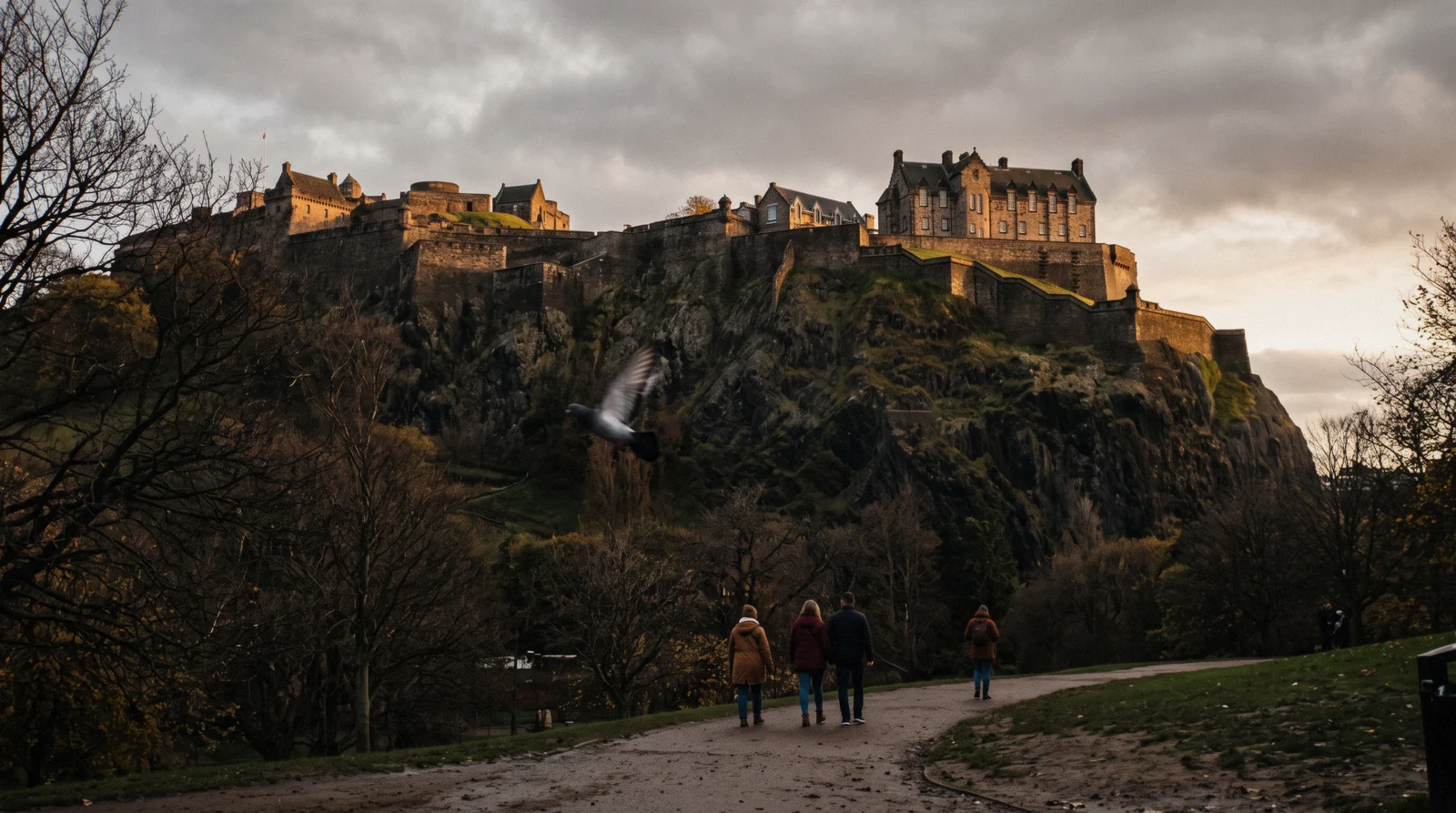
Edinburgh Castle
Edinburgh Castle is the fortress on the volcanic crag at the top of the Royal Mile, run by Historic Environment Scotland and holding the Honours of Scotland, St Margaret's Chapel, the Great Hall, the prison vaults and the One O'Clock Gun. This page covers the opening times, the highlights worth your standing time, the climb itself and how to get there; the prices, the flexi ticket and the sell-out rule live on the Edinburgh Castle tickets page. For the rest of the city, see what to do in Edinburgh.
Quick answer Hours, last entry, what to see, how long — in four lines
Edinburgh Castle opens daily at 09:30 and closes at 18:00 from 1 April to 30 September, 17:00 from 1 October to 31 March, with last entry one hour before closing. It shuts only on 25 and 26 December. Entry is a timed, booked ticket, and Historic Environment Scotland states the consequence plainly: "Once tickets are sold out online, there will be no further tickets available at the castle."
Key takeaways
- Historic Environment Scotland asks you to set aside at least two hours; the official Morning and Afternoon routes are both written for 2–3 hours, and its shortest route is one hour
- Adult entry is £23.50 booked online against £26 at the gate — the whole grid, including the seven-day flexi ticket and who gets in free, is on the Edinburgh Castle tickets page
- If you want the stories told to you, the guided tour with entry included runs 90 minutes and the two-hour in-depth tour covers the whole complex; both hold their own ticket allocation
- The Honours of Scotland, St Margaret's Chapel of about 1130 and the prison vaults are the three most people remember. The Stone of Destiny is no longer here — it moved to Perth Museum in 2024
- The gun fires at 13:00 every day except Sundays, Good Friday and Christmas Day, from Mills Mount Battery beside the Redcoat Café
Key facts
Opening hours
| 1 April – 30 September, daily | 09:30–18:00 |
|---|---|
| 1 October – 31 March, daily | 09:30–17:00 |
| Last entry | One hour before closing: 17:00 in summer, 16:00 in winter |
| 1 January | 11:00–17:00 |
Closed 25 and 26 December. 24 December closes at 16:00 with last entry 14:30
Admission
- Adult
- £23.50 online (about $32); £26 at the gate (about $35)
- Reduced
- Concession, 65+ or unemployed, £19 online (about $26); child 7–15 £14 online (about $19)
- Free
- Historic Scotland members and Explorer Pass holders; up to two carers per transaction; serving British Armed Forces with a MOD 90 card. Young Scot card holders pay £1 (about $1.40)
Planning it
- Time needed
- "You should set aside at least 2 hours to see the main attractions" — Historic Environment Scotland's own figure
- Book ahead
- Essential — weeks ahead
- Address
- Castlehill, Edinburgh Castle, Edinburgh EH1 2NG (approach across the Esplanade, 110 m of tarmac on a 5-degree gradient)
Five ways through the gatehouse, priced from edinburghcastle.scot and from the GetYourGuide listings on 30 August 2026. Dollar figures are approximations at £1 = $1.36 and never what you are charged.
One question decides the row: are you paying to get in, or paying for someone to explain the rock? Historic Environment Scotland sells entry at £23.50 online; every row below it adds a guide, a route or a second attraction on top of that same admission.
| Option | Price | Includes | Cancel | Book |
|---|---|---|---|---|
| Official timed entry, booked onlineThe cheapest way in, and the only row that sells plain entry | £23.50 adult (about $32); £26 at the gate (about $35) | Entry at a chosen date and time; audio guide £4 extra | Not stated as refundable | Official site |
| Guided tour, 1.5 h, entry includedA held slot plus 90 minutes of explanation, then your own time | £39 (about $53) | Castle entry, licensed guide, free time after the tour | Free up to 24 hours before | Check Availability |
| In-depth tour, 2 h, entry includedThe longest guided route, for anyone who wants the whole complex | £46 (about $63) | Castle entry and a 120-minute guided route through the whole complex | Free up to 24 hours before | Check Availability |
| Guided walking tour with entry ticketThe ticket collected for you, on a date you would rather not queue to sort out | £35 (about $48) | Pre-collected castle ticket and a 90-minute guided walk | Free up to 24 hours before | Check Availability |
| Castle plus a Royal Mile walkFor a first morning that continues down the Mile without a second booking | £51 (about $69) | Castle entry, guided castle visit and the walk down the Mile | Free up to 24 hours before | Check Availability |
The official row is the plain Historic Environment Scotland shop with no tracking on the link. Reseller prices are the figures listed on 30 August 2026 and move with the date; treat the checkout figure as the real one. The official shop is always the cheapest way in and the only one that sells the plain entry ticket; every other row buys you a guide, a route or a second attraction on top, and the full comparison — flexi, family, concession, free categories — is on the Edinburgh Castle tickets page.
Ways into Edinburgh Castle, compared
Every card opens the operator's own page, where the calendar shows what is still free on your date. Prices in pounds as listed on 30 August 2026; a guided ticket costs more than the official entry because it carries a guide and its own ticket allocation.
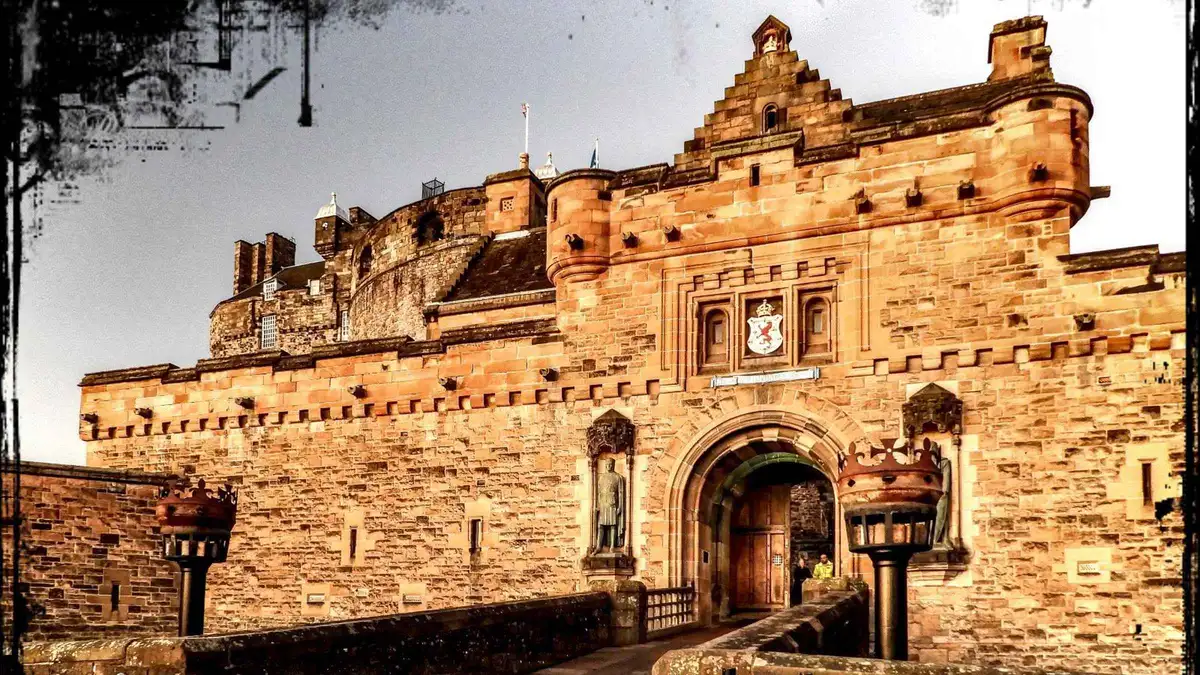 from £39
Edinburgh Castle: Guided Tour with Tickets Included
The only castle tour in this group marked wheelchair accessible, at 90 minutes with tickets included. English only, and you stay on afterwards until closing time to see the interiors.
Check Availability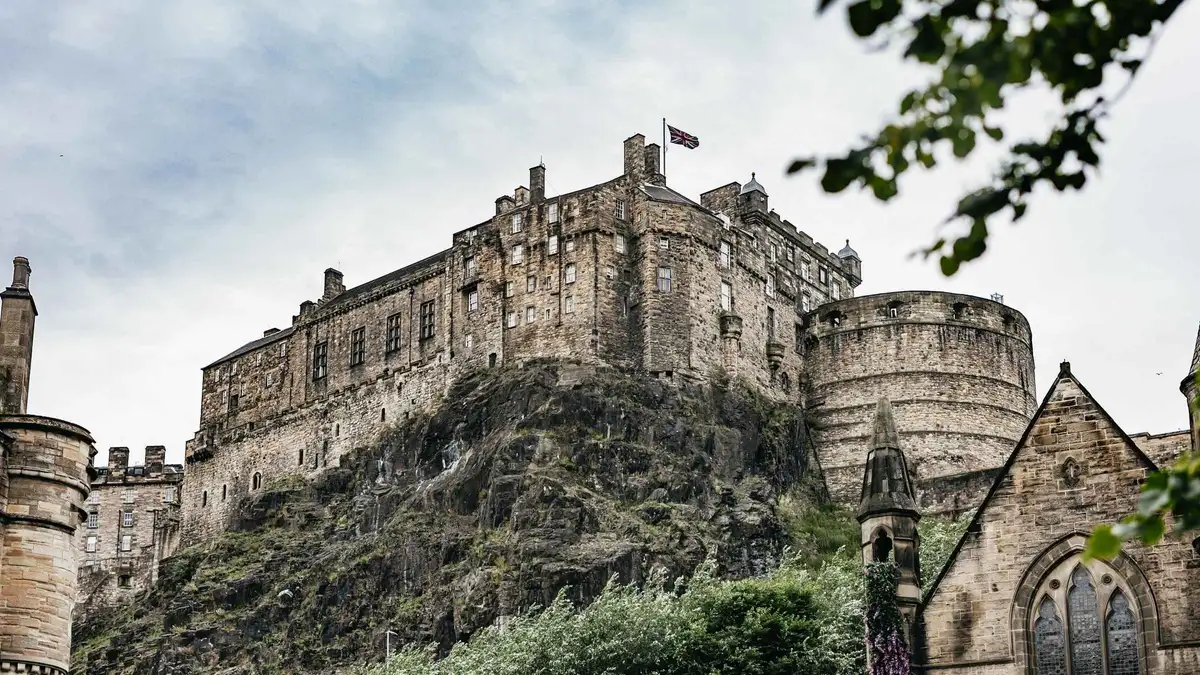 from £46
Edinburgh Castle 120-Minute In-Depth Tour with Expert Guide
Two hours rather than the usual 90 minutes, with a printed castle map and eleven named stops from Mons Meg to the Royal Palace. English only, and fast-track entry is included.
Check Availability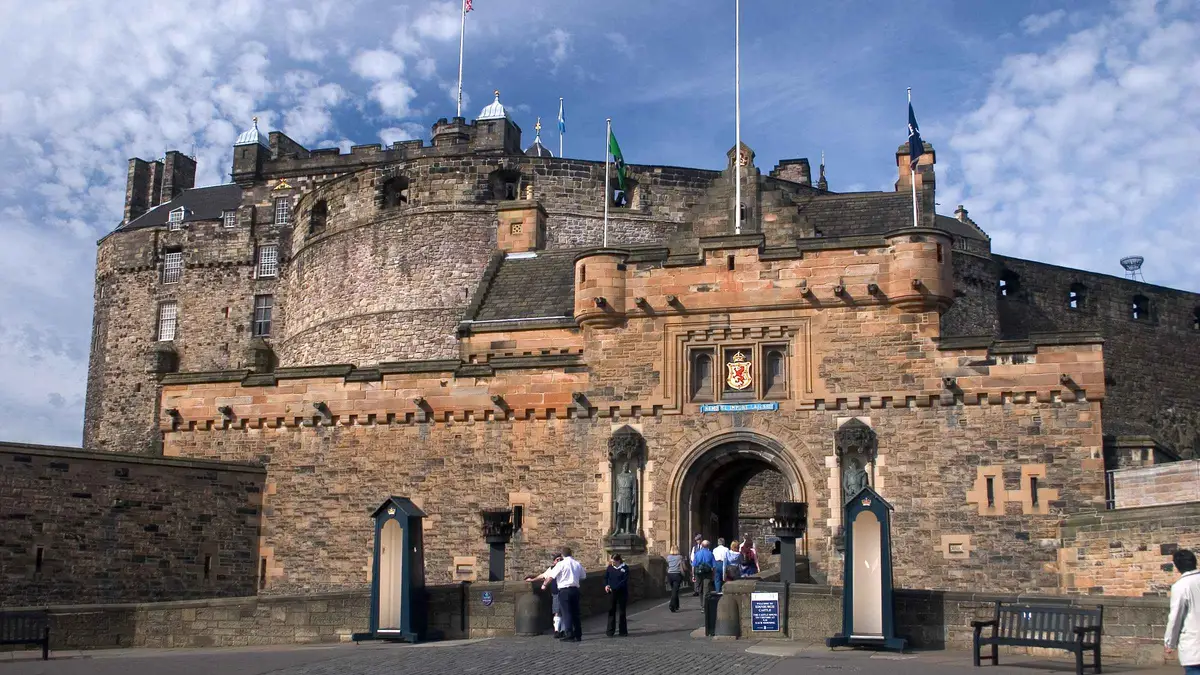 from £35
Edinburgh Castle: Guided Walking Tour with Entry Ticket
Castle entry ticket plus a 75-minute guided walk of the grounds, offered in five languages. The tour stays outdoors, and you explore the Great Hall, museums and prisons on your own afterwards.
Check Availability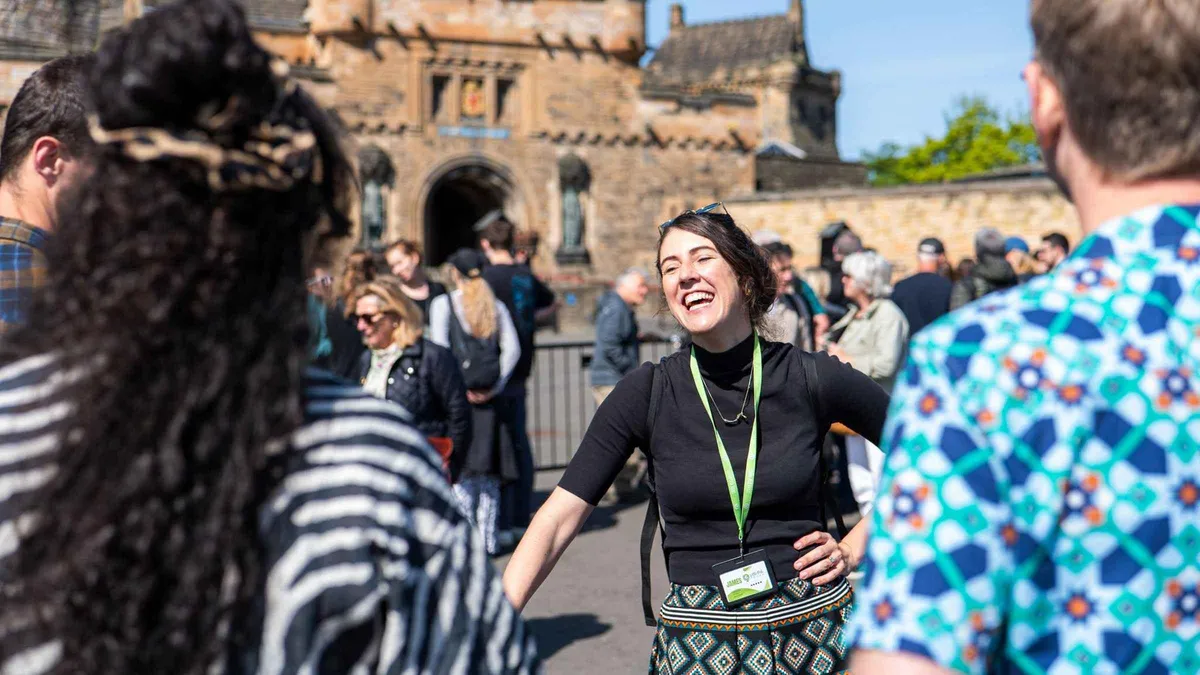 from £37
Edinburgh: Edinburgh Castle Guided History Tour with Tickets
Tickets are collected before you arrive, then a guide covers the Argyle Battery, Great Hall and St Margaret's Chapel for 80 minutes. Free time inside follows; only English and Spanish are offered.
Check Availability from £39
Edinburgh: Edinburgh Castle Tickets & Tour with Kilted Guide
A 90-minute castle tour whose selling point is a guaranteed local guide in a kilt, with tickets included. Arrive 15 minutes early; the tour runs in English only.
Check Availability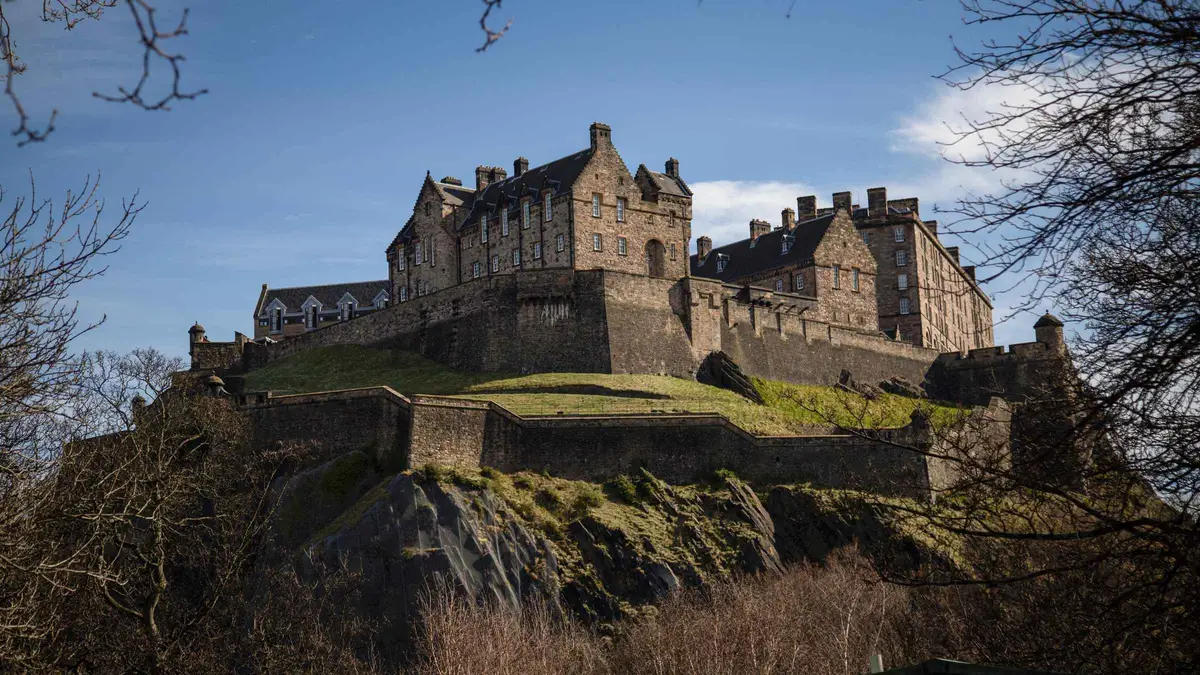 from £51
Edinburgh Castle & Royal Mile Walking Tour - Ticket Included
The only castle option here that first walks the Royal Mile, with stops at St Giles', Victoria Street and the Grassmarket before 45 minutes inside the castle. Runs 135 minutes.
Check Availability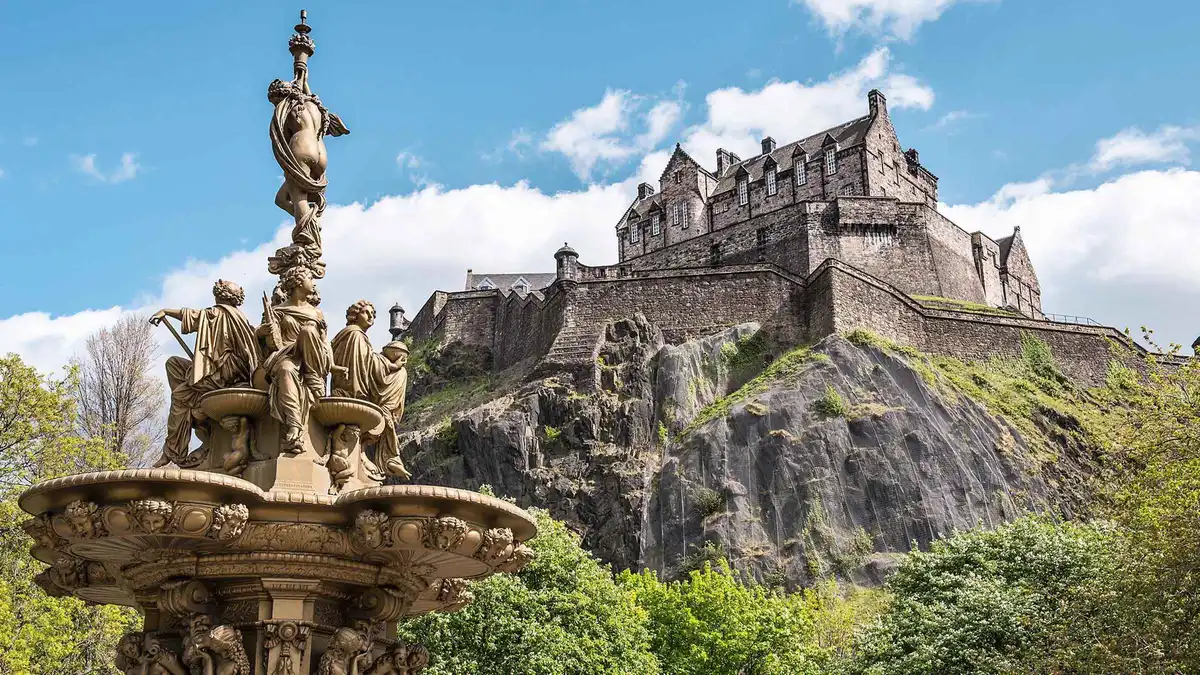 from £58
Edinburgh: Harry Potter Tour with Entry to Edinburgh Castle
The same Old Town Potter route as the cheaper walks, plus an Edinburgh Castle ticket handed to you at the end and two hours to use it yourself. Four hours in total.
Check AvailabilityPrices, ratings and details are the platform's own. Pound figures are the listed prices. The platform bills in your account's currency.
How Much Time To Give Edinburgh Castle
Historic Environment Scotland's own figure is "at least 2 hours to see the main attractions", which is a floor rather than a plan. These are three routings against the gate hours — open 09:30 all year, last entry 17:00 in summer and 16:00 in winter — with what each one gives up.
The variable is not the walking; it is the Crown Room queue and the National War Museum. The regalia corridor is the one indoor bottleneck on the rock, shortest in the first half hour after opening and in the last hour before last entry, and the war museum is a full museum visit inside a castle visit. Every routing below starts at the Esplanade, which is 110 metres of five-degree uphill before you reach the drawbridge.
| Routing | Inside the walls | Door to door from Waverley | What you give up |
|---|---|---|---|
| The castle's own short route | 1 h | About 1 h 40 | Crown Square, the Honours, the war museum and the vaults — this is the Portcullis Gate, the Lang Stairs and St Margaret's Chapel and no more |
| The full visit: Crown Square, the Honours, the vaults | 2–3 h | 3–3 h 40 | Nothing that matters. This is the routing this page recommends, and it is HES's own two-hour minimum with the queue built in |
| A guided tour with entry included | 1.5–2 h guided, then your own time | 4 h with the walk down | Your own pace at the start, and the 09:30 slot unless the operator books it — the five ways in compare on price |
Two fixed points bend the plan. The One O'Clock Gun fires at 13:00 every day except Sundays, Good Friday and Christmas Day, and the compressed hour around it is the busiest moment of the castle's day. And the food and shops shut early: the Redcoat Café serves until 16:00, the Crown Square Tea Rooms until 16:00, the shops at 17:40 in summer and 16:40 in winter.
A 16:00 entry in July is a real visit. In February the gate has already closed.
What Edinburgh Castle is: a garrison on a plug of volcanic rock
The castle is not one building but a walled town of them, stacked up a crag that ends in a 80-metre drop on three sides. That geology decided everything: the only easy approach is the ridge you walk up, which is why the Royal Mile runs where it does.
Twenty-six sieges, and the one that erased the medieval castle
Research published in 2014 counted 26 sieges in the castle's 1,100-year history, a tally that gives it a fair claim to being the most besieged place in Great Britain. The one that shaped what you see was the Lang Siege of 1573, when English artillery brought in for the Regent Morton battered the medieval defences into rubble on behalf of the King's party. Almost nothing above ground survived it.
The exceptions are the reason to come. St Margaret's Chapel, built about 1130, is the oldest building in Edinburgh. The Royal Palace and the early sixteenth-century Great Hall stand on the south and east sides of Crown Square. Everything else — the Half Moon Battery, the Forewall, the Portcullis Gate, Foog's Gate — is the rebuilt fortress that grew back over the ruins between 1573 and the Jacobite century.
David's Tower is still down there
The Half Moon Battery, the curved wall that everybody photographs from Princes Street, was raised between 1573 and 1588 straight over the wreck of David's Tower, the fourteenth-century keep the siege destroyed. Two storeys of the tower survive underneath and you can walk into them; the shattered masonry inside the battery is the actual damage from the 1573 bombardment, left visible on purpose.
Still a garrison, and Scotland's busiest paid attraction
The army never entirely left. The New Barracks hold the regimental headquarters of the Royal Regiment of Scotland, the Honours of Scotland are guarded by soldiers, and armed sentries stand at the Gatehouse outside opening hours. Historic Environment Scotland runs the visitor side.
The Association of Leading Visitor Attractions counted 2,044,963 visitors here in 2025, up 3 per cent, which makes Edinburgh Castle Scotland's most visited paid attraction and the fifteenth busiest in the United Kingdom. One Scottish site drew more people that year and it is free: the National Museum of Scotland, at 2,318,305. That contrast is worth holding in mind when you plan a wet afternoon.
Edinburgh Castle In Ten Dates
The dates that explain what is standing on the rock, and what is not. Research published in 2014 counted 26 sieges in an 1,100-year history.
-
c. 1130
St Margaret's Chapel
Built for David I in memory of his mother; it is the oldest building in Edinburgh and the only structure on the rock that predates the artillery age.
-
1430s
The vaults under Crown Square
Cellars are built to level the ground for the courtyard above, and become the prison the castle is best known for below stairs.
-
1540–1543
The Honours of Scotland come together
The crown is made for James V and first worn at Mary of Guise's coronation in 1540; Mary, Queen of Scots is the first monarch crowned with crown and sceptre together, in 1543.
-
1573
The Lang Siege erases the medieval castle
English artillery brought in for the Regent Morton batters the defences into rubble. Almost nothing above ground survives it, David's Tower included.
-
1573–1588
The Half Moon Battery goes up over the wreck
The curved wall photographed from Princes Street is raised over the ruin of David's Tower. Two storeys survive underneath and can still be walked into.
-
1707
The regalia are locked away
After the Act of Union the Honours are shut in a chest in the Crown Room and forgotten for a century.
-
1758–1811
The prison years
French privateers are the first prisoners of war in the vaults, followed by Americans, Spaniards, Dutch, Irish, Italians, Danes and Poles. The youngest recorded prisoner is six, taken at Trafalgar in 1805; in 1811 forty-nine escape through a hole still visible in the defences and all but one are recaptured.
-
1818
Walter Scott opens the chest
Scott has the Crown Room opened and finds the Honours still inside, together with a silver wand nobody has explained since.
-
1861
The One O'Clock Gun starts firing
Begun as a time signal for shipping in the Firth of Forth, working with the time ball on Calton Hill, which was useless in a haar. Since 2001 it has been a 105mm light field gun.
-
2024–2025
The Stone leaves, the crowds do not
The Stone of Destiny moves to Perth Museum in 2024 and is no longer displayed here. ALVA counted 2,044,963 visitors in 2025, making this Scotland's most visited paid attraction.
Sources: Historic Environment Scotland's own castle pages and highlights list; the Association of Leading Visitor Attractions 2025 visitor figures; the 2014 published research on the siege count. Read on 30 August 2026.
What to see in Edinburgh Castle: the highlights, in the order the hill gives them
Historic Environment Scotland names fourteen highlights. They are not spread evenly — the climb from the Portcullis Gate to Crown Square passes most of them in a single line, so the route below is the hill's own order rather than a ranking. Locations are the castle's own directions, read on 30 August 2026.
If you only have an hour, the castle's own shortest itinerary takes the Portcullis Gate, the Lang Stairs and St Margaret's Chapel and stops there. With two hours you add Crown Square, which is where the Honours, the Great Hall and the war memorial all stand.
| Highlight | Where it is | Why it earns the stop |
|---|---|---|
| Argyle Battery and the One O'Clock Gun | Through the Portcullis Gate, on the right at the far end, outside the Redcoat Café | The Princes Street view most people picture, and the firing point at 13:00 |
| St Margaret's Chapel | Through Foog's Gate, on the left past the Whisky and Finest Food Shop | Built about 1130 by David I for his mother; the oldest building in Edinburgh, and still used for weddings |
| Mons Meg | On the terrace in front of the chapel | A fifteenth-century siege bombard with its gunstones beside it; the barrel burst firing a salute in 1681 |
| Honours of Scotland | First floor of the Royal Palace, east side of Crown Square | The crown, sceptre and sword of state — the oldest crown jewels in Britain, hidden from Cromwell and sealed away in 1707 |
| The Great Hall | South side of Crown Square | An early sixteenth-century hall with an original hammerbeam roof, later cut into three floors for 312 soldiers and restored in the 1890s |
| Prisons of War | Vaults beneath Crown Square | Recreated as they were around 1800, down to the Stars and Stripes scratched into a door |
| Scottish National War Memorial | North side of Crown Square | Opened on 14 July 1927; the casket on the shrine holds Rolls of Honour naming over 147,000 dead of the First World War |
| National War Museum and the regimental museums | West end of the castle, in the old hospital and the New Barracks | Separate opening hours — the war museum opens at 09:45 and stops admitting 30 minutes before the castle does |
The Honours, and what happened to them
The crown was made for James V and first worn at the coronation of Mary of Guise in 1540; Mary, Queen of Scots was the first monarch crowned with the crown and sceptre together, in 1543. The regalia were smuggled out and hidden between 1651 and 1660 to keep them from Cromwell's army, then locked in a chest in the Crown Room after the Act of Union in 1707 and forgotten for a century. Walter Scott had the room opened in 1818 and found them still in the chest, along with a silver wand nobody has explained since.
The queue for the Crown Room is the one indoor bottleneck in the castle. It runs along the exhibition corridor before the room itself, and it is shortest in the first half hour after opening and in the final hour before last entry.
The Stone of Destiny is not here any more
This is the fact most travel pages still get wrong, and one of the two encyclopaedia entries ranking for this castle today still places the Stone in the Crown Room. It is not there. The Stone of Destiny left Edinburgh Castle for Perth Museum in 2024, where it is displayed for free — although the museum limits numbers, so a free timed ticket has to be booked. Historic Environment Scotland's own highlights list for the castle names the Honours and does not mention the Stone at all.
If seeing it was your reason for the visit, plan Perth as a separate day and let the castle stand on the Honours, the chapel and the vaults instead.
The prison vaults, and the six-year-old
Under Crown Square, the vaults built in the 1430s to level the ground for the courtyard held pirates and then prisoners of war. The first were French privateers taken in 1758; later arrivals came from France, America, Spain, the Netherlands, Ireland, Italy, Denmark and Poland, most of them sailors, many of them Americans captured in the War of Independence. The youngest recorded prisoner was six, taken at Trafalgar in 1805.
In 1811 forty-nine men escaped through a hole in the defences that is still visible, got down the rock, and were recaptured — all but one.
Edinburgh Castle opening times, last entry and the quiet hours
The full official table, read on edinburghcastle.scot on 30 August 2026. The castle closes for two days a year. Last entry is always an hour before the gate shuts, and the ticket you book is for a time, not a day — arriving two hours late is not a plan the shop supports.
The winter table is the one people misread: the gate is open at 09:30 all year, but from October the last entry falls back to 16:00, which means an afternoon flight or a late lunch can quietly cost you the visit.
| Dates | Opens | Last entry | Closes |
|---|---|---|---|
| 1 April to 30 September | 09:30 | 17:00 | 18:00 |
| 1 October to 23 December | 09:30 | 16:00 | 17:00 |
| 24 December | 09:30 | 14:30 | 16:00 |
| 25 and 26 December | Closed | — | — |
| 27 to 31 December | 09:30 | 16:00 | 17:00 |
| 1 January | 11:00 | 16:00 | 17:00 |
| 2 January to 31 March | 09:30 | 16:00 | 17:00 |
Things inside close before the castle does
The National War Museum opens at 09:45 and takes its last visitors at 17:30 in summer and 16:30 in winter. The Royal Scots and Royal Regiment of Scotland Museum shuts as early as 15:45 on winter weekdays and closes altogether from 21 December to 5 January. The Royal Scots Dragoon Guards Museum closes at 16:15 in winter and is shut on 1 and 2 January.
Food and shopping stop earlier still: the Redcoat Café serves 09:30 to 16:00 daily, the Tea Rooms in Crown Square 10:30 to 16:00, and the three shops close at 17:40 in summer and 16:40 in winter. A 16:00 entry in July is a real visit; a 16:00 entry in February is not possible at all.
When the castle is quiet, and when it is not
Our reading, not an official count: the calm windows are the first slot at 09:30, before the coach groups clear the Esplanade, and the last ninety minutes, once the 13:00 gun crowd has drifted off. The compressed hour around the gun is the single busiest moment of the castle's day, and Crown Square empties as it starts.
From May to October the Esplanade in front of the gate is a construction site for the Royal Edinburgh Military Tattoo stands, which runs 7 to 29 August 2026. The castle stays open throughout; what disappears is the accessible parking and the bike racks.
The castle also warns that adverse weather can close it at no notice and asks visitors to check ahead before a long journey. One visitor toilet block, on the left after the drawbridge, has been closed for refurbishment "until early September 2026", with temporary toilets by the ticket plaza — that was still the notice on 30 August 2026.
The One O'Clock Gun: when it fires and where to stand
The gun fires at 13:00 every day except Sundays, Good Friday and Christmas Day. It is not a re-enactment: it began in 1861 as a time signal for ships in the Firth of Forth, after the businessman John Hewat brought the idea back from Paris, and it complemented the time ball on the Nelson Monument over on Calton Hill, which was useless in the sea fog Edinburgh calls a haar.
Stand at Mills Mount Battery, on the north face, just outside the Redcoat Café — through the Portcullis Gate and right, at the far end of the Argyle Battery. The original was a 64-pounder; since 2001 it has been a 105mm light field gun, and the report is louder than first-timers expect, which is half the pleasure. Sensory backpacks and ear defenders can be borrowed from the ticket office if the bang is a problem for someone in your group.
Going at 12:40 costs you the quietest half hour of the middle of the day. If your slot is in the morning, see Crown Square first and come down for the gun; if it is in the afternoon, you have already missed it and the Royal Mile below is the better use of one o'clock.
Eating On The Rock
Two places inside the walls, both of which stop serving before the castle closes.
The Redcoat Café sits on the north side by Mills Mount Battery — the same terrace the One O'Clock Gun fires from, which is either the best seat on the rock or the worst, depending on your ears — and serves 09:30 to 16:00 daily. The Tea Rooms in Crown Square keep shorter hours still, 10:30 to 16:00. Neither publishes a menu price we could read on 30 August 2026, so no figure is printed here.
The practical point is the clock rather than the cost: on a winter afternoon slot the kitchens close at the same hour as the last entry, so a late ticket is a visit without lunch. The alternative is five minutes downhill, where the Royal Mile and the Grassmarket both feed people all day, and the eating page names the kitchens worth the walk.
Inside the walls: the climb, bags, wheelchairs and what nobody warns you about
Everything below is Historic Environment Scotland's own access and security wording, read on 30 August 2026, plus the walking notes we take from it.
The route is a hill, not a museum floor
You cross the Esplanade first — 110 metres of smooth tarmac on a five-degree uphill gradient — then enter over a wooden-slatted bridge. Inside, the way up is a steep curved cobbled climb, and several areas are reached only by steps. Wet setts in October are slippery in smooth soles; this is a site for the shoes you would wear on a hill, not the ones you would wear to a gallery.
A mobility vehicle runs the climb and manual wheelchairs can be borrowed. Adapted toilets are on site. Visitors with disabilities pay the standard adult, concession or child rate with no proof of disability required, and up to two accompanying carers enter free per transaction — but the carer tickets have to be added when you book, so this is not something to sort out at the gate.
Bags: the rule that turns people away
Suitcases and rucksacks of 30 litres or more are not allowed in, and the castle stores nothing at all — no luggage, no prams, no pushchairs, no personal items. Bag searches happen at the entrance. If you are visiting between hotels, leave the case at your accommodation or at a Waverley locker before you climb; there is no cloakroom on the rock and nowhere on Castlehill to leave a case.
Assistance dogs are welcome, including in the roofed areas. Other dogs are not.
Deaf and autistic visitors, and the practicalities
British Sign Language tours are arranged in advance by emailing [email protected]; if no Deaf guide is free on your date, there is a BSL itinerary to follow on your own. Visual stories for autistic visitors, written separately for adults and children, are published on the castle's access guide, and sensory backpacks and ear defenders are lent from the ticket office.
The audio guide costs £4 (about $5.40), runs in fourteen languages including Mandarin, Korean, Ukrainian and Brazilian Portuguese, and exists in large print and Open Dyslexic versions. It can be downloaded to your own phone — do that before you travel, because the castle warns that connectivity on the rock varies, and bring your own headphones. The paper orientation map is free at the gate.
Five Things Most Visitors Do Not Know About Edinburgh Castle
Facts that change how the rock reads, each with where it comes from.
- A whole medieval keep is buried inside the wall everyone photographs. The Half Moon Battery was raised over the wreck of David's Tower after the 1573 siege; two storeys survive underneath, and the shattered masonry inside was left visible on purpose. (Historic Environment Scotland) - The Honours of Scotland were lost for over a century. Locked in a chest in the Crown Room after the Act of Union in 1707, they were rediscovered when Walter Scott had the room opened in 1818 — with a silver wand alongside them that has never been explained. (Historic Environment Scotland) - The youngest prisoner of war held here was six years old, taken at Trafalgar in 1805 and held in the vaults under Crown Square with sailors from eight countries.
(Historic Environment Scotland, the prisons of war exhibition) - The Stone of Destiny is not in the Crown Room. It moved to Perth Museum in 2024, where it is displayed free on a booked timed ticket; HES's own highlights list for the castle does not mention it. (Historic Environment Scotland; Perth Museum) - A free museum in this city out-draws it. ALVA counted 2,044,963 visitors at the castle in 2025 against 2,318,305 at the National Museum of Scotland, which charges nothing. (Association of Leading Visitor Attractions, 2025 figures) With so many of the castle's stories hidden behind walls and under floors, guided tours of Edinburgh are the easiest way to hear them as you walk the rock yourself.
How to get to Edinburgh Castle and which way to walk up
The castle sits at the top of the ridge, so every route ends in a climb. The figures below are from the castle's own getting-here page, Edinburgh Airport and the operators, read on 30 August 2026.
From Waverley station the castle is a short walk and, in the castle's own words, "uphill all the way" — up Cockburn Street or the Waverley Steps to the Royal Mile, then left and up past the Lawnmarket. Allow fifteen to twenty minutes at a walking pace, more with a pushchair.
From the airport, trams run every seven minutes and reach Princes Street in about 30 minutes; the airport single is £7.90 (about $11). The Airlink 100 bus takes 25 minutes to Waverley Bridge at £6 (about $8), and services 17 and 18 now carry the ordinary city fare of £2.40 (about $3.30) to and from the airport, which is the cheapest scheduled link of the three. Fares and caps are set out on the getting around page.
Local buses that put you closest stop on the Mound or George IV Bridge — both leave a five-minute uphill walk. Hop-on hop-off tours stop by the castle too.
Driving, and why you probably should not
There is no public parking at Edinburgh Castle. The nearest car park is the Castle Terrace NCP, below the rock on the west side. A small number of accessible spaces sit on the Esplanade for ticket holders with accessibility requirements, first come or booked in advance — and from May to October they are largely taken by the Tattoo stands, along with the bike racks.
Which approach is worth the extra minutes
Coming up the Royal Mile from the east delivers you to the Esplanade with the whole street behind you and is the walk most people should take. The alternative, up Castle Wynd Steps from the Grassmarket in the Old Town, is shorter on the map and much steeper on the legs — a flight of stone steps, not a slope.
Dos And Don'ts At Edinburgh Castle
The short version of everything above, for the morning you go.
Do
- Book the official timed ticket online before anything else — it is £2.50 cheaper and it is the only stock there is once a date closes
- Take the 09:30 slot or the last ninety minutes; the hour around the One O'Clock Gun is the busiest of the castle's day
- See the Crown Room first or last, when the regalia corridor is shortest
- Wear the shoes you would wear on a hill — the Esplanade is a five-degree slope and the climb inside is wet cobbles
- Download the £4 audio guide to your own phone before you travel, and bring headphones; connectivity on the rock varies
- Add carer tickets at the time of booking if you need them — up to two enter free per transaction, but not if you turn up and ask
Don't
- Don't arrive with a suitcase or a rucksack of 30 litres or more; the castle stores nothing at all and there is nowhere on Castlehill to leave a case
- Don't come for the Stone of Destiny — it left for Perth Museum in 2024 and pages still saying otherwise are out of date
- Don't book a 16:00 entry between October and March; last entry falls back to 16:00 and the cafes shut at the same hour
- Don't assume a wet day is solved here: most of the route is open-air walking between buildings — the indoor list is elsewhere
- Don't drive; there is no public parking, and the Esplanade's accessible spaces largely disappear under the Tattoo stands from May to October
- Don't pay a reseller for plain entry — the official shop is always cheapest, and the five routes are compared above
Edinburgh Castle map: the gate, the gun and what is within five minutes
The gatehouse, the firing point of the One O'Clock Gun and the stops within a ten-minute walk down the ridge. Coordinates for the castle and its neighbours come from the verified Wikidata records for each site.
Next stop from the castle gate
Walk minutes are our estimates from the GPS distances; every one of them is downhill, which is the point of visiting the castle first.
The Royal Mile
The street starts at the Esplanade and runs a Scots mile to Holyrood. The Royal Mile covers what is worth stopping for on the way down, and the castle and Royal Mile walk does the two together with entry included.
1 min walkThe Scotch Whisky Experience
At 354 Castlehill, the first door below the Esplanade. Tastings, distillery visits and what each one actually pours are on the whisky page.
2 min walkOld Town closes and the Grassmarket
Down Castle Wynd Steps to the Grassmarket, under the rock. The Old Town is where the castle's siege history carries on at street level.
7 min walkNational Museum of Scotland
Free, indoors and busier than the castle in 2025. The national museum is the sensible plan B on the day the weather closes the rock.
12 min walkEdinburgh Castle questions
Why is Edinburgh Castle so famous?
Because of what happened on the rock and what is still kept there. Research in 2014 counted 26 sieges in 1,100 years, which is a strong claim to being the most besieged place in Great Britain; the Honours of Scotland, the oldest crown jewels in Britain, are on display in the Royal Palace; St Margaret's Chapel of about 1130 is the oldest building in the city; and the One O'Clock Gun has been fired here since 1861. It is also the most visited paid attraction in Scotland, with 2,044,963 visitors in 2025. If you want the story told rather than read, the in-depth two-hour tour is built around exactly these places.
Is it worth paying to visit Edinburgh Castle?
Yes, if you go in with two hours and a route. The Honours, the vaults, the chapel and the war memorial are all genuine, and the view from the Argyle Battery is the one people picture when they picture Edinburgh. It is a poor purchase if you arrive at 16:30 in November with half an hour before last entry, or if you were coming mainly for the Stone of Destiny, which is no longer here. The full price grid and who gets in free will tell you quickly whether your own group pays anything at all.
Which films and TV shows were actually filmed at Edinburgh Castle?
Historic Environment Scotland's own filming pages name The Lost King (2022), with Steve Coogan and Sally Hawkins, as shot at Edinburgh Castle. They also record that in Mary & George (2024) it was Stirling Castle that doubled for Edinburgh Castle on screen. No Harry Potter film was shot here — that connection is a writing-desk one, and the walking routes that trace it around the Old Town are on the Harry Potter page, including the tour that pairs it with castle entry.
What time is the One O'Clock Gun, and does it fire every day?
13:00, every day except Sundays, Good Friday and Christmas Day. It is fired from Mills Mount Battery, just outside the Redcoat Café: through the Portcullis Gate, then right to the far end of the Argyle Battery. The crowd builds from about 12:40, so if you are inside anyway, see Crown Square first and come down for it.
How long do you need at Edinburgh Castle?
Historic Environment Scotland says to set aside at least two hours for the main attractions, and its own suggested routes back that up: Morning and Afternoon are written for two to three hours, the Family Day Out for three, and the shortest published route runs an hour. Our reading is that two hours covers Crown Square, the Honours and the vaults without hurrying, and three lets you add the National War Museum at the west end. The guided tour with entry fits the highlights into ninety minutes and leaves you free afterwards.
Is the Stone of Destiny still at Edinburgh Castle?
No. It moved to Perth Museum in 2024, where it is shown free of charge, though the museum limits numbers and a timed ticket has to be booked. The castle's own highlights list names the Honours of Scotland — the crown, sceptre and sword of state — and does not include the Stone. Several guides and encyclopaedia entries still say otherwise; on this the official site is the one to trust.
What are Edinburgh Castle's winter opening times and when does it close for Christmas?
From 1 October to 31 March the castle opens at 09:30 and closes at 17:00, with last entry at 16:00. It shuts entirely on 25 and 26 December, closes early on 24 December at 16:00 with last entry at 14:30, and opens late on 1 January at 11:00. Adverse weather can close it at short notice, so the castle asks you to check ahead before a long journey; the tickets page explains how the timed ticket handles a change of plan.
Can you visit Edinburgh Castle in a wheelchair, and is there parking at the gate?
Partly, and with planning. The Esplanade is 110 metres of smooth tarmac on a five-degree gradient, entry is over a wooden-slatted bridge, and the route inside is a steep cobbled climb with steps to some areas; a mobility vehicle and manual wheelchairs are available, and adapted toilets are on site. Standard rates apply with no proof of disability required, and up to two carers per transaction enter free — added when you book, not at the gate. A few accessible spaces sit on the Esplanade for ticket holders, first come or pre-booked, but from May to October the Tattoo stands take most of them. Otherwise there is no public parking; the Castle Terrace NCP is nearest, and the getting around page covers the alternatives.
Where the castle fits in an Edinburgh day
Book the first slot at 09:30, take Crown Square before the Honours queue forms, come down to Mills Mount for the gun at 13:00 and walk out of the gate into the rest of the day facing downhill. That single decision — castle first, everything else after — is what keeps the ridge from becoming two climbs.
From the Esplanade the Royal Mile runs east past St Giles' to Holyrood, where the Palace of Holyroodhouse closes on Tuesdays and Wednesdays for much of the year, so check before you commit an afternoon. Arthur's Seat is the walk that puts the castle back in the frame from the other side, and it is free at any hour. On a wet day the National Museum of Scotland is twelve minutes away and costs nothing.
Everything else with hours, prices and a map is indexed on things to do in Edinburgh, and every ticket on this site sits side by side on the tickets index. Several Edinburgh attractions raise their prices on 1 September 2026 as a temporary VAT reduction ends; Historic Environment Scotland has published no change for the castle, so the figures on this page are what it charged on 30 August 2026.
Edinburgh Castle on Film: the Route, the Rooms and the Verdict
Three walk-throughs that show what the climb and the rooms actually look like before you pay for them — the official tour, a full walk of the site, and one that argues with the ticket price.
A guided tour of Edinburgh Castle
Historic Environment Scotland's own tour of the site, useful for placing Crown Square and the chapel before you arrive.
Video: Historic Environment ScotlandInside Edinburgh Castle — Is It Worth The Money?
A full 4K walk from the Esplanade to Crown Square, filmed at visitor pace, with the price question asked out loud.
Video: Virtual ScotlandInside Edinburgh Castle | FULL Walking Tour
An unhurried walk-through that shows the cobbled climb and the steps between levels better than any floor plan.
Video: LADmobVideos load from YouTube only when you press play.
Prices, hours and terms are set by the venue or operator and confirmed at checkout.
We may earn a commission if you book through one of our links, at no extra cost to you. Full affiliate disclosure