 Visit Edinburgh Guide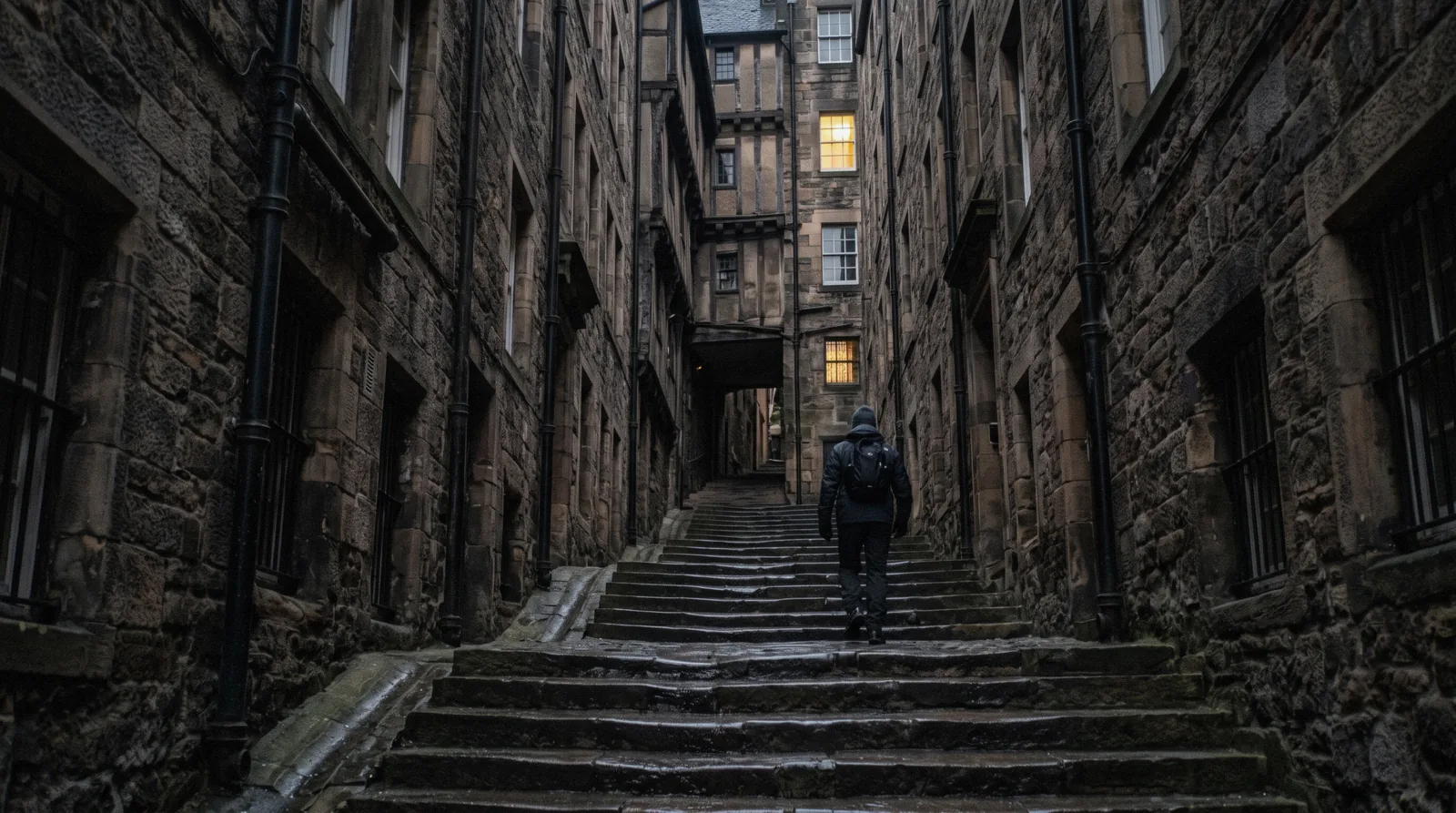
Edinburgh Old Town
Edinburgh Old Town is the medieval half of the city: one ridge running down from the castle rock to Holyrood, the closes and wynds dropping off both sides of it, and the districts that hang below — the Grassmarket, the Cowgate, West Port and the Canongate. It is half of a single UNESCO World Heritage Site, inscribed with the Georgian New Town across the valley in 1995. This page sets out what stands here, what each place charges and when it closes, which closes are worth turning into, what the ridge is like in August, and what staying up here actually costs you in sleep. The street itself is covered in walking order on the Royal Mile page, and how many days the city needs in total is on what to do in Edinburgh.
Quick answer What it is, what to see, what it costs, how long
The Old Town is the medieval ridge and everything that falls away from it: the castle at the top, Holyrood at the bottom, and the closes, the Grassmarket and the Cowgate in between. Walking it is free. Half a day covers the ridge and two interiors; a full day adds the underground close tour and a museum.
Key takeaways
- Four of the best things here cost nothing: St Giles' Cathedral, the National Museum of Scotland, the Writers' Museum and Greyfriars Kirkyard, which is open 24 hours a day, 365 days a year
- The two that need a date locked in are Edinburgh Castle, at £23.50 (about $32) online against £26 (about $35) at the gate with no walk-up stock once it sells out, and the sealed closes under the City Chambers at £24.95 (about $34), which rises on 1 September 2026
- A two-hour Old Town walk is the cheapest way to have the closes explained; the same walk in a smaller group costs less again, and the underground vaults tour covers the spaces the eighteenth-century bridges left behind
- Sleeping on the ridge in August means Fringe noise until the small hours — what that is worth, and what the 5% visitor levy adds to the bill, is set out under staying in the Old Town
What to see in the Old Town: price, hours and the thing that catches people out
Every figure below was read on 30 August 2026 from the venue's own website — historicenvironment.scot, nms.ac.uk, stgilescathedral.org.uk, realmarykingsclose.com, camera-obscura.co.uk, scotchwhiskyexperience.co.uk, nts.org.uk, greyfriarskirk.com and cultureedinburgh.com.
| Place | Adult price | Hours | The catch | Book ahead? |
|---|---|---|---|---|
| Edinburgh Castle | £23.50 online, £26 at the gate (about $32 / $35) | 09:30–18:00, 1 April to 30 September; 09:30–17:00, 1 October to 31 March | Sold out online means no tickets at all at the gate; no luggage or pushchairs stored | Yes, and early |
| The Real Mary King's Close | £24.95, child £18.25 (about $34 / $25) | Published as a rolling day-by-day calendar, not seasons | 58 steps down and 38 up, no lift; under-5s refused; price rises 1 September 2026 | Yes, days ahead |
| St Giles' Cathedral | Free; suggested donation £10 (about $14) | Monday to Friday 10:00–18:00; Saturday 09:00–17:00; Sunday 13:00–17:00 | The Sunday window is four hours long and starts at 13:00 | No |
| National Museum of Scotland | Free; the Giants exhibition £13 advance, £14.50 on the day | Daily 10:00–17:00; 26 December and 1 January 12:00–17:00 | Closed 25 December; the advance exhibition price dies at 23:59:59 the night before | No |
| Camera Obscura | Not published — prices appear only inside the booking widget | From 09:00; closing time varies by season, closed 25 December | 98 steps over five floors in a listed building, no lift | Timed slots, walk-ups if space |
| The Scotch Whisky Experience | Silver Tour £25; Gold £39.75 (about $34 / $54) | Tours from 10:00, last tour 19:00 | Gold and Taste of Scotland are 18+ and ask for physical photo ID | Recommended |
| Gladstone's Land | £11, child £7, family £33 (about $15 / $10 / $45) | Daily 10:00–16:00 to 23 December 2026 | Self-guided visits stop at 14:30; the price rises on 1 September 2026 | For the 15:00 tour, yes |
| The Writers' Museum | Free | Daily 10:00–17:00, last entry 16:30 | One step at the door, no lift, no ramp, exhibitions by stairs | No |
| Museum of Edinburgh and The People's Story | Free | Daily 10:00–17:00, last entry 16:30 | Facing each other on the Canongate, both stop admitting at 16:30 | No |
| Greyfriars Kirkyard | Free | Open 24 hours a day, 365 days | The kirk inside is a Fringe venue and is shut to general visiting many days in August | No |
| The Edinburgh Dungeon | From £20.12 (about $27) | 10:30–17:00 on 30 and 31 August 2026, published day by day | Pre-booking is stated as essential; under-5s refused, 8+ recommended | Yes |
| Palace of Holyroodhouse | £22 advance, £26 on the day (about $30 / $35) | 09:30–18:00 April to October; 09:30–16:30 November to March | Usually shut Tuesdays and Wednesdays outside 21 May to 14 September | Yes |
Two prices in this table — Gladstone's Land and the underground close tour — carry the temporary VAT cut that ends on 1 September 2026, so both go up within days of this check. The Edinburgh tickets page tracks what each one becomes. Where a venue publishes no figure, the cell says so rather than borrowing one from a blog. Dollar figures are approximations at £1 = $1.36 and are never what you are charged.
Guided walks that work the Old Town
Every card links to the operator's own page, where the calendar shows what is still open. Prices in pounds as listed on 30 August 2026; the platform charges in your own currency at checkout, and ratings are the operators' own.
 from £18
Edinburgh: Old Town History and Tales Walking Tour
Two hours through the UNESCO Old Town covering Mercat Cross, St Giles' and the Grassmarket, plus the Harry Potter locations. Ends in the centre near bars and transport; English only.
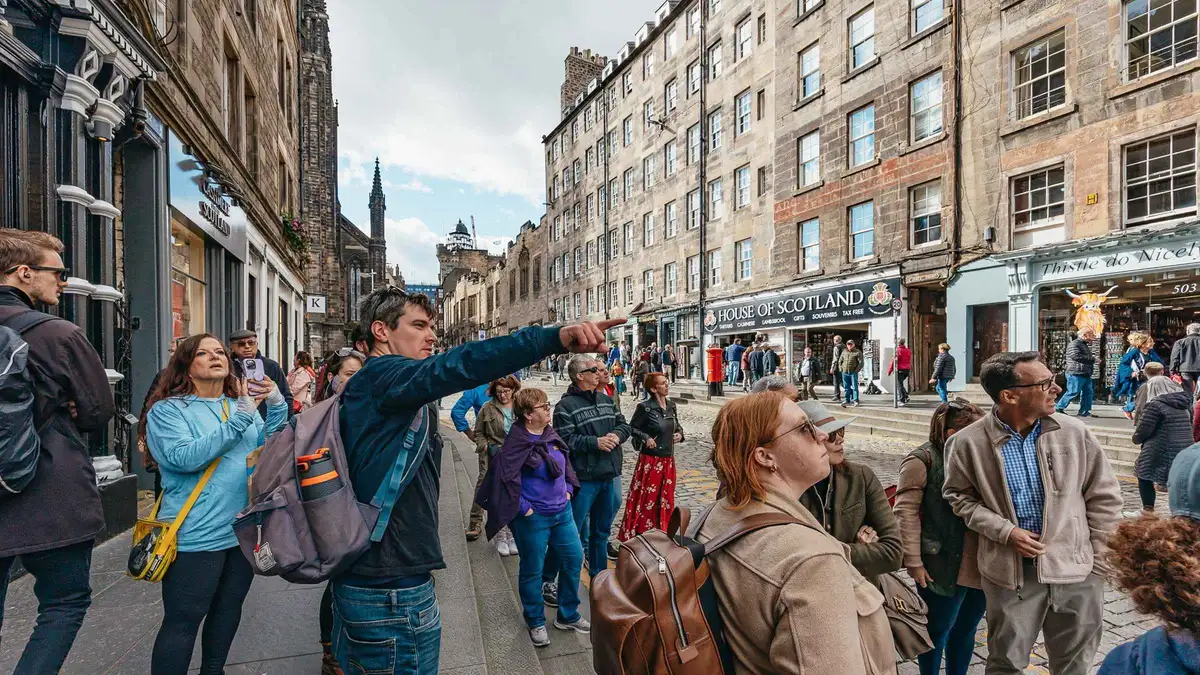
Check Availability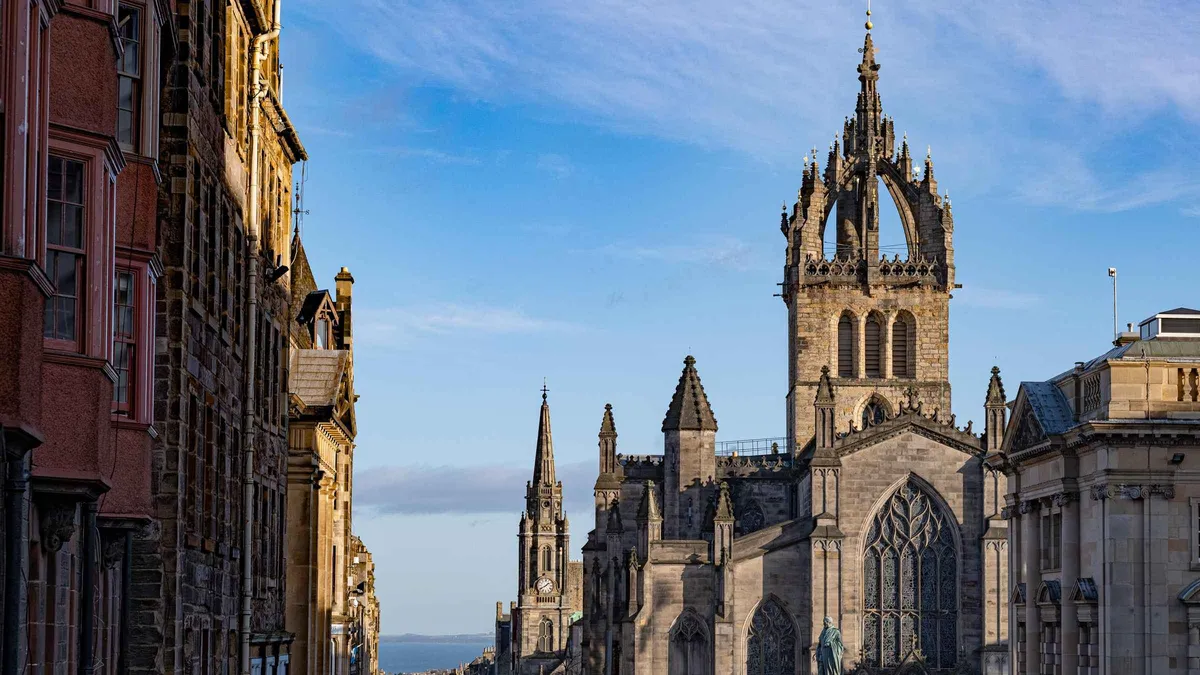 from £16
Edinburgh: Old Town History Walking Tour
The cheapest Old Town walk on the site, two hours past St Giles', Victoria Street and Greyfriars Kirkyard with the Greyfriars Bobby statue. Runs in four languages rather than English only.
Check Availability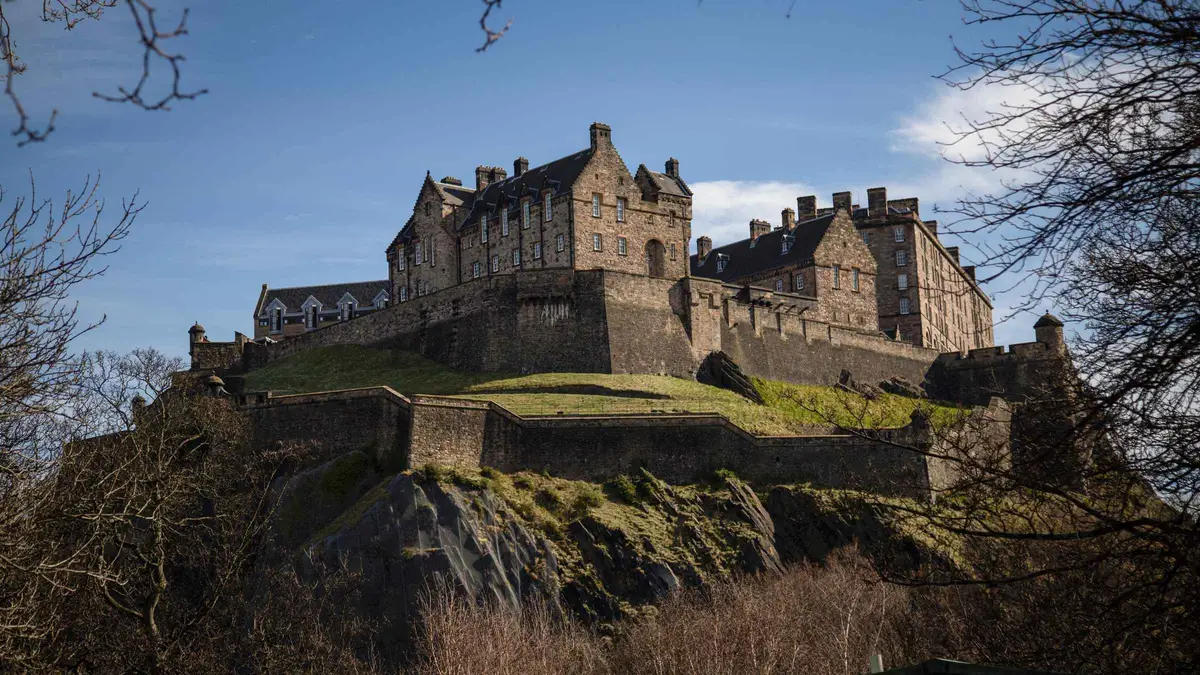 from £51
Edinburgh Castle & Royal Mile Walking Tour - Ticket Included
The only castle option here that first walks the Royal Mile, with stops at St Giles', Victoria Street and the Grassmarket before 45 minutes inside the castle. Runs 135 minutes.
Check Availability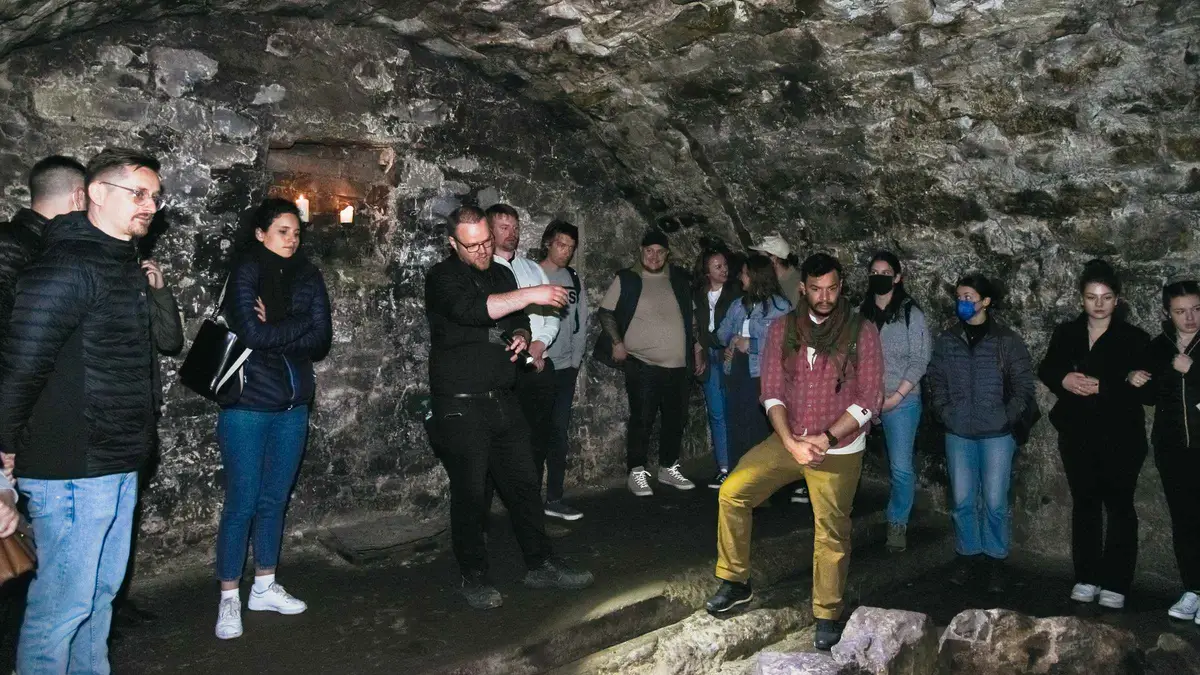 from £19.44
Edinburgh: Underground Vaults Tour
An hour in the South Bridge vaults with the Burke and Hare murders and the witch trials, and the Torture Exhibition as a paid-up option. The shortest of the vault tours here.
Check Availability from £17.60
Edinburgh Darkside Ghost Tour of Mysteries Murder & Legends
A street-level dark-history walk that climbs Calton Hill and ends in Canongate Kirkyard, covering witch trials and the Anatomy Act. It talks about the vaults but does not go inside them.
Check Availability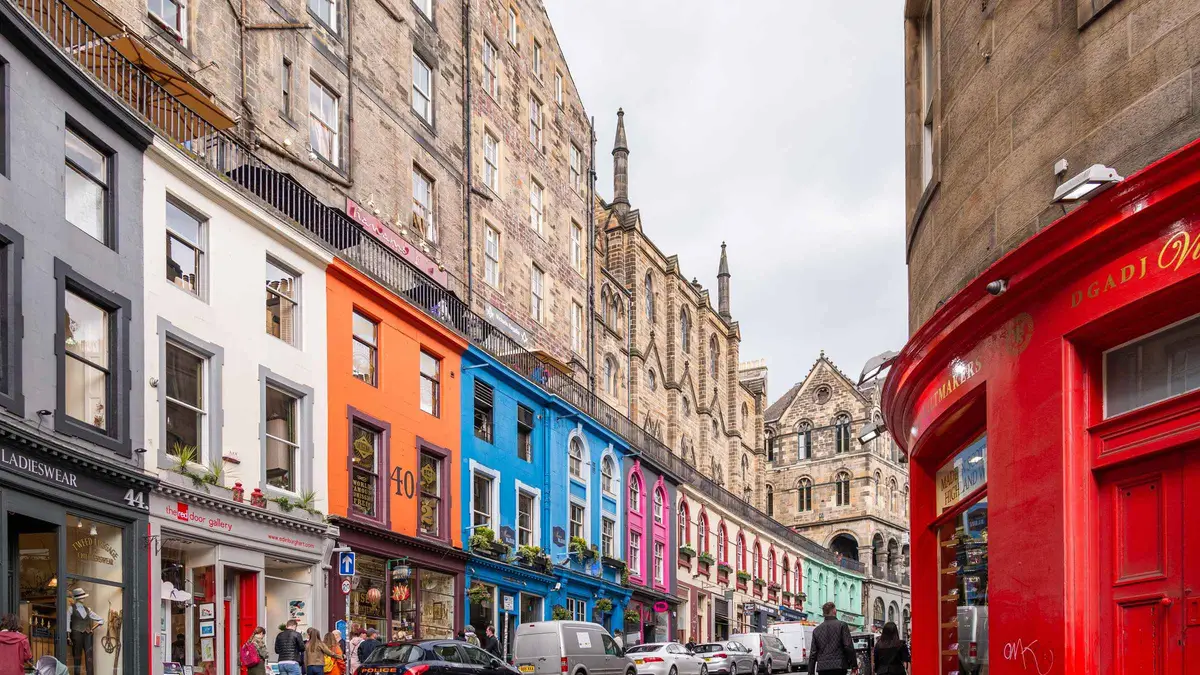 from £18
Edinburgh: Harry Potter Magical Guided Walking Tour
Two-hour walk between Greyfriars Kirkyard, Victoria Street and the Grassmarket, with a house-sorting quiz along the way. Runs in six languages, and the listing states plainly that no film scenes were shot in Edinburgh.
Check AvailabilityPrices, ratings and details are the platform's own. Pound figures are the listed prices. The platform bills in your account's currency.
What the Old Town actually is: a crag, a tail and everything that fell off the sides
The shape of this district was decided by ice and by a wall, and both are still legible when you walk it.
Edinburgh Castle stands on the plug of an extinct volcano. The last ice sheet scoured around that hard core and dropped softer material behind it, leaving a long ramp running east — the crag-and-tail landform every guide mentions and nobody explains. The Old Town is that tail. The ridge road along its crest is the street most people mean when they say Old Town, and it is covered stop by stop on the Royal Mile page.
The rest of the district is what the ridge falls into. Marshland lay to the south and the artificial Nor Loch to the north, so the town could only grow up and down rather than out, and access was through gates called ports in the city walls, of which only fragments survive. That is the whole explanation for the Old Town's density: eleven and twelve storeys were normal on the south side of the ridge long before anywhere else in northern Europe built like that.
Where the Old Town stops
It is not only the ridge. Running west to east, the district takes in West Port, the old road out of the city; the Grassmarket below the castle rock to the south-west; the Cowgate, which is the lower southern street the bridges vault over; the Canongate, a burgh separate from Edinburgh until 1856 and the name properly applied to the whole eastern district; Croft-an-Righ behind Holyrood; the castle itself; and Holyrood at the bottom, with the palace and the abbey.
The practical version: if you can see the ridge above you and you are walking on cobbles or setts, you are in the Old Town. When the ground flattens and the street runs straight, you have crossed the valley into the New Town.
The streets that were cut through it later
The medieval plan had only closes and wynds off the spine. Wide north-south routes came later: the North Bridge and South Bridge route first, then George IV Bridge, then the curving Cockburn Street, laid out by Peddie and Kinnear in 1856 specifically to get people between the ridge and the new Waverley Station.
The Edinburgh Improvement Act 1867, devised by the architects David Cousin and John Lessels, did the rest and did it hard. St Mary's Wynd was demolished and replaced by the wider St Mary's Street; Leith Wynd went; Jeffrey Street was built on arches; Chambers Street was created, taking Brown Square and Adam Square with it, and was named after the Lord Provost — it is the street the National Museum of Scotland stands on today. So the Old Town you walk is medieval in plan and Victorian in its surgery, which is why the closes stop abruptly at modern kerbs.
One World Heritage Site, two towns: the 443 hectares and the number that contradicts it
The Old Town is not listed on its own. UNESCO inscribed the Old and New Towns of Edinburgh together in 1995 as site 728, under criteria (ii) and (iv), and the listing is the reason so much of what you see is still standing.
The reason for the joint listing is the contrast itself. UNESCO's citation sets the organic medieval town on its ridge — the fishbone of closes, wynds and courts, the tall tenements — against the planned neoclassical town on the plain to the north, built as a collection of seven new towns between 1767 and 1890, with the two linked across the Waverley valley by North Bridge and the Mound. Neither half makes the case alone; the pair does.
The protection that follows is worth knowing before you photograph a skip in a close and assume the city has given up on it. Around 75% of buildings inside the property are category A, B or C listed. Four conservation areas — Old Town, New Town, Dean Village and West End — cover the majority of it. The setting is held by a Skyline Policy adopted by the Council, which is why the roofline you look at from the ridge is not a row of towers. And Edinburgh World Heritage, the body that does the day-to-day work, exists because the Council and Historic Scotland merged the New Town Conservation Committee with the Old Town Renewal Trust.
443 hectares, not 3,288
The number to quote is 443 hectares. That is the property area in the data block of the UNESCO listing for site 728, and it is the figure that describes the inscribed World Heritage property — the Old Town and the New Town together.
You will also meet 3,288 hectares, and it comes from the same page: the Brief Synthesis text says the New Town covers a very large area of 3,288 ha. The two numbers are not measuring the same thing. One is the boundary of the protected property as inscribed; the other is a descriptive figure for the built extent of the Georgian development in the prose. If a page quotes 3,288 ha for the World Heritage Site, it has taken the descriptive sentence for the legal boundary. We print 443 ha, and we print why the other number exists.
A listing with a conservation file, not a clean sheet
UNESCO's own text on the site names the pressure in plain words: this rich cultural life, in such a magnificent setting, attracts tourists in great numbers. The site carries State of Conservation reports for 2003, 2004, 2008, 2009 and 2011, and a UNESCO-ICOMOS reactive monitoring mission is recorded in a news item dated 20 November 2008.
The local argument has run alongside it. The redevelopment north of the Canongate, originally Caltongate and now New Waverley, was opposed by the Cockburn Association and the Architectural Heritage Society of Scotland as incompatible with a World Heritage site, and approved by the Council in January 2014. You walk past the result on the way from the ridge to Calton Hill.
Edinburgh Old Town closes: what they are, and what is under them
The closes are the narrow alleys running off both sides of the ridge, the fishbone pattern the World Heritage listing cites. Most are public, and walking into one is free.
A close is a private alley with a door at its end, usually named for whoever lived at that door. A wynd is a through-route wide enough for a horse. A court is the open space a close opens into, and a land is the tall tenement block they run between. They are steep because the ridge drops away on both sides; that is the entire reason the Old Town could hold so many people on so little ground.
Four worth the turn, all free:
- Lady Stair's Close, off the Lawnmarket — opens into a courtyard with the free Writers' Museum in it, and most people walk straight past the pend
- Advocate's Close, off the High Street opposite St Giles' — steps dropping north with the New Town framed at the bottom; excavations here in 2012 found a sixteenth-century tenement and rare twelfth- and thirteenth-century deposits
- Warriston's Close, beside the City Chambers — the way into the sealed closes under the building, the only place you see a close with its roof still on
- Tweeddale Court, off the High Street lower down — a walled courtyard with a surviving stretch of the old town wall, and no photo queue in it
Why there is a second Old Town underneath the first
Two events built the underground city. The Great Fire of Edinburgh in 1824 destroyed most of the buildings on the south side of the High Street between St Giles' and the Tron Kirk; they were rebuilt on their old foundations, which changed the ground level and left passages and vaults sealed below. Separately, the North Bridge and South Bridge of the eighteenth century were built as viaducts and then built over, so their arches became rooms — the Edinburgh Vaults under South Bridge.
That is what the tours sell. The underground vaults tour at £19.44 (about $26) goes into the bridge arches; the guided close under the City Chambers at £24.95 is a street with houses on it rather than a cellar, and it is the more honest of the two experiences. The ghost tours page compares every operator working the same spaces, because five of them run tours that sound identical and are not.
And a fire that is still visible
On 7 December 2002 the Cowgate fire destroyed a dense group of buildings at the Cowgate and South Bridge, including the Gilded Balloon comedy club and much of the University of Edinburgh's Informatics department. The gap sat open for a decade; the site was redeveloped in 2013 and 2014 as a single new building, largely a hotel. Standing in the Cowgate and looking up at the mismatch between the black tenements and one clean façade is the shortest lesson in how this district actually changes.
Old Town Edinburgh: what to see, from the castle rock down
In the order the ridge takes you, with what each one is for. Prices and hours are in the table above; this is the judgement.
The top: castle, whisky, illusions
Edinburgh Castle is the fixed point of a first visit and the one thing on the ridge that behaves like an airport — timed, sold out weeks ahead in summer, and explicit that when online stock is gone there are no tickets at the gate. Book it first and build the day around the slot; the tickets page sets the online price against the gate price and the passes.
Below the Esplanade, Castlehill has two paid attractions facing each other: Camera Obscura, whose Victorian rooftop camera is genuinely good and whose 98 steps over five floors rule it out for a lot of people, and the Scotch Whisky Experience, whose 50-minute Silver Tour at £25 (about $34) is the one whisky introduction in the city that takes children.
The middle: the High Kirk, the closes and the museum on Chambers Street
St Giles' Cathedral is free, and the Thistle Chapel inside it is the single most concentrated piece of craftsmanship on the ridge. Give it half an hour, and do not turn up at noon on a Sunday — the visiting window that day is 13:00 to 17:00.
One street south, over George IV Bridge, the National Museum of Scotland is free, open daily 10:00 to 17:00, and closed only on 25 December. It is the wet-afternoon answer for the whole district and the roof terrace is the free viewpoint nobody queues for. Greyfriars Kirkyard, a few minutes further, is open 24 hours a day, 365 days a year; the kirk itself becomes a Fringe venue and is shut to general visiting many days in August, which is precisely when most people try the door.
The bottom: the Canongate and the palace
Below the Bridges crossroads the crowd thins by half and the entry prices go with it. The Museum of Edinburgh and The People's Story face each other on the Canongate, both free, both stopping admission at 16:30 — a late run at the pair has to start by 16:00. At the foot of the street the Palace of Holyroodhouse charges £22 in advance against £26 on the day and, outside 21 May to 14 September, is usually shut on Tuesdays and Wednesdays.
That closure is the most commonly wasted walk in the district; if it catches you, keep going through the gates into Holyrood Park, where Arthur's Seat is free and open at any hour.
How long the Old Town takes, and the order that wastes least
Three routings that actually work, built on the opening hours rather than on distance. Walking times are our estimates along the ridge and its cross streets.
The district is small — about a mile end to end on the ridge and never more than ten minutes off it — so time is spent on interiors and queues, not on ground. Work downhill: the ridge falls the whole way, and the timed tickets are at the top.
- Two hours. Castle Esplanade for the view, down Castlehill and the Lawnmarket, into Lady Stair's Close for the free Writers' Museum, St Giles' for the Thistle Chapel, then Advocate's Close for the drop north. No tickets needed except the castle if you go in.
- Half a day. The above plus one paid interior — the underground close tour is the one we would pick — and a walk down the Canongate to the palace gates. About four hours with a coffee.
- A full day. Castle at opening, the ridge to the Bridges, the National Museum of Scotland over lunch when the street is worst, the Grassmarket and Greyfriars in the afternoon, a vaults tour or a ghost walk after dark. The castle and the palace do not both fit in one day with anything else.
The hours worth avoiding, and the ones that are free
Before 09:30 the ridge belongs to deliveries and dog walkers in any month. From roughly 11:00 to 15:00 in July and August the High Street between St Giles' and the Bridges stops being a thoroughfare at all. Late afternoon empties the top of the street as the coach groups leave and the light on the tenements is at its best.
A guided walk buys you the closes without a ticket to anything: two hours of Old Town history and tales at £18 (about $24), or the same ground in a smaller group at £16 (about $22). If you would rather combine the street with the fortress, the walk with castle entry included at £51 (about $69) is the version that handles the timed ticket for you.
August on the ridge: three festivals, one street, and no published closing time
For 25 days a year the Old Town is not a neighbourhood, it is a venue. Knowing the dates is the difference between the best month here and the worst.
In 2026 the Fringe ran 7 to 31 August, the Edinburgh International Festival 7 to 30 August and the Royal Edinburgh Military Tattoo 7 to 29 August, all read from the organisers' own sites on 30 August 2026.
| Festival | 2026 dates | Where it lands in the Old Town | 2027 dates |
|---|---|---|---|
| Edinburgh Festival Fringe | 7–31 August 2026 | The High Street and Hunter Square as street-performance grounds; venues in almost every close | Not yet published |
| Edinburgh International Festival | 7–30 August 2026 | Concert and theatre venues across the centre, drawing evening crowds onto the ridge | Not yet published |
| Royal Edinburgh Military Tattoo | 7–29 August 2026 | Grandstands on the Castle Esplanade; the queue forms on Johnston Terrace, not the Esplanade | Not yet published |
None of the official organisers had published 2027 dates by that day, so any page giving you next August's dates now is guessing; the events calendar carries them the moment they are announced.
What that does to the district is specific rather than general. The High Street and Hunter Square become the gathering points where Fringe performers advertise their shows, mostly by performing them. Greyfriars Kirk closes to general visiting on many August days because it is itself a venue. The castle Esplanade disappears under the Tattoo grandstands from roughly May to October, taking the accessible parking bays and the bike racks with it.
How late it stays loud, and why we will not print an hour
Everyone tells you the Old Town is loud until three in the morning in August. We could not find an official source for that hour, and we are not going to invent one. The City of Edinburgh Council publishes no festival terminal hour: its Licensing Board sets licensed hours, its most recent Statement of Licensing Policy was agreed on 27 November 2023, and the last public statement we could find on a festival extension is a Council news release of 25 May 2021 recording that on-sale premises with a seasonal variation could extend by an additional two hours across the August festival period.
So the honest version is this. Licensed premises in the Old Town can and do run later in August than in any other month, the ridge and the Cowgate carry that noise between the tenements, and no authority publishes the hour at which it stops. Plan around the mechanism rather than the number: ask for a room that faces a courtyard rather than the High Street, the Cowgate or the Grassmarket, and treat a top-floor room on a close as quiet and a first-floor room over a bar as not.
Nobody publishes a crowd figure either
There is no Council over-tourism page and no Old Town footfall count. The nearest thing to an official acknowledgement is the framing on the Council's own visitor levy pages: the city's popularity comes at a cost through the pressure it puts on our services and on the people who live and work here all year round. Every crowd number you read about this district, including ours, is somebody's observation.
Ours is that the ridge is comfortable before 10:00 and after 18:00 for eleven months of the year, and neither in August.
Staying in Edinburgh Old Town: the licence rules that shaped the flat market
Two pieces of policy explain why the Old Town has fewer whole-flat lets than it did and why every bill now carries a percentage on top. Both are the Council's own published figures, read on 30 August 2026.
The whole of the City of Edinburgh Council area has been a short-term let control area since 5 September 2022. The licence fees below are the part that changed the market, because they scale with how many people you sleep.
| Secondary-letting licence, by occupancy | Fee for a one-year licence | Approx. USD |
|---|---|---|
| 1–3 guests | £653 | $888 |
| 4–5 guests | £1,089 | $1,481 |
| 6–10 guests | £2,481 | $3,374 |
| 11–15 guests | £3,872 | $5,266 |
| 16–20 guests | £5,264 | $7,159 |
| 21 or more guests | £5,869 | $7,982 |
Inside a control area, using an entire property that is not the operator's own main home for short-term letting needs planning permission first. On top of that, every short-term let host and operator has needed a licence since 1 January 2025. Operating without one is a criminal offence carrying a fine of up to £2,500 (about $3,400) and a one-year ban on applying again.
A public register of licence holders is published, so an address you are offered can be checked.
The 5% visitor levy applies to every address in the city
The UK's first city-wide visitor levy started applying to paid overnight stays in Edinburgh on Friday 24 July 2026. It is 5% of the accommodation cost, charged at the same rate every day of the year and capped at five consecutive nights. It has applied to all advance bookings made since 1 October 2025 for stays on or after 24 July 2026, so a room reserved last year still carries it.
There is no way to dodge it by choosing a district: the levy covers the whole council area, so the Old Town, the New Town, Leith and Stockbridge are all charged the same 5%. It applies to UK and Scottish residents too, and to people travelling for work. Exemptions are narrow — people who may not have a permanent or safe home, and holders of certain UK disability, incapacity and injury-related benefits on production of the award letter, the invoice naming them and proof of payment.
- Home sharing or home letting licence: £120, against £653 and up for a secondary let — which is why so much Old Town stock is now a room in someone's flat rather than the whole flat
- Temporary licence or exemption: £250, £350 or £600 depending on type
- Every application needs A4 floor plans, an annual gas certificate where there is gas, and a completed fire safety checklist
What that means for where you book
Rooms on the ridge itself are the shortest walk to everything and the loudest place to sleep in August. The Grassmarket and the Cowgate are the same trade in stronger form — they are the district's late-night streets. The Southside edge around Chambers Street and the National Museum of Scotland is five to ten minutes from the ridge and considerably quieter, and the valley floor around Waverley puts you between both towns.
The areas below carry the search link for each; the city-wide comparison, with the New Town and the outer districts, is on the where to stay page.
Getting into the Old Town, and getting around inside it
Fares read from lothianbuses.com and edinburghtrams.com on 30 August 2026. The Old Town is small enough that the honest answer is usually to walk it.
Waverley station sits in the valley between the two towns, so almost every arrival starts with a climb: the steps and ramps up to the ridge, or Cockburn Street curving up from Market Street. From the ridge, nothing in this district is more than about ten minutes on foot. The figures worth holding:
| Ticket | Adult | Approx. USD | What it is for |
|---|---|---|---|
| Lothian single | £2.40 | $3.26 | One bus journey; exact change only if you pay cash, drivers give none |
| Tap Tap Cap daily cap | £5.70 | $7.75 | The cheapest day's bus travel — 30p under the paper DAY ticket |
| City DAY ticket | £6.00 | $8.16 | Paper day ticket, buses and trams in the city zone |
| Tram city single | £2.40 | $3.26 | Any stop except the airport; the line runs along the New Town side |
| City LATE (18:00–04:30) | £5.50 | $7.48 | Evening travel after a late tour or a show |
The tram runs across the valley on the New Town side and does not climb the ridge, so it is a way of reaching the edge of the Old Town rather than a way of moving inside it. Lothian's buses do cross the ridge.
The capping trap, and the live status page
Capping only works through Tap Tap Cap. The fares page is explicit: pay on board with plain contactless and you have bought a single, with no capping at all. Tap the same card as a Tap Tap Cap user and the day is capped at £5.70. It is the same card and a different product, and it is the most common way visitors overpay Lothian.
Trams were running the full route from every 7 minutes when we read the operator's own service banner on 30 August 2026, after the Princes Street disruption earlier in the summer; the getting around page carries the live status link and the airport comparison, where the tram single at £7.90 costs more than the Airlink bus at £6.00 and considerably more than service 17 or 18 at the ordinary £2.40 city fare.
Old Town or New Town: which side to spend your time on
The two halves of the World Heritage Site are a fifteen-minute walk apart and answer different questions. This is the short version; the Georgian side has its own page.
The Old Town is where the sights are. The castle, the palace, the cathedral, the underground closes, the free national museum and every ghost walk in the city are all on this side of the valley, packed into about a mile of ridge. It is also cobbled, steep, loud in August and short on flat ground.
The New Town is where the grid is: Craig's 1767 plan, the Georgian terraces, the two free national galleries, the shopping streets, and most of the city's good restaurants. It is quieter, flatter and about fifteen minutes from anything on the ridge.
You walk between them, and the crossing is part of the point. North Bridge and the Mound are the two links UNESCO names, and both take you from medieval to neoclassical in a few hundred metres. Standing on one town, you look at the other — which is why the listing covers the pair and not either alone.
If you are still deciding how many days the city needs before you decide which side of the valley to spend them on, that question is answered on the best things to do in Edinburgh, which sets the districts, the tickets and the itineraries against each other.
Edinburgh Old Town map: the ridge, the districts below it and where each stop stands
Purple pins are free to walk to or free to enter; gold pins are ticketed or run their own opening hours. Positions come from Wikidata and the venues' own published addresses, read on 30 August 2026.
Next stop from the Old Town
Walk minutes are our estimates from the GPS distances, measured from the middle of the ridge.
The New Town
The other half of the same World Heritage Site: Craig's grid, two free national galleries and most of the restaurants. The New Town page has the layout, the shopping streets and what a room there costs.
15 min over North Bridge or the MoundThe Royal Mile
The ridge stop by stop, in walking order from the Esplanade to Abbey Strand, with every price and opening hour on the street: the Royal Mile guide.
You are standing on itArthur's Seat
Holyrood Park begins where the Old Town ends, and it is free and open at any hour. If the palace is shut on your day, this is the replacement that costs nothing: Arthur's Seat routes.
27 min downhill, then upStaying in the Old Town: which part of it, and what it costs you in sleep
We did not read a hotel rate band for this page, so none is printed: the only nightly figures we could source on 30 August 2026 were live search results for one date, which is a snapshot rather than a price, and we would rather print nothing than a number that misleads. What each area is actually like, and the 5% visitor levy that applies to every address in the council area, is below. The links open a hotel search for that address.
The ridge: Lawnmarket, High Street and Canongate
- Suits
- Shortest walk to everything; first-timers on a two-night trip
Two to five minutes from the castle, St Giles' and the closes, and the loudest address in the city from 7 to 31 August, when the High Street is a performance ground. Ask for a courtyard-facing room. The 5% visitor levy applies across the whole council area, capped at five consecutive nights, so no address here or anywhere else in Edinburgh avoids it.
See stays in The ridge: Lawnmarket, High Street and CanongateGrassmarket and the Cowgate
- Suits
- Nightlife on the doorstep, and a flat-ish approach from the west
Under the castle rock, with the Saturday market 10:00–17:00 outside the door and the city's late-night street one block east. Choose it for the evenings, not for an early start. The 5% visitor levy applies here as it does across the whole council area, so the district makes no difference to the bill.
See stays in Grassmarket and the CowgateChambers Street and the Southside edge
- Suits
- Quieter nights five minutes from the ridge; museum-first days
The National Museum of Scotland and Greyfriars are on the doorstep and the ridge is a five to ten minute walk uphill. It is the compromise address: Old Town distances, university-quarter noise levels. The 5% visitor levy applies to every paid overnight stay in the council area, this street included.
See stays in Chambers Street and the Southside edgeNo nightly rate band was read for this page. The visitor levy is 5% of the accommodation cost on every paid overnight stay in the City of Edinburgh Council area, capped at five consecutive nights and charged at the same rate all year, and it has applied to advance bookings made since 1 October 2025 for stays from 24 July 2026 (edinburgh.gov.uk/visitorlevy, read 30 August 2026). The city-wide comparison is on the where to stay page. We take a commission if you book through these links, at no extra cost to you.
Edinburgh Old Town questions
Is Edinburgh Old Town worth visiting?
It is the reason most people come to the city, and the case is concrete rather than atmospheric: the castle, the palace, the free national museum, St Giles' and a sealed seventeenth-century close all stand within a mile of each other, and half of them cost nothing. Two hours gets you the ridge and its closes; a guided two-hour walk at £18 (about $24) is the version with the history attached.
What is the famous street in the Old Town?
The Royal Mile — which is not one street but five linked ones, Castlehill through to Abbey Strand, running down the ridge from the castle to the palace. No address is legally on "the Royal Mile". What stands along it, in walking order and with every price, is on the Royal Mile page.
How long does it take to walk from the Old Town to the New Town?
About fifteen minutes from the middle of the ridge, and the two crossings UNESCO names are North Bridge and the Mound. It is downhill on the way over and a climb on the way back, which is worth knowing at the end of an evening. The New Town page covers what is on the other side.
What is the difference between the Old Town and the New Town?
One grew, the other was designed. The Old Town is medieval, organic and vertical: a ridge, a fishbone of closes, tenements that reached eleven storeys. The New Town was laid out from a competition won in 1766 and built from 1767 onwards as a neoclassical grid on the plain to the north. UNESCO inscribed them together in 1995 precisely because of the contrast, as a single 443-hectare property.
Can you walk into the Old Town closes?
Most of them, yes, and it costs nothing. Lady Stair's Close, Advocate's Close and Tweeddale Court are all public and all worth the turn — the closes section says what to look for in each. The exception is the set sealed under the City Chambers, which is a ticketed guided tour at £24.95 (about $34) through the Real Mary King's Close.
Is it worth staying in the Old Town?
For a short first trip, yes: everything is a walk away and you lose no time in transit. In August, think hard. The ridge, the Grassmarket and the Cowgate are the city's loudest addresses during the festivals, and the Council publishes no closing hour for licensed premises, so nobody can promise you one. The staying section has the areas and the trade-offs, and the 5% visitor levy applies to every address in the council area regardless.
How much does the visitor levy add to a stay in the Old Town?
5% of the accommodation cost, capped at five consecutive nights, charged at the same rate every day of the year. It started on 24 July 2026 and applies to advance bookings made since 1 October 2025 for stays after that date. It covers the entire City of Edinburgh Council area, so moving to the New Town, Leith or anywhere else in the city does not avoid it.
What is free in the Old Town?
The ridge and every public close; St Giles' Cathedral, which asks a £10 suggested donation; the National Museum of Scotland and its roof terrace; the Writers' Museum in Lady Stair's Close; the Museum of Edinburgh and The People's Story on the Canongate; and Greyfriars Kirkyard, open 24 hours a day, 365 days a year. That is a full day without a ticket.
The Edinburgh Old Town on video
Three walks filmed at street level on the ridge and below it. Watch one before you go and the closes stop being abstract: you will recognise the pends, the steps and the point where the crowd thickens at the Bridges.
EDINBURGH - Old Town Tour With a Local Guide
A guide walking the ridge and turning into the closes, which is the half of the district a map cannot show you.
Video: David WheaterEdinburgh Old Town Grassmarket guided tour - Victoria Street
The lower district: the Grassmarket under the castle rock and the climb up Victoria Street to the ridge.
Video: Visit Scotland ToursBEAUTIFUL Edinburgh Old Town walking tour | 4K
An unnarrated 4K walk end to end, useful for judging the gradients and the cobbles before you pack shoes.
Video: Walking Through ScotlandVideos load from YouTube only when you press play.
Prices, hours and terms are set by the venue or operator and confirmed at checkout.
We may earn a commission if you book through one of our links, at no extra cost to you. Full affiliate disclosure