 Visit Edinburgh Guide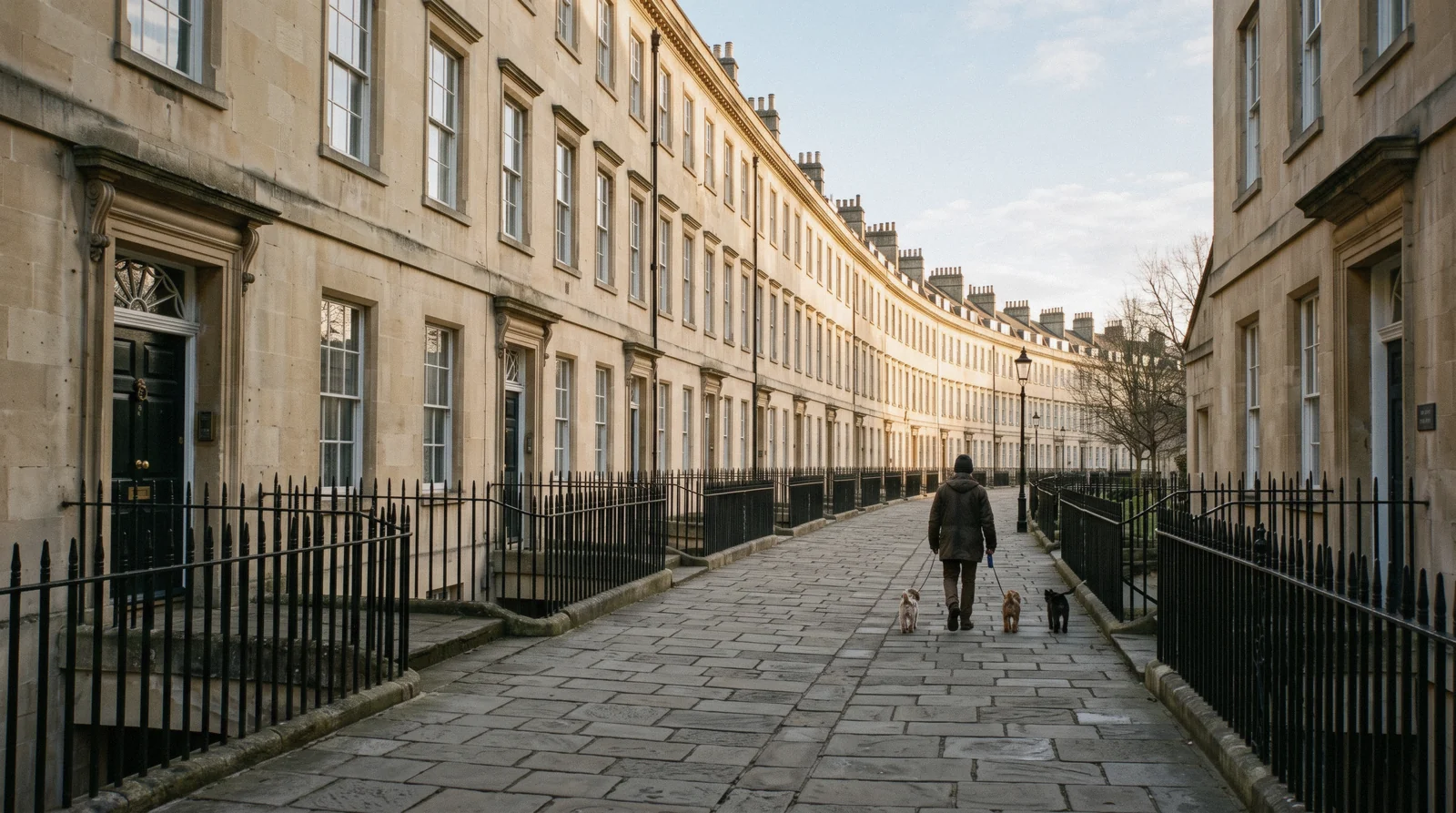
The New Town, Edinburgh
The Edinburgh New Town is the planned half of the city: a neoclassical grid on the plain north of the valley, begun in 1767 to a competition-winning layout by a 26-year-old named James Craig and extended for a century afterwards. It is not a museum quarter — it is where the shops, the two free national galleries and most of the good restaurants are, and it is half of the same UNESCO World Heritage Site as the medieval Old Town across the Waverley valley. This page covers how the grid works, what stands in it, what each thing costs, where to eat and shop, and what staying on this side is actually like.
Quick answer What it is, what is free, where to eat, how long
The New Town is a Georgian grid built from 1767: three main streets running east to west between two garden squares, with Princes Street facing the castle across the valley. Both national galleries inside it are free and open daily 10:00 to 17:00. Half a day walks it; most visitors sleep and eat here and sight-see on the other side.
Key takeaways
- Free, daily, all year: the Scottish National Gallery on the Mound and the Scottish National Portrait Gallery at 1 Queen Street, both 10:00–17:00 with charges only for some temporary exhibitions
- The one paid climb is the Scott Monument at £9 (about $12), and it has two traps — it cannot be pre-booked at all and it closes every day from 12:30 to 13:45
- A three-hour guided walk of the Georgian city at £35 (about $48) is the way to have the grid explained; a food and drink walk across both towns is the way to eat your way across the valley
- Staying here is quieter than the ridge and about fifteen minutes from it, and the 5% visitor levy applies to every address in the council area — the trade-offs are under staying in the New Town
What is in the New Town: price, hours and the catch
Read on 30 August 2026 from the venues' own websites — nationalgalleries.org, cultureedinburgh.com, johnniewalker.com and edinburgh.gov.uk — with the National Galleries figures confirmed in a browser session because that domain answers automated fetches with a 403.
| Place | Adult price | Hours | The catch | Book ahead? |
|---|---|---|---|---|
| Scottish National Gallery, The Mound | Free; some temporary exhibitions charge | Daily 10:00–17:00; shop the same, Scottish Cafe last orders 16:00 | The charge appears only on the temporary exhibitions, not at the door | No |
| Scottish National Portrait Gallery, 1 Queen Street | Free | Daily 10:00–17:00; Cafe Portrait to 16:30, last orders 16:00 | It sits on the site of an unbuilt stretch of Queen Street, one block off the grid's spine | No |
| Scott Monument | £9; concession and child £7; family £26 (about $12 / $10 / $35) | Daily 10:00–17:00; tours every 30 minutes from 10:30, last at 16:30 | Closed daily 12:30–13:45 for lunch; card payments only; no children under 5 | Impossible — kiosk only |
| Johnnie Walker Princes Street | Signature Experience £30 (about $41), 1.5 hours | Tour times vary by experience; the venue's own site gives two different sets of shop hours | Children over 8 on the Signature Experience only, with an adult; strict Challenge 25 | Yes, required |
| Princes Street Gardens | Free | Gate times are published only inside an image-only PDF with no readable text | West Gardens close early for events — the Council puts it under 2% of opening time | No |
| Calton Hill and the Nelson Monument | Hill free; monument and tower £7.50 (about $10) | Monument seven days a week 10:00–16:30 | The £3 ticket buys the monument without the tower view; no under-5s up the tower | No |
| The Georgian House, 7 Charlotte Square | Not read — see the note below | Not read | The National Trust for Scotland's site returned a 403 to us on 30 August 2026 | Not known |
We could not read the Georgian House's own page: nts.org.uk answered our fetch with a 403 on 30 August 2026, as it does for automated requests generally, so no price or opening hour for it is printed here rather than borrowed from a third party. Check nts.org.uk directly before you plan around it. Dollar figures are approximations at £1 = $1.36 and never what you are charged.
Walks that cover the Georgian city
Every card links to the operator's own page, where the calendar shows what is still open. Prices in pounds as listed on 30 August 2026; the platform charges in your own currency at checkout, and the ratings are the operators' own.
 from £35
Edinburgh: 3-Hour Guided Walking Tour
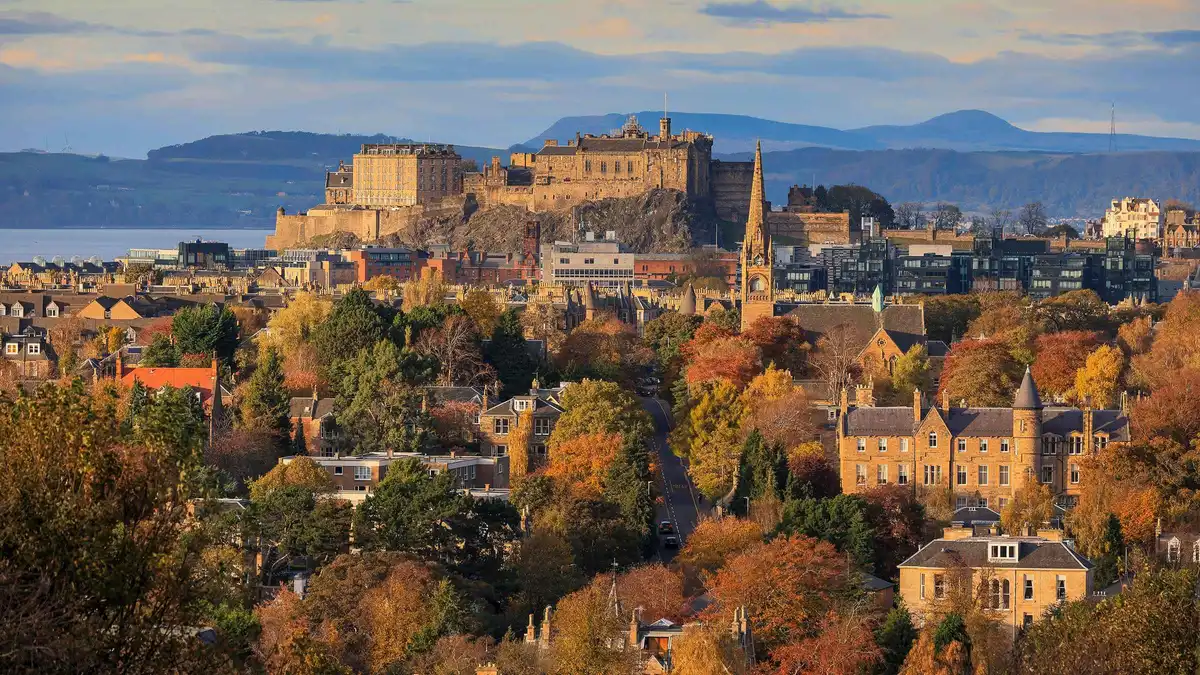
Three hours and nineteen stops, from Usher Hall through the Grassmarket and Royal Mile to the Scott Monument, led by historians. You pass the castle from outside; no entry is included.
Check Availability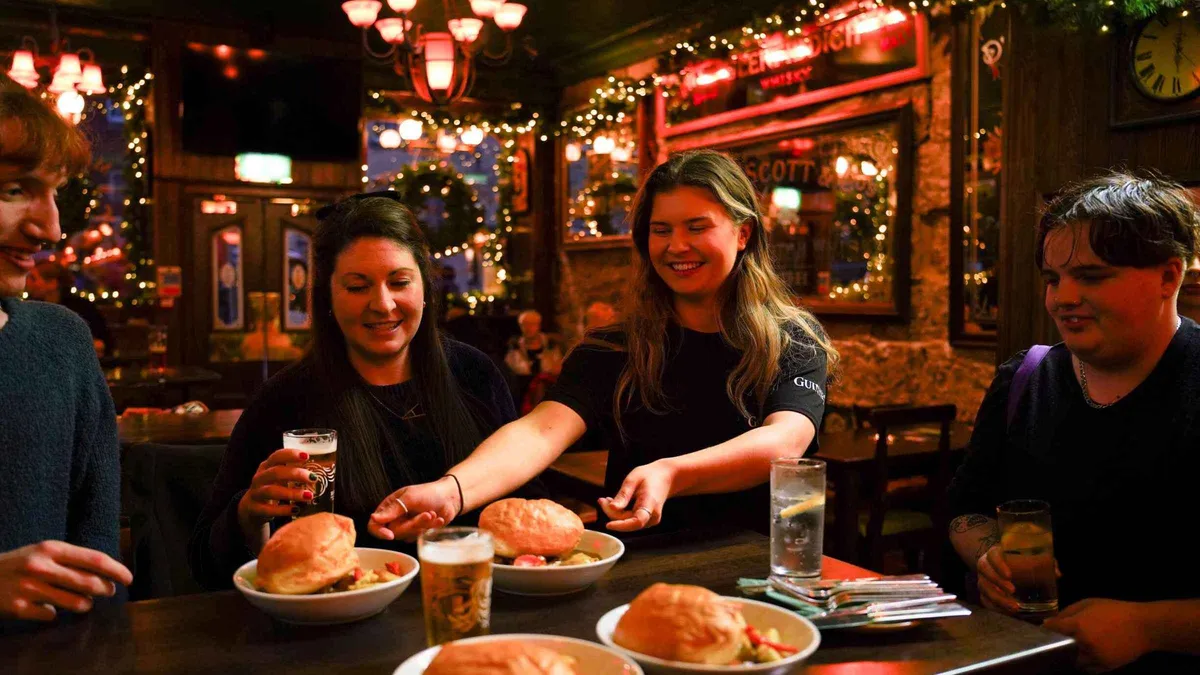 from £94
Eating Edinburgh: New & Old Town Food and Drink Walking Tour
Four tasting stops across the New Town and Old Town in three hours, finishing with dessert on Bank Street. Groups cap at 12, dietary requests go by email, and severe allergies cannot be accommodated.
Check Availability from £95.50
Edinburgh: Food Tour with Scotch, Haggis, Secret Dish & More
Whisky is the difference here: a Lowland single malt alongside haggis, cranachan and a dish the operator will not name in advance. Ten people maximum, three hours, all inside the Old Town.
Check Availability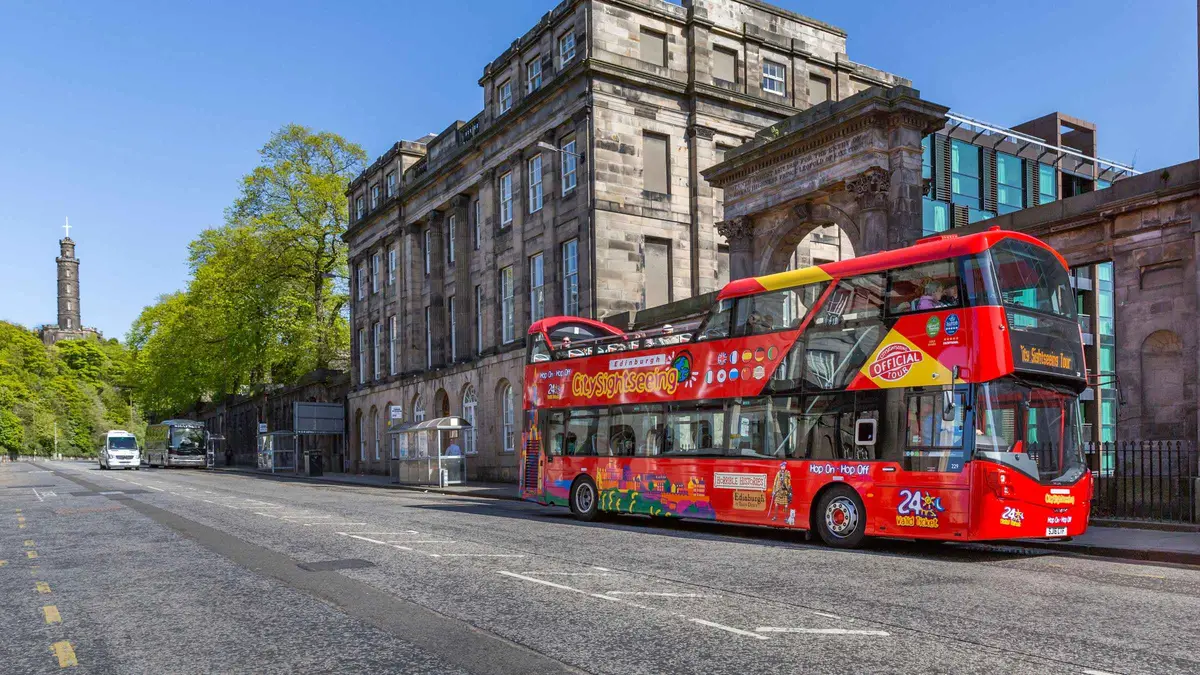 from £20
Edinburgh: City Sightseeing Hop-On Hop-Off Bus Tour
A single 24-hour ticket on one 70-minute loop of 15 stops, with a Horrible Histories children's channel. Up to three kids travel free per paying adult, which the multi-route passes do not offer.
Check Availability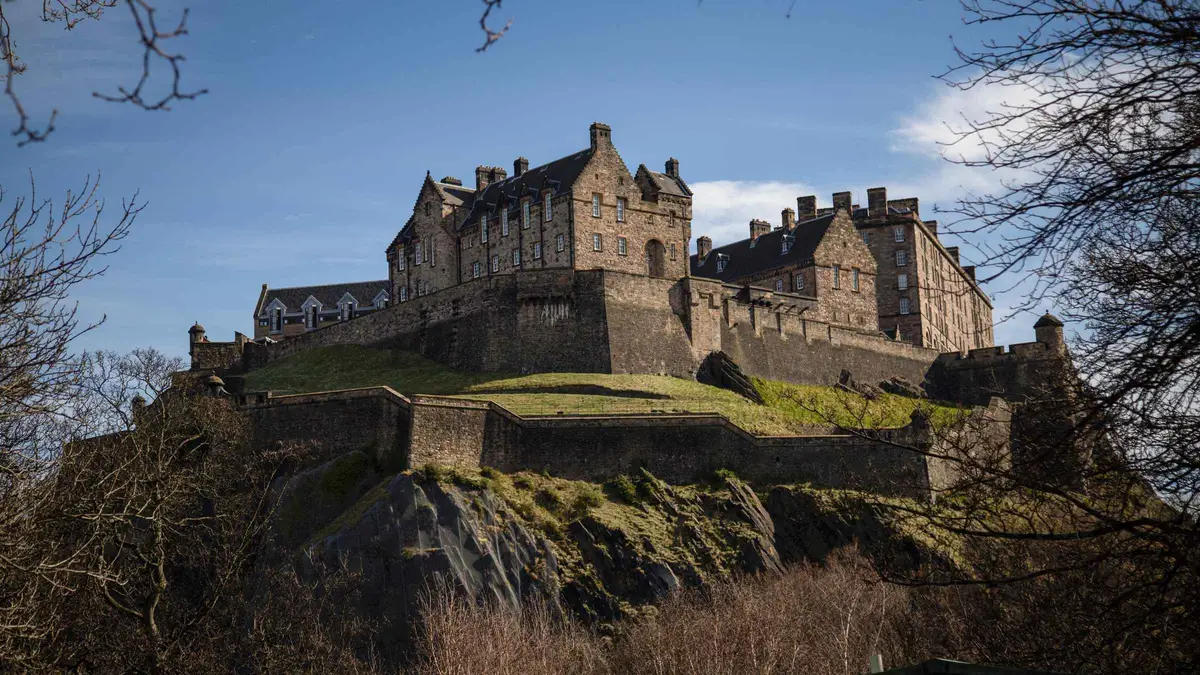 from £51
Edinburgh Castle & Royal Mile Walking Tour - Ticket Included
The only castle option here that first walks the Royal Mile, with stops at St Giles', Victoria Street and the Grassmarket before 45 minutes inside the castle. Runs 135 minutes.
Check Availability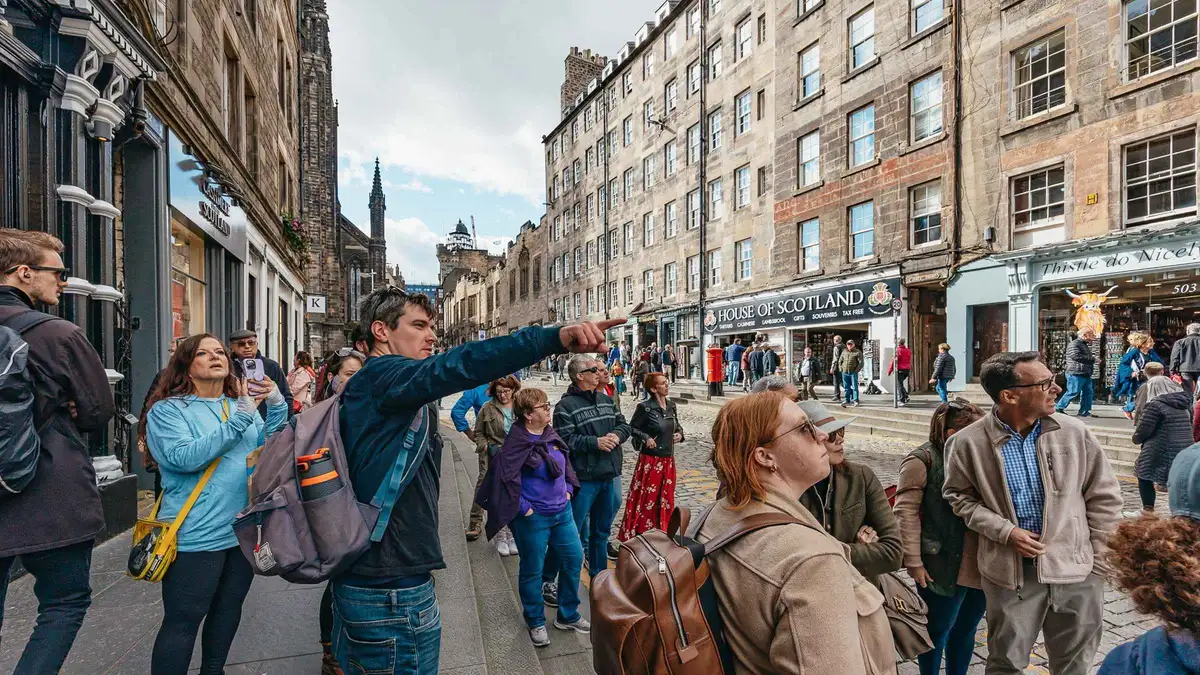 from £18
Edinburgh: Old Town History and Tales Walking Tour
Two hours through the UNESCO Old Town covering Mercat Cross, St Giles' and the Grassmarket, plus the Harry Potter locations. Ends in the centre near bars and transport; English only.
Check AvailabilityPrices, ratings and details are the platform's own. Pound figures are the listed prices. The platform bills in your account's currency.
What the New Town is: Craig's 1767 plan and the seven towns that followed
It is the largest planned Georgian development of its kind in Britain, and it was built because the Old Town had run out of room and was losing its wealthy residents to London.
By the middle of the eighteenth century overcrowding inside the walls of the Old Town had reached breaking point. Lord Provost George Drummond got the boundary of the royal burgh extended north over the fields beyond the Nor Loch, the polluted lake that filled the valley, and a scheme to drain it was put in motion — a job not fully finished until 1817. The crossings followed: North Bridge in 1772, and the Earthen Mound, which began as a tip for spoil dug out of the New Town foundations and reached its present size in the 1830s.
A design competition was held in January 1766 and won by James Craig, then 26 years old. His answer was a simple axial grid following the contours: one principal street along the ridge of the new ground linking two garden squares, a main road downhill to the north and another to the south, two minor streets between them, mews lanes for the stables and three cross streets to complete the figure. That is the plan you are walking, and once you see it the grid stops being a maze of identical terraces.
Why the streets are called what they are
The names were a political statement about the Union, and one of them was vetoed by a king. George Street, the intended principal thoroughfare, was named for George III; Queen Street to the north for his wife; and the southern street was to be St Giles Street, after the city's patron saint. The king refused it — St Giles was the patron saint of lepers and the name of a London slum — so it became Princes Street, after his eldest son. St George's Square became Charlotte Square, after the queen, to avoid confusion with the existing George Square. Between the main streets went Thistle Street for Scotland's emblem and Rose Street for England's, and the three cross streets were named Castle, for the view; Frederick, for the king's second son; and Hanover, for the dynasty.
The first building went up in 1767, and it was not a terrace. The exposed new site was unpopular enough that a £20 premium was offered to the first builder on it; John Young took the money and built Thistle Court, a small courtyard at the east end of Thistle Street, which is still the oldest surviving building in the New Town.
Seven new towns, 443 hectares and one number to ignore
UNESCO inscribed the Old and New Towns of Edinburgh together in 1995 as site 728, under criteria (ii) and (iv), and describes the northern half as a collection of seven new towns built between 1767 and 1890. The citation credits the successive planned extensions and the quality of their architecture with setting standards for Scotland and beyond and influencing urban planning across Europe in the eighteenth and nineteenth centuries.
The property area is 443 hectares — that is the figure in the listing's own data block, and it covers both towns together. The same page's descriptive text says the New Town covers a very large area of 3,288 ha, which is a description of the sprawl of Georgian building, not the boundary of the inscribed property. When a page quotes 3,288 ha as the size of the World Heritage Site, it has mistaken the prose for the data. Around 75% of buildings within the property are category A, B or C listed, and the Council's Skyline Policy protects the views between the two towns.
Edinburgh New Town architecture: how to read the grid as you walk it
Three streets, two squares, and a set of arguments about who got to build what. Knowing four buildings turns a walk down George Street into a legible sequence.
Craig meant George Street to be closed at each end by a church on the outer edge of its square, on axis. He got one. At Charlotte Square the western church was built; at St Andrew Square the land behind the church site belonged to Sir Lawrence Dundas, who built himself a Palladian town mansion instead, designed by Sir William Chambers and finished in 1774. Dundas House was bought by the Royal Bank of Scotland in 1825 and is still its registered office, and the equestrian monument in front of it stands where the church should have been. St Andrew's Church had to be squeezed onto a site on George Street itself, and the missing eastern focus was patched in 1823 with William Burn's monument to Henry Dundas.
Charlotte Square is the payoff. Designed by Robert Adam and mainly complete by 1820, it is the only architecturally unified section of the whole New Town — one façade composition running round a square rather than a row of individual houses agreeing to look similar. Its north side holds Bute House, the official residence of the First Minister of Scotland.
The Second New Town and the estates that followed
The success of the first grid produced grander schemes after 1800. The Northern or Second New Town ran from Queen Street Gardens down towards the Water of Leith, mostly between 1800 and 1830, on William Sibbald's designs following Craig's orientation, with entire streets built as single constructions. Great King Street is its central avenue, terminated by Drummond Place to the east and Royal Circus to the west; Heriot Row and Abercromby Place are the one-sided streets on the southern edge, which is why their front rooms look over gardens.
West of Charlotte Square, the Earl of Moray had plans drawn up in 1822 by James Gillespie Graham for the Drumsheugh estate. The bulk of the Moray Estate was finished by 1835 and it remains one of the most exclusive sets of addresses in the city; walk Moray Place and Ainslie Place and you are inside it. To the east, the commissioners appointed William Henry Playfair in February 1818 and his 1819 plan produced the third New Town under Calton Hill. Stockbridge, north-west along the river, was gradually absorbed from about 1813 — the Stockbridge page picks up where the grid stops.
What was lost, and the plan that nearly took Princes Street
The New Town was designed as a residential suburb with a few professional offices, and the commercial pressure on Princes Street began almost immediately: shops opened, and through the nineteenth century most of the townhouses on that street were replaced by larger commercial buildings. Queen Street, Thistle Street and large stretches of George, Hanover, Frederick and Castle Streets still stand as their original late eighteenth-century buildings, which is why one street feels Georgian and the one parallel to it does not.
The near-miss is worth knowing. A 1960s scheme proposed an elevated walkway along the whole length of Princes Street, which required demolishing the street. It was abandoned in 1982, but not before seven buildings had gone, including the old Boots building at 102 Princes Street with its statues of Wallace, Burns, Scott and the Bruce, demolished in 1965. The gaps in the street's rhythm are that plan's remains.
What to see in the New Town, and what it costs
Fewer big-ticket sights than the ridge, and a much higher proportion of them free. Hours and prices are in the table above.
Two free national galleries, both open daily
The Scottish National Gallery sits on the Mound, at the point where the New Town meets the valley, at EH2 2EL: free, daily 10:00 to 17:00, with charges only on some temporary exhibitions. It is the single best wet-afternoon room on this side of the city, and the Scottish Cafe takes last orders at 16:00, an hour before the building shuts.
The Scottish National Portrait Gallery is at 1 Queen Street, EH2 1JD, also free and also daily 10:00 to 17:00, with Cafe Portrait closing at 16:30. Both were confirmed in a browser session on 30 August 2026 because nationalgalleries.org answers automated requests with a Cloudflare 403 — a negative finding worth recording, since it means most price aggregators quoting these galleries have not read the page either.
The Scott Monument, and the two hours it is shut
The Scott Monument stands in East Princes Street Gardens and costs £9 (about $12) for an adult, with the concession, child and family rates in the table above. It runs 10:00 to 17:00 with guided tours every half hour from 10:30. Two things catch people. It cannot be booked in advance at all — the venue states plainly that tickets are sold at the kiosk on arrival — and it closes daily from 12:30 to 13:45 for lunch, which is exactly when most people walk past it. Payment is by card only and children under 5 are not admitted.
A combined ticket with the Nelson Monument on Calton Hill saves £2.50 over two separate tower tickets; the hill itself is free and open at any hour.
The gardens, and the hours nobody publishes
Princes Street Gardens are free and are the valley floor between the two towns, which makes them the best view of the Old Town you can get without climbing anything. The Council does publish gate times — inside an image-only PDF with no extractable text, unreadable to a screen reader or a search engine, which is why no page on the internet gives you a reliable closing hour. The West Gardens also close early for events, which the Council quantifies as under 2% of normal opening time; that 2% covers the Ross Bandstand programme and the winter build.
The whisky venue at 145 Princes Street sells its Signature Experience at £30 (about $41) for 90 minutes, and its own website gives two contradictory sets of shop hours on two different pages. Booking is required and it takes children over 8 on that experience only. The whisky page sets it beside the tastings and distillery tours elsewhere in the city.
Where the restaurants actually are, and why we name streets and not venues
The reason to be in the New Town in the evening is that this is where the eating and drinking is. What we will not do is hand you a list of restaurant names off the back of somebody's blog.
The grid holds the density. George Street, which was the financial centre, is now a run of bars and restaurants many of them in former banking halls, which is why the rooms are so large and so ornate. Thistle Street and Rose Street, the two minor streets Craig put between the main ones, are narrow, largely intact and where the smaller kitchens are. Broughton Street, on the Picardy Place extension finished around 1809, and the streets around Stockbridge at the northern edge carry the neighbourhood restaurants rather than the visitor ones. Multrees Walk and the St James Quarter at the eastern end hold the newest openings.
Our rule on this site is that naming a restaurant requires a citable published list — a Michelin entry, a Slow Food or Gambero Rosso listing, or the venue's own site for hard facts — and no such list for Edinburgh was read for this page. So the honest form is streets, not names. If you want names with a person attached to them, take the walk: the food and drink walk across both towns at £94 (about $128) and the Scotch, haggis and secret dish tour at £95.50 (about $130) are both three hours and both feed you properly, and the where to eat page collects what we can source.
Shopping in the New Town: four different places, one grid
Princes Street is the chain street, and has been since the nineteenth century, when the townhouses were replaced with commercial buildings; the Jenners department store that defined it for generations has closed. George Street is the higher-end run of bars, restaurants and shops in the old banking halls. Multrees Walk, off St Andrew Square, is the designer strip and holds Harvey Nichols. And the St James Quarter at the east end is the newest of them: the 1970 St James Centre closed on Sunday 16 October 2016, was demolished and reopened as the Quarter in 2021. Waverley Market, above the station, carries the everyday high-street names.
The practical note is that all four are within about ten minutes of each other on foot, so the New Town is one shopping trip and not four.
How long the New Town takes, and the route that makes sense of it
The grid rewards a route rather than a wander, because every street looks like the last one until you know what each was for.
Two hours walks the first New Town properly; half a day adds a gallery and the Second New Town down the hill. Start at one square and finish at the other, and the plan explains itself as you go. Walking minutes below are our estimates from the distances.
- St Andrew Square — start at Dundas House and the monument standing where Craig's church should have been. Five minutes from Waverley.
- George Street, west along the spine — about ten minutes end to end, past the Assembly Rooms and the former banking halls, with the castle appearing down each cross street on your left.
- Charlotte Square — Adam's unified square, Bute House on the north side. About 12 minutes from St Andrew Square at a walking pace.
- Queen Street and the Portrait Gallery — five minutes north and east; free, and it is the one interior in the grid that is about the people who built it.
- Down into the Second New Town — Heriot Row, Great King Street and Drummond Place, another 15 minutes, and the point at which the streets empty of visitors entirely.
Or have it explained
The three-hour guided walk of the Georgian city at £35 (about $48) is the version with the Enlightenment attached — the argument about why a city rebuilt itself on a grid at the moment it was producing Hume and Smith. If you want the two towns compared on foot in one go, the walk that includes castle entry starts on the ridge and the Old Town history walk covers the medieval half at £18 (about $24); the Old Town page sets out that side in the same detail as this one.
For a first orientation with no walking at all, the hop-on hop-off city bus at £20 (about $27) runs a 70-minute loop that crosses both towns.
Where this district fits in a first trip — how many nights the city needs, and which tickets to hold before you arrive — is set out on the page covering what to do in Edinburgh.
Staying in Edinburgh New Town: quieter nights, the same levy
The Georgian side is the standard answer for a second visit and for anyone who wants to sleep. Two pieces of Council policy apply here exactly as they do on the ridge.
The trade is simple. The New Town is flatter, quieter and about fifteen minutes on foot from anything in the Old Town, with the crossing over North Bridge or the Mound. It has the restaurants, the shops and Waverley and the tram on its doorstep. What it does not have is the sights: everything a first-time visitor books is on the other side of the valley, so a short trip spent here pays fifteen minutes each way, twice a day.
In August that arithmetic flips. The festivals are concentrated on the ridge and the Cowgate, and a room on Heriot Row or in the Second New Town is a different night's sleep from a room on the High Street. The one thing choosing this side does not save you is the levy.
The 5% visitor levy and the short-term let rules
Edinburgh's visitor levy — the UK's first city-wide scheme — has applied to paid overnight stays since Friday 24 July 2026. It is 5% of the accommodation cost, charged at the same rate every day of the year and capped at five consecutive nights, and it has applied to advance bookings made since 1 October 2025 for stays on or after that date. It covers the entire City of Edinburgh Council area, so no address in the New Town, the Old Town, Leith or Stockbridge avoids it, and it applies to UK and Scottish residents and to people travelling for work.
The whole council area has also been a short-term let control area since 5 September 2022, and every host has needed a licence since 1 January 2025, with a fine of up to £2,500 (about $3,400) for operating without one. The fee ladder that reshaped the whole-flat market is set out on the Old Town page, and it applies identically here: it is why a Georgian flat is more likely to be offered as a room in someone's home than as an empty apartment.
Getting around from the New Town
This is the side of the valley the tram runs on, which makes it the easier base for arrivals and departures. Fares read from lothianbuses.com and edinburghtrams.com on 30 August 2026.
Waverley sits in the valley below Princes Street and the tram line runs along the New Town side, so a bag arriving from the airport reaches a New Town hotel without a climb. The fares below, and the one comparison that saves real money:
| Ticket | Adult | Approx. USD | What it is for |
|---|---|---|---|
| Tram city single | £2.40 | $3.26 | Any stop except the airport; revised 22 February 2026 |
| Tram city day return | £4.60 | $6.26 | Out and back on the line in a day |
| City DAY, trams and buses | £6.00 | $8.16 | Both networks in the city zone |
| Tram airport single | £7.90 | $10.74 | The dearest of the three airport options |
| Airlink 100 bus, airport single | £6.00 | $8.16 | 24/7, up to every 10 minutes from 04:12 to 01:00 |
| Lothian service 17 or 18 to the airport | £2.40 | $3.26 | The ordinary city fare — the cheapest scheduled link, since April 2025 |
That climb is the thing that catches people staying on the ridge. Trams were running the full route from every 7 minutes on the operator's own service banner, read on 30 August 2026.
Two things the fare pages do not say loudly enough
First, capping only happens through Tap Tap Cap: paying on board with plain contactless buys a single and caps nothing, while the Tap Tap Cap daily cap is £5.70 (about $7.75) and the weekly £26.50 (about $36). Second, trams to the airport run from 05:20 in that direction and the last is 23:56, while the first tram from the airport is 06:30 and the last 22:52 — a late flight lands after the tram has stopped and the Airlink bus has not.
The airport transfer page sets the three options against each other with times, and getting around carries the live tram status link.
Edinburgh New Town map: the grid, the squares and what stands in them
Purple pins are free to enter or free to walk to; gold pins are ticketed or keep their own hours. Positions come from Wikidata and the venues' own published addresses, read on 30 August 2026.
Next stop from the New Town
Walk minutes are our estimates from the GPS distances, measured from George Street.
The Old Town
The medieval half of the same World Heritage Site: the ridge, the closes, the castle and the free national museum. The Old Town page has every price, the closes worth turning into and what August does to the street.
15 min over North Bridge or the MoundStockbridge
Where the Second New Town runs out and the village it absorbed from about 1813 begins. The Sunday market runs 10:00–16:00 all year and is free: Stockbridge.
20 min downhill to the north-westCalton Hill
The eastern end of Playfair's third New Town, and the view that puts both towns in one frame. Free and open at any hour; the Nelson Monument charges £7.50 for the tower.
12 min east, then stepsStaying in the New Town: which part of the grid
We did not read a hotel rate band for this page, so none is printed here: the only nightly figures we could have sourced on 30 August 2026 were live search results for a single date, which is a snapshot and not a price. What each part of the grid is like is below, and the links open a hotel search for that address.
George Street and the first New Town
- Suits
- Restaurants and bars downstairs; a flat five minutes to Waverley and the tram
The centre of the grid, between the two squares, and the busiest of these three addresses on a Friday and Saturday evening because the former banking halls are now bars. Ten to fifteen minutes on foot from the Old Town ridge. The 5% visitor levy applies across the whole City of Edinburgh Council area, capped at five consecutive nights, so no address here or anywhere else in the city avoids it.
See stays in George Street and the first New TownPrinces Street and St Andrew Square
- Suits
- Arriving by train or tram with luggage; shopping-first days
The southern and eastern edge, on top of Waverley, the tram line and the St James Quarter, and looking across the gardens at the castle. It is the noisiest traffic-wise and the easiest arrival in the city. The 5% visitor levy applies here exactly as it does across the whole council area.
See stays in Princes Street and St Andrew SquareThe Second New Town: Heriot Row and Great King Street
- Suits
- Quiet nights, longer stays, anyone who wants to sleep in August
Down the hill north of Queen Street Gardens, built mostly between 1800 and 1830 and still residential. About twenty minutes on foot to the ridge and almost empty of visitors after dark. The 5% visitor levy applies to every paid overnight stay in the council area, this side of the grid included.
See stays in The Second New Town: Heriot Row and Great King StreetNo nightly rate band was read for this page. The visitor levy is 5% of the accommodation cost on every paid overnight stay in the City of Edinburgh Council area, capped at five consecutive nights and charged at the same rate all year; it has applied to advance bookings made since 1 October 2025 for stays from 24 July 2026 (edinburgh.gov.uk/visitorlevy, read 30 August 2026). The city-wide comparison is on the where to stay page. We take a commission if you book through these links, at no extra cost to you.
Edinburgh New Town questions
Is the New Town in Edinburgh worth visiting?
Yes, and not as a duty visit: both national galleries in it are free and open daily 10:00 to 17:00, the shopping is all here, and so are most of the restaurants worth booking. It is also half of the World Heritage Site — the planned half that UNESCO says set standards for urban planning across Europe. Two hours walks the first grid; a three-hour guided walk at £35 (about $48) explains why it looks like that.
When was the New Town built?
The design competition was held in January 1766 and won by the 26-year-old James Craig; the first building, Thistle Court, went up in 1767. The first New Town was mainly complete by 1820 with Charlotte Square, and UNESCO describes the whole as a collection of seven new towns built between 1767 and 1890. The Second New Town went up mostly between 1800 and 1830.
Who designed the Georgian New Town?
James Craig laid out the original grid from 1767. Robert Adam designed Charlotte Square, the only architecturally unified section; Sir William Chambers designed Dundas House on St Andrew Square in 1774; William Sibbald laid out the Second New Town; James Gillespie Graham planned the Moray Estate from 1822; and William Henry Playfair, appointed in February 1818, produced the eastern extension under Calton Hill and both galleries on the Mound.
Can you walk from the New Town to the Old Town?
Yes, in about fifteen minutes, and it is the walk the World Heritage listing is built around. The two crossings UNESCO names are North Bridge and the Mound. It is uphill on the way over and downhill coming back, so plan the climb for the morning. The Old Town page covers what is waiting on the other side.
Where is the shopping in the New Town?
Four distinct places within ten minutes of each other: Princes Street for the chains, George Street for the higher-end shops and bars in former banking halls, Multrees Walk off St Andrew Square for the designer names including Harvey Nichols, and the St James Quarter, which opened in 2021 on the site of the demolished 1970 St James Centre. Waverley Market above the station carries the everyday names.
Is it better to stay in the New Town or the Old Town?
The New Town if you want quiet, restaurants and an easy arrival with luggage; the ridge if you want to walk out of the door into the sights. The gap between them is about fifteen minutes on foot. In August the New Town wins on sleep by a distance, because the festivals sit on the other side of the valley. The 5% visitor levy is identical either way — the staying section has the detail.
Which museums in the New Town are free?
The Scottish National Gallery on the Mound and the Scottish National Portrait Gallery at 1 Queen Street: both free, both daily 10:00 to 17:00, with charges only for some temporary exhibitions. We confirmed both in a browser session on 30 August 2026 because the National Galleries site answers automated requests with a 403. The city's other free national collection, the National Museum of Scotland, is across the valley on Chambers Street.
Which climb in the grid cannot be booked in advance?
The tower in East Princes Street Gardens. Its own page has the detail, but the short version is that the venue states pre-booking is not currently available: tickets are sold at the kiosk on arrival, card only. Adult entry is £9 (about $12), £7 concession or child, £26 for a family; it opens 10:00 to 17:00 with tours every 30 minutes from 10:30, closes daily from 12:30 to 13:45, and does not admit children under 5. A combined ticket with the Nelson Monument on Calton Hill is £14 (about $19).
The Edinburgh New Town on video
Three walks through the grid, all filmed at street level. Watch one and the terraces stop being interchangeable: you start seeing where the squares are and which street was meant to close the view.
Edinburgh, Scotland: Georgian New Town - Rick Steves' Europe
A short, clear account of why the grid was built and what the Enlightenment had to do with it.
Video: Rick Steves' EuropeEdinburgh's Beautiful New Town | A Tour Of The Most Elegant Georgian City In The World
A local guide walking the terraces and squares, with the architecture explained as he goes.
Video: David WheaterEdinburgh's New Town Walk: From St Andrews Square to Charlotte Square
Exactly the route in the section above, square to square along George Street, at walking pace.
Video: indexbotVideos load from YouTube only when you press play.
Prices, hours and terms are set by the venue or operator and confirmed at checkout.
We may earn a commission if you book through one of our links, at no extra cost to you. Full affiliate disclosure