 Visit Edinburgh Guide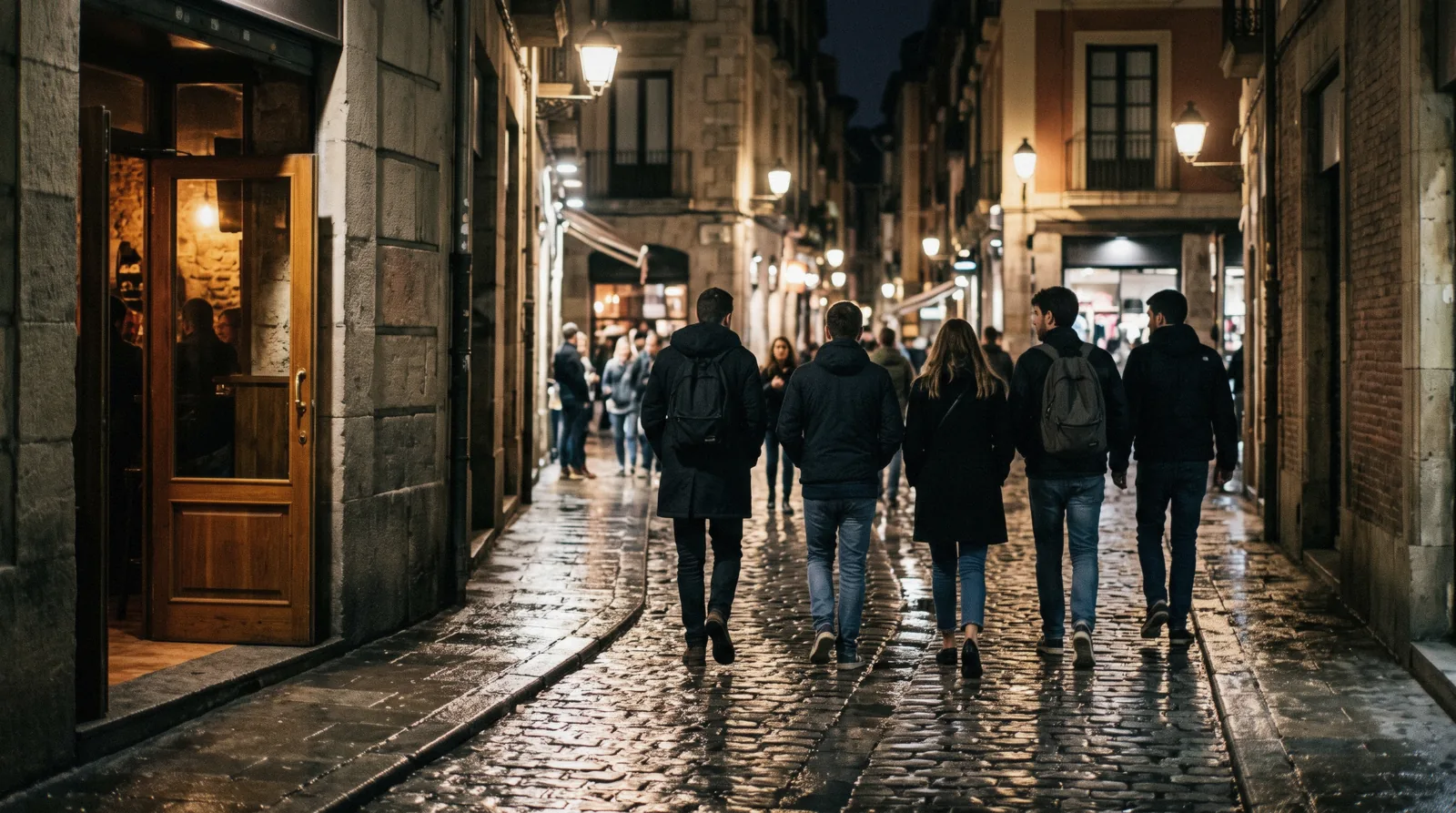
Is Edinburgh Safe? What the Official Sources Actually Say
The short answer to "is Edinburgh safe" is yes, and the longer answer is more useful: this is a low-drama city where the thing most likely to hurt you is the pavement. What follows is built only from what official sources publish — Police Scotland's ticket-fraud advice and its safe-nights-out guidance, the City of Edinburgh Council's own live warning about fake penalty-charge texts, Edinburgh Castle's warning about lookalike ticket sites, and Historic Environment Scotland on the ground underfoot in Holyrood Park — plus one negative finding that matters more than any of them: neither Police Scotland nor the council publishes an Edinburgh-specific tourist crime or pickpocketing figure, so nobody quoting one to you can source it, and neither will we. Everything below was read on 30 August 2026; the rest of the city starts with things to do in Edinburgh.
Quick answer What is real, what is not published, and the numbers to call
Edinburgh is a low-crime city by any measure that exists, and no official body publishes a tourist-specific crime warning for it. The genuine local fraud is ticket fraud: Police Scotland's own scams page singles out fake websites, touts and social-media sellers targeting concerts, festivals and sporting events, which in this city means the Fringe, the Tattoo and Hogmanay. The City of Edinburgh Council separately warns that fake text messages are circulating demanding payment of Low Emission Zone penalty charges. Beyond that, the real risks are physical: wet granite setts, unlit hill paths and a lot of stairs.
Key takeaways
- The one scam with an official page behind it is ticket fraud, and Police Scotland publishes a five-step list of what to do if it happens to you — the first step is not to use the tickets
- Edinburgh Castle runs a permanent banner on its own site warning about "lookalike sites selling fake tickets", which is why the first row of every ticket table on this site is the official shop with an untracked link
- Nothing published makes any Edinburgh neighbourhood a no-go area, but two places genuinely need care after dark for reasons of terrain rather than crime: Calton Hill and the unlit paths of Holyrood Park below Arthur's Seat — the guided sunset hike exists precisely because the descent is done in the dark
- 999 for an emergency, 101 for everything else, and 999 BSL if you sign; the reporting section has the online form and the support lines
Every Edinburgh risk we could source, and who publishes it
This table separates what an authority actually publishes from what circulates online. Everything in the middle column is quoted or closely paraphrased from the source named beside it, read on 30 August 2026; the last column is our reading of what it means for a two-day visit.
| Risk | What is published | Who publishes it | What it means for a visitor |
|---|---|---|---|
| Ticket fraud | "Ticket scams (also called 'ticket fraud') is when someone sells you fake tickets, or tickets that do not exist", targeting concerts, festivals and sporting events through fake websites and touts on social media | Police Scotland | The single scam with a named local shape. Buy festival and Tattoo tickets from the organiser only |
| Lookalike ticket websites | "Be aware of lookalike sites selling fake tickets. Please use caution when planning your visit." — a site-wide banner on every page | Edinburgh Castle (Historic Environment Scotland) | Check the domain before you pay. The official shop is edinburghcastle.scot and historicenvironment.scot, and nowhere else |
| Fake penalty-charge texts | "We are aware of fake text messages asking you to click on a link to pay an overdue Low Emission Zone (LEZ) penalty charge notice (PCN). We never send messages about unpaid PCNs. Do not share personal information. Delete the text." | The City of Edinburgh Council | Relevant if you drive a hire car. The council does not text about penalties, so any such message is a phishing attempt |
| Crime on a night out | Crime "often happens in busy spaces" because there are lots of people, alcohol, new faces and valuables in pockets; advice covers spiking, cash machines and getting home | Police Scotland, Safe nights out | National advice, not an Edinburgh warning. It applies to the Cowgate at 01:00 the way it applies to any city's bar street |
| Pickpocketing in Edinburgh | Nothing. No Edinburgh-specific pickpocketing, theft-from-person or tourist-crime figure is published | Neither Police Scotland nor the council | Anyone quoting you a rate for this city invented it or borrowed it from somewhere else. Ordinary care, no special fear |
| The ground itself | "Beware of sheer drops, uneven and slippery surfaces. Wear sturdy shoes with good grip" | Historic Environment Scotland, Holyrood Park | The most likely thing to actually go wrong. Setts, gradients and 158.8 rain days a year make footwear a safety decision |
| Historic interiors | 58 steps down and 38 up with dim lighting, where "some guests may experience disorientation or claustrophobia"; a listed six-storey building with 98 steps and a handrail on one side only | The Real Mary King's Close; Camera Obscura | Read the venue's own warning before booking. Both publish alternatives, listed on the accessibility page |
| Reseller ticket markups | A guided castle ticket at £35 to £46 against an official adult ticket of £23.50 — a legitimate premium for a guide, not a fraud | Our own price check across the operator listings | Not a scam, but the biggest avoidable cost on most trips. Compare before you buy |
Read on 30 August 2026. Sources: scotland.police.uk/advice, edinburgh.gov.uk/lowemissionzone, edinburghcastle.scot, historicenvironment.scot and the operator listings priced on our own tickets index. Dollar approximations elsewhere on this page use £1 = $1.36. Where a row says nobody publishes it, that is the finding, not a gap we intend to fill later.
The one scam Police Scotland names: ticket fraud
Of the fifteen fraud types Police Scotland publishes advice on, exactly one has an obvious Edinburgh shape. Its definition, its five-step recovery list and its referrals are quoted below from scotland.police.uk, read on 30 August 2026.
Police Scotland's definition is short: "Ticket scams (also called 'ticket fraud') is when someone sells you fake tickets, or tickets that do not exist." It states that fraudsters usually target major events — concerts, festivals and sporting events — and that the two routes in are a fake website and a tout on social media. A city that hosts the world's largest arts festival, a military tattoo on a castle esplanade and a street party at Hogmanay is the country's most concentrated version of that risk, and August is when it concentrates hardest.
What makes it work here is that the legitimate market is genuinely confusing. Fringe shows are sold through the Fringe box office and by hundreds of individual venues; the Tattoo sells on a no-return basis with an official resale platform as the only route out of a ticket you cannot use; and the winter festival's own site is JavaScript-rendered and was publishing no 2026-27 dates or prices at all when we read it. That mixture — many sellers, no returns, missing information — is the gap a fake resale site advertises into.
What Police Scotland says to do if it has already happened
This is the part worth carrying with you, because the instinct — try the ticket at the door and see — is the one thing the advice rules out. Police Scotland's published list, in its order:
- Do not use the tickets. Presenting a ticket you now believe is fraudulent is the step that turns a victim into a suspect at the door.
- Explain what has happened to venue staff, at the venue, in person.
- Give the tickets to venue staff — they are evidence, and the venue is where the evidence is useful.
- Collect your proof of sale: emails, messages, receipts, screenshots of the listing and the seller.
- Ask your bank to start a fraud claim. A card payment has recovery routes that a bank transfer to a stranger does not.
Where prevention advice actually lives
Police Scotland does not print its own prevention tips for this; it refers readers to Cyber and Fraud Centre Scotland, and lists Stop! Think Fraud, Take Five, the National Cyber Security Centre, Cyber Scotland and Get Safe Online alongside it. Reporting goes through its online form, by phone, or in person, and Victim Support Scotland is named for anyone affected by crime, on 0800 160 1985.
The practical version for a visitor is a single rule: buy from the organiser. For the Tattoo that means the box office on +44 (0)131 225 1188, which is also the only way to buy accessible seating. For the castle, the Palace or the museums it means the venue's own shop, which is always the first row of every ticket table on this site and always carries an untracked link. The Tattoo ticket page covers the resale platform and the no-return rule, and the festivals hub has the organisers.
Lookalike ticket sites: the castle's own warning, and how to check a domain
The strongest evidence that fake ticket sites are an Edinburgh problem is not a police statistic. It is that the city's biggest attraction runs a warning about them on every page of its own website.
The banner reads: "Be aware of lookalike sites selling fake tickets. Please use caution when planning your visit." That is Historic Environment Scotland's wording, not ours, and it was live on 30 August 2026. It exists because "Edinburgh Castle tickets" is one of the most valuable search phrases in Scottish tourism, and a site that copies the castle's imagery and sells at a markup — or sells nothing at all — earns from it.
The test takes ten seconds and turns on the domain rather than the design. The official shop lives at edinburghcastle.scot and historicenvironment.scot. Those two domains are the only places the plain £23.50 online adult ticket (about $32) exists. If a site is advertising "official Edinburgh Castle tickets" on a domain you have never heard of, at a price above the gate, it is a reseller at best.
Where the money actually goes
Compare the numbers rather than the promises. The castle's own adult ticket is £23.50 online or £26 at the gate (about $32 or $35). Guided tours on the booking platforms run £35 to £46 (about $48 to $63) and include a licensed guide who cannot take you inside the roofed buildings, because Historic Environment Scotland does not permit outside guides in them. That premium is real and legitimate, and it buys the guide and the flexibility — most cancel free up to 24 hours before, which the castle's own dated ticket does not.
What you should never pay is a markup for the plain entry ticket with nothing attached to it. The castle tickets page sets the official shop against every reseller option in one table, with the official row first and untracked, which is the format every ticket table on this site follows. The same applies at the Palace of Holyroodhouse, where the ticket is a Royal Collection Trust product sold on its own site.
The council's own scam warning: fake penalty-charge texts
The City of Edinburgh Council publishes no tourist safety page at all. It does publish one live fraud warning, and it sits on the page about the Low Emission Zone — which makes it exactly the scam a visitor in a hire car is most likely to meet.
The council's wording, read on edinburgh.gov.uk/lowemissionzone on 30 August 2026: "We are aware of fake text messages asking you to click on a link to pay an overdue Low Emission Zone (LEZ) penalty charge notice (PCN). We never send messages about unpaid PCNs. Do not share personal information. Delete the text."
The context makes it plausible enough to catch people. Edinburgh's Low Emission Zone has been enforced since 1 June 2024, it operates 24 hours a day, 365 days a year, it covers vehicles registered outside the UK as well as inside it, and it is enforced by automatic number plate recognition cameras at signposted entry and exit points. A driver who has been through the city centre in a hire car genuinely does not know whether a camera has read their plate, which is precisely the uncertainty a phishing text is written to exploit. The council's position is unambiguous: it never texts about unpaid penalty charges.
The charge that is real, and is not a scam
One thing on your bill will look like an unexpected fee and is entirely genuine: Edinburgh's visitor levy. From 24 July 2026 a 5% charge applies to the cost of all paid overnight accommodation in the city, capped at the first five consecutive nights and calculated before VAT. It applies to hotels, apartments, aparthotels, B&Bs, guest houses, hostels, holiday lets and caravan sites, to Scottish and UK residents as well as international visitors, and to bookings made from 1 October 2025 onwards for stays on or after that date. The accommodation provider collects it and passes it to the council.
So a 5% line appearing on a hotel bill is the law working, not a hotel inventing a charge. It is worked out with figures on the Edinburgh costs page, which is also where the arithmetic on what a day in this city actually costs lives.
The number that does not exist
The most-repeated claim about safety in any tourist city is a pickpocketing statistic. For Edinburgh there is not one, and we think saying so is more useful than any figure we could have borrowed.
We went looking on 30 August 2026 for an Edinburgh-specific tourist safety or scam page from either Police Scotland or the City of Edinburgh Council, and there is none. Police Scotland publishes national advice organised by topic — safe nights out, scams and frauds, bike theft, car theft, hate crime, major events, internet safety, victim support — and fifteen named fraud types from credit card fraud to voice cloning. None of them carries an Edinburgh page, an Edinburgh figure or an Edinburgh warning. The council publishes the LEZ text warning above and nothing else aimed at visitors.
That means every "Edinburgh pickpocketing rate" and "safety score" you will read on the way here comes from somewhere else: crowd-sourced apps where users rate how safe they felt, security-company blogs assembling national statistics, or forum threads. Those can be interesting and they are not evidence. A number with no publisher behind it is a decoration, and putting one on this page would make it look better researched while making it less true.
What we will say instead
Three things are defensible without a statistic. First, no authority publishes any warning about any Edinburgh neighbourhood, and none of the areas a visitor is likely to stay in or walk through — the Old Town, the New Town, Stockbridge, Leith, the Grassmarket, Dean Village — appears in official advice as somewhere to avoid. Where a district's reputation is worth discussing at all, we discuss it on that district's own page: Leith, for instance, has changed beyond recognition and its guide says so with the reasons.
Second, the risks that are documented here are physical, not criminal, and they are documented by the bodies that own the ground: Historic Environment Scotland on Holyrood Park's drops and slippery surfaces, the venues themselves on their stairs and their lighting. Third, ordinary urban care — a bag closed in a crowd, a phone not left on a pub table, a route home decided before you set out — is the whole of the sensible advice, and it is the same advice Police Scotland gives for a night out anywhere in Scotland.
Edinburgh at night: the hills are the problem, not the streets
Two-thirds of the questions people ask about safety here are about walking after dark. The honest answer separates the lit city, which is unremarkable, from two specific pieces of unlit ground that are genuinely hazardous — and from a winter that starts the night in the middle of the afternoon.
The central streets at night are what you would expect of a wealthy northern European capital: busy until closing time along the Cowgate, the Grassmarket and Rose Street, quiet by one in the morning, and lit throughout. Police Scotland's safe-nights-out advice is the applicable guidance and it is entirely generic — plan how you will get home, keep your phone charged, stay with people you know, look after bags and valuables, stay alert at cash machines and hide your PIN, keep enough money to get home, use a trusted taxi company, and get medical help and report it if you think you have been spiked. Nothing in it is Edinburgh-specific because nothing about Edinburgh's night makes it need to be.
What is specific to this city is the topography. The Old Town is built on a ridge and the streets that fall off it are steep, stepped and laid in setts, and setts in the wet at night are the single most reliable way to hurt yourself here. Going downhill is when it happens. If you have been out and the choice is a longer level route or a short flight of wet steps, take the long way — the Old Town guide maps which is which.
The two hills after dark
Calton Hill and Holyrood Park are both open all night, both free and both genuinely worth seeing at sunset — and both are unlit, with uneven surfaces and unfenced edges. Holyrood Park is open 24 hours a year-round, and Historic Environment Scotland's own note for it is "beware of sheer drops, uneven and slippery surfaces", with the instruction to wear sturdy shoes with good grip. Neither of those is a warning about people.
The practical advice on both is the same and it is on their own pages. On Calton Hill the paths are unlit and the steps are uneven; stay on the lit side, come down when the last group does and carry a torch rather than a phone. On Arthur's Seat the summit is 251 metres up, the paths are unlit and the crag edges unfenced, and a phone torch is useless when your other hand is on rock. If sunset from the summit is the thing you came for, the guided sunset hike at £45 (about $61) exists exactly because the descent is done in the dark with head torches, and the Arthur's Seat and Calton Hill walk at £26 (about $35) covers both in daylight.
Winter darkness, and getting home
Edinburgh sits at 55.95° north, which means the December afternoon ends early: a walk you planned as a daylight activity is a night walk from mid-afternoon, and the hills above are winter hazards from about half past three. This is not a safety warning so much as a scheduling one, and the best time to visit page has the month-by-month picture, including the 158.8 days a year with a millimetre of rain or more.
Getting home is the easy part. Lothian's NightBus runs from midnight to 04:30 across the city, a City LATE ticket covering evening travel from 18:00 costs £5.50 (about $7.48), and the licensed black cabs are metered to a council-set tariff — one that, as the getting around page records, the operators publish nowhere on a web page. Taxi ranks sit at Waverley station, the west end of Princes Street and the top of Leith Walk.
The ground underfoot is the real hazard, and it is well documented
If a visitor to Edinburgh gets hurt, the overwhelming likelihood is a fall. This is the one part of the safety picture where official bodies do publish specific warnings — and where the operators of the tours themselves print the clearest ones.
Historic Environment Scotland's note for Holyrood Park asks visitors to "beware of sheer drops, uneven and slippery surfaces" and to wear sturdy shoes with good grip. The Real Mary King's Close strongly recommends sturdy footwear for its uneven surfaces and steep inclines and warns that many areas are dimly lit and that "some guests may experience disorientation or claustrophobia." Camera Obscura publishes 98 steps across five floors with a handrail on one side only and two-way traffic on the stairs. The Edinburgh Dungeon warns of uneven floor surfaces in near-darkness. These are venues describing their own buildings, and they are the most reliable safety information anyone publishes about this city.
The tour listings say the same thing in commercial language: "not suitable for people with mobility impairments", "narrow stairways and steep hills", and, on the Arthur's Seat climbs, warnings about heart problems, vertigo and respiratory issues with an instruction to check the topographic profile before booking.
Three decisions that remove most of the risk
Footwear is a safety decision here, not a comfort one. Granite setts with recessed joints, wet 158.8 days a year on the thirty-year average, plus stairs everywhere, means smooth soles are the wrong equipment. This is the one packing note worth acting on.
Plan the ridge downhill. Start at the castle end and finish at Holyrood and the Royal Mile's 220-foot drop works for you rather than against you. The same logic applies to the closes running north and south off it: descending stepped closes in the wet is where ankles go.
Read the venue's own warning before you book, not after. Every difficult interior in this city publishes what it is: the step counts, the lighting, the claustrophobia note. The accessibility page collects all of them in one table, with what each venue offers instead.
Tourist traps: where money leaks, and where it does not
None of what follows is a scam and none of it is illegal. It is the set of published rules and prices that quietly costs visitors money in Edinburgh, gathered in one table because five of them together are worth more than any of them alone. Every figure was read from the operator's or the venue's own page on 30 August 2026; dollar figures are approximations at £1 = $1.36.
The pattern is consistent: the trap is almost never a person selling you something fake, it is a rule you did not know about published somewhere you did not look. The two biggest are the gap between an official ticket and a reseller's, and the difference between tapping a card reader yourself and handing your card to a bus driver.
The seven that cost the most
Every figure below was read from the operator's or the venue's own page on 30 August 2026.
| The trap | What it costs | The published rule behind it | What to do instead |
|---|---|---|---|
| A reseller's castle ticket bought as if it were the plain entry | £35 to £46 against £23.50 online, so £11.50 to £22.50 extra per adult | The castle sells its own timed ticket at £23.50 online and £26 at the gate; resellers add a guide and their own allocation | Buy the guided tour only if you want the guide. Otherwise use the official shop, first row of the tickets table |
| Paying the bus driver by card instead of tapping the reader | £2.40 a journey with no cap, against a £5.70 day cap — £3.90 over four journeys | Lothian's fares page describes paying on board as "contactless (without capping)"; only Tap Tap Cap caps | Tap the reader yourself, every boarding, same card. The fares page has the whole rule |
| Handing a note to a bus driver | The difference between your note and £2.40, kept | Cash is accepted "exact fare only" and nothing is published about giving change | Carry coins or tap. Trams sell from platform machines that take cards |
| Turning up at the Scott Monument at lunchtime | A wasted walk across the gardens | It closes daily 12:30–13:45, sells only at the kiosk on arrival, takes card only and admits nobody under five | Go before 12:30 or after 13:45 — the monument page has the tour times |
| Assuming a city pass saves money | Up to the full price of the pass | Every pass publishes only "from" prices, and one of them is run by a third party rather than the council | Add up the tickets you would actually buy first. The passes page does the arithmetic |
| Buying Tattoo tickets for children expecting a discount | Full adult price per child, at any age above three | "We welcome children and we do not impose an age limit. Tickets for children are charged at full price", and there are no concessions of any kind | Budget adult prices for the whole party. The Tattoo page has the seating and the resale rule |
| Treating the 5% on your hotel bill as an error | Nothing — but an argument at checkout | Edinburgh's visitor levy, 5% of the accommodation cost before VAT, capped at five nights, since 24 July 2026 | Expect it, and budget it. The costs page folds it into a daily figure |
The two "traps" that are not
St Giles' Cathedral asks for a suggested donation of £10 (about $14) and it is genuinely suggested: entry is free, nobody stops you, and the £5.50 phone audio tour is the only fixed price it publishes for an individual visitor. Paying nothing is not theft and paying £10 is not a rip-off; it is a working church running on donations, and the cathedral guide is clear about what your money does and does not buy. The other is the whisky shop on the Royal Mile with a tasting counter — a shop, and the tasting a sales technique rather than a con.
If you want the structured version, the whisky page compares what each distillery tour actually includes.
August: crowded, not dangerous
The month that changes this city changes it in every way except the crime rate, about which, again, nobody publishes anything. What August actually does is multiply people, prices and street-level selling.
In 2026 the Fringe ran 7 to 31 August, the International Festival 7 to 30 August and the Military Tattoo 7 to 29 August, all at once, in a city centre that is a mile long and a few hundred metres wide. No organiser had published 2027 dates when we checked on 30 August 2026, so treat any 2027 date you see elsewhere as a guess. What that overlap means on the ground is that the Royal Mile becomes a continuous performance and flyering corridor, the queues at every timed attraction lengthen, and accommodation prices behave like a different city's.
The safety consequence is crowd management rather than crime. Police Scotland's published advice topic for this situation is "major events", and the practical version is the ordinary one: keep bags closed and in front of you in a dense crowd, agree a meeting point with anyone you might lose, and give yourself twice the walking time you would allow in April. The festivals hub has what is on and where, and the best time to visit page has the case for coming in a different month entirely.
Flyering, touting and street performance
The people pressing leaflets at you on the Royal Mile in August are, overwhelmingly, performers in their own shows or flyerers paid by them. That is the Fringe's economy working as intended, and taking a flyer costs you nothing but the flyer. What to be careful about is the resale layer around it: Police Scotland names touts and social-media sellers as a route to fake tickets, and a Fringe show sold to you in the street by someone unconnected to it is exactly that shape.
The safe route is the one the organisers publish — the Fringe box office and the venues' own sites, and the Tattoo box office on +44 (0)131 225 1188, which sells on a no-return basis with its official resale platform as the only exit.
Emergency numbers, and how to report something
The numbers below are Police Scotland's own, read on its contact page on 30 August 2026. They are the same across Scotland — there is no separate Edinburgh line.
Call 999 if someone is in danger, if you need help now, or if a serious incident is happening or about to happen. Police Scotland publishes 999 BSL for British Sign Language users, and Relay UK users reach it on 18001101, the number its contact page publishes for both lines.
For anything that is not an emergency — a theft discovered later, a fraud, something that does not feel right — call 101, report it through Police Scotland's online form, or go into a station in person. Relay UK users reach the non-emergency line on 18001101. Police Scotland's own instruction on witnessing a crime is worth repeating exactly: "Do not go near the suspects or try to stop them. Keep yourself safe."
- Emergency: 999, or 999 BSL for British Sign Language users; Police Scotland publishes 18001101 for Relay UK.
- Non-emergency: 101, Police Scotland's online reporting form, or any police station in person; 18001101 through Relay UK.
- Victim Support Scotland: 0800 160 1985, for anyone affected by crime or facing court.
- Fraud advice: Cyber and Fraud Centre Scotland, which Police Scotland refers ticket-fraud victims to for prevention detail.
- Your bank, immediately, if money has left your account — the fraud claim is the fifth step on Police Scotland's own list.
Health, and what a visitor should carry
Emergency care in Scotland works through 999 and the accident and emergency department. NHS 24 runs the non-emergency health line, and its number is published on nhs24.scot rather than here — the site refused our request on 30 August 2026, and we do not print a health number we have not read. Travel insurance matters more than most visitors expect, not because Edinburgh is dangerous but because the injuries it produces — an ankle on wet setts, a fall on a stair in a historic building — end in an x-ray and a changed flight.
What to carry is short: a charged phone, the address of where you are staying written somewhere that is not the phone, and shoes with grip.
Guided options for the two things worth not doing alone
The after-dark hills and the underground closes are the two Edinburgh experiences where a guide is a safety purchase rather than a luxury: head torches on a descent, handrails and radios below ground, and someone who knows where the ground goes. Prices are the operator's own in pounds, read on 30 August 2026; dollar figures are approximations at £1 = $1.36 and are never what you are charged.
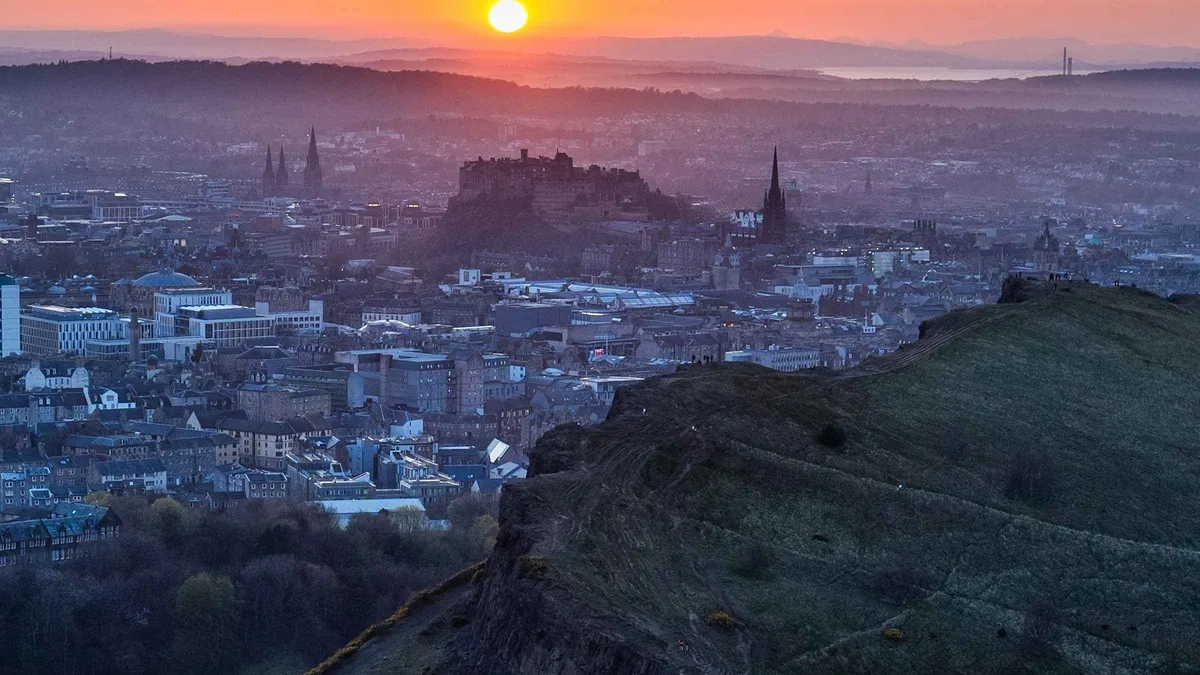 from £45
Arthur's Seat Sunset Hike
Timed so the summit lands at sunset, then a torch-lit descent on a quieter route — that timing is what the higher price buys. Led by a qualified Mountain Leader, 250 metres of climbing.
Check Availability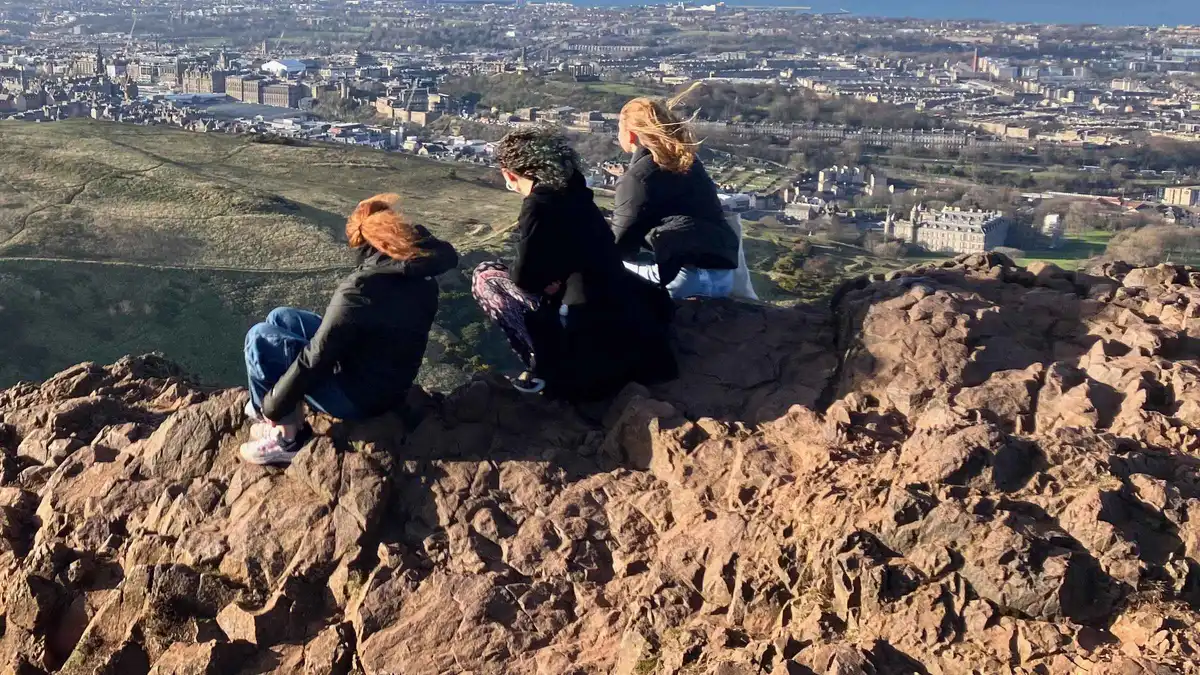 from £26
Edinburgh: Hike Arthur's Seat & Calton Hill
Adds Calton Hill and its monuments to the Arthur's Seat climb, four miles end to end across three hours at a gentle pace. Starts at Waterloo Place and finishes at the Holyrood car park.
Check Availability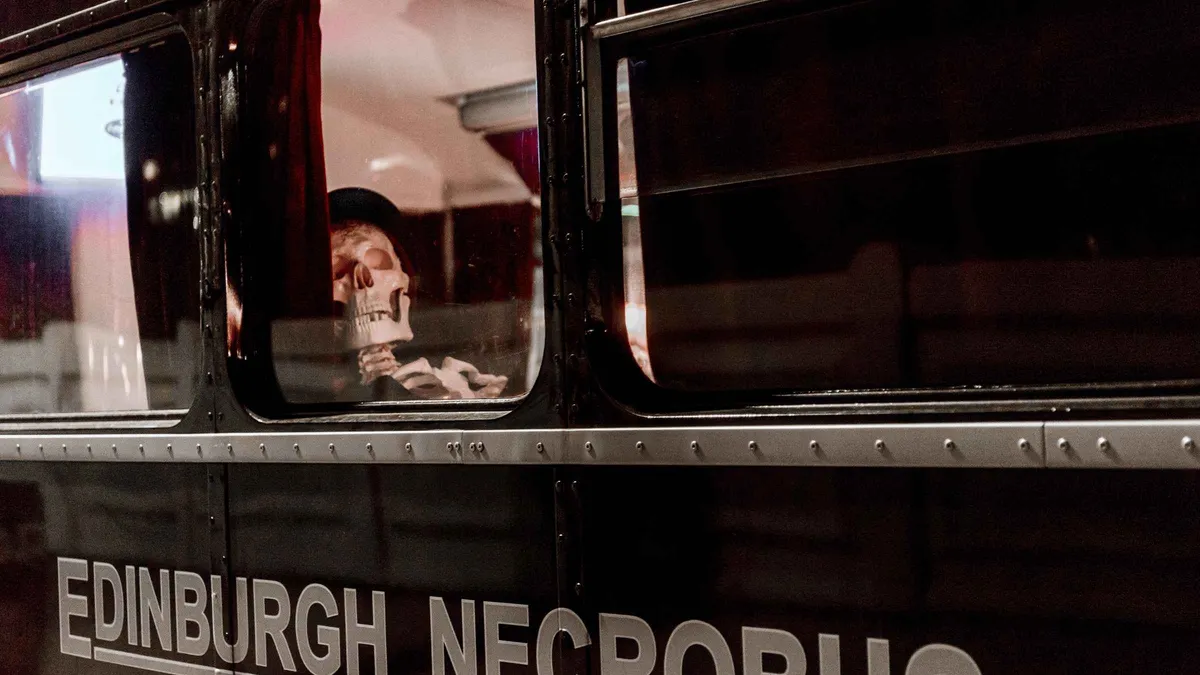 from £21
Edinburgh: Comedy Horror Ghost Bus Tour
The one ghost option that stays seated: 75 minutes on a black vintage double-decker with a conductor performing the Burke and Hare stories. Passes the castle, Grassmarket and Holyrood.
Check Availability from £19
Edinburgh: Evening Underground Ghost Tour
Combines Greyfriars Kirkyard, the Royal Mile wynds and the Edinburgh Vaults in 75 minutes. It admits children from age 7, lower than most vault tours here.
Check AvailabilityPrices, ratings and details are the platform's own. Pound figures are the listed prices. The platform bills in your account's currency.
What to read next
Three pages that carry the practical detail this one keeps pointing at.
Getting around Edinburgh
The tapping rule that costs £3.90 over four journeys, the exact-fare cash rule, the City LATE ticket and the NightBus hours. The getting around page is where the money on this page is actually won or lost.
Fares and the night busEdinburgh accessibility
Every warning about stairs, lighting and uneven floors on this page comes from a venue's own access statement. The accessibility page collects all thirteen of them in one table, with what each venue offers instead.
Step counts, venue by venueWhat Edinburgh costs
The 5% on your hotel bill, the daily arithmetic and the difference between an official price and a reseller's. The costs page turns the trap table above into a budget.
The visitor levy includedEdinburgh safety questions
Is Edinburgh safe for tourists?
Yes, on every measure anyone publishes. Neither Police Scotland nor the City of Edinburgh Council issues a tourist-specific safety warning for the city, names any area to avoid, or publishes a tourist crime figure — and we say so rather than borrowing a number. The advice that does exist is national and generic: bags closed, valuables out of sight, plan how you get home. The documented risks here are physical rather than criminal, and the ground underfoot is the one worth preparing for.
Is Edinburgh safe at night?
The lit central streets are unremarkable — busy until closing, quiet after one, and covered only by Police Scotland's general safe-nights-out advice. What genuinely needs care is unlit ground: Calton Hill and the paths of Holyrood Park below Arthur's Seat, both open all night, both without lighting and with unfenced edges. Carry a torch rather than a phone, and if sunset from the summit is the plan, the guided hike does the descent with head torches. The night section has the rest.
What are the most common scams in Edinburgh?
Two have official warnings behind them. Ticket fraud is the one Police Scotland names — fake websites and touts selling tickets to concerts, festivals and sporting events, which here means the Fringe, the Tattoo and Hogmanay. The other is fake text messages demanding payment of a Low Emission Zone penalty charge, which the council warns about in its own words and says it never sends. Everything else that costs visitors money here is a published rule rather than a crime, and it is in the trap table.
How do I avoid fake Edinburgh ticket sites?
Check the domain, not the design. Edinburgh Castle runs a banner on every page of its own site warning about "lookalike sites selling fake tickets", and the only places its plain £23.50 online adult ticket (about $32) exists are edinburghcastle.scot and historicenvironment.scot. A legitimate reseller costs more because it includes a guide or a route and says so; a fake one sells the same ticket at a markup. The lookalike section has the test, and the castle ticket table puts the official shop first with an untracked link.
Are there tourist traps in Edinburgh?
Yes, but they are rules rather than rip-offs, and the expensive ones are avoidable in one decision each: a reseller ticket bought as if it were plain entry, £11.50 to £22.50 above the gate; paying the bus driver by card, which never caps; a note handed over on a bus that gives no change; and a city pass bought before adding up the tickets it replaces. The full table sets each against the published rule behind it.
What should I do if I have been scammed in Edinburgh?
Police Scotland's published list, in order: do not use the tickets, explain what has happened to venue staff, give the tickets to venue staff, collect your proof of sale and any emails or documents, and ask your bank to start a fraud claim. Report it on 101, through its online form or in person. Victim Support Scotland is on 0800 160 1985. The ticket fraud section has the wording and the referrals.
How this page was checked
Every claim on this page is traceable to a source read on 30 August 2026: Police Scotland's advice hub and its ticket-scams, safe-nights-out and contact pages; the City of Edinburgh Council's Low Emission Zone and visitor levy pages; Edinburgh Castle's own site banner and ticket pages; Historic Environment Scotland's Holyrood Park guidance; the venues' own access and visit pages; and our own price checks across the operator listings on the same day.
We have deliberately not used the two easiest sources for a page like this. We have not quoted crowd-sourced safety scores, because a number with no publisher is decoration. And we have not manufactured a risk to make the page feel substantial — the section headed the number that does not exist is there because the absence of an Edinburgh pickpocketing figure is a finding, not an omission. If an authority publishes one later, this page will carry it with its date attached. Prices and rules move: the visitor levy started on 24 July 2026, the Low Emission Zone has been enforced since 1 June 2024, and both were current when we read them.
Edinburgh safety and traps on film
Three videos that answer the question the way a visitor asks it — one on how safe the city feels, one testing the places everyone calls traps, and one on what disappoints people here. None of them is a source for the facts above; they are for the feel of the place.
How SAFE is EDINBURGH? | Crime stats, theft, things to look out for
A resident walking through what the city actually feels like after dark, street by street.
Video: Kakibot's GuidebookI tested 5 TOURIST TRAPS in EDINBURGH - how bad are they really?
The trap question answered by going to them, which is the fairest version of the argument in the table above.
Video: Kakibot's GuidebookEdinburgh: The Best & WORST of Visiting Edinburgh, Scotland
The honest downsides — weather, crowds, hills — from a channel that always leads with them.
Video: Wolters WorldVideos load from YouTube only when you press play.
Prices, hours and terms are set by the venue or operator and confirmed at checkout.
We may earn a commission if you book through one of our links, at no extra cost to you. Full affiliate disclosure