 Visit Edinburgh Guide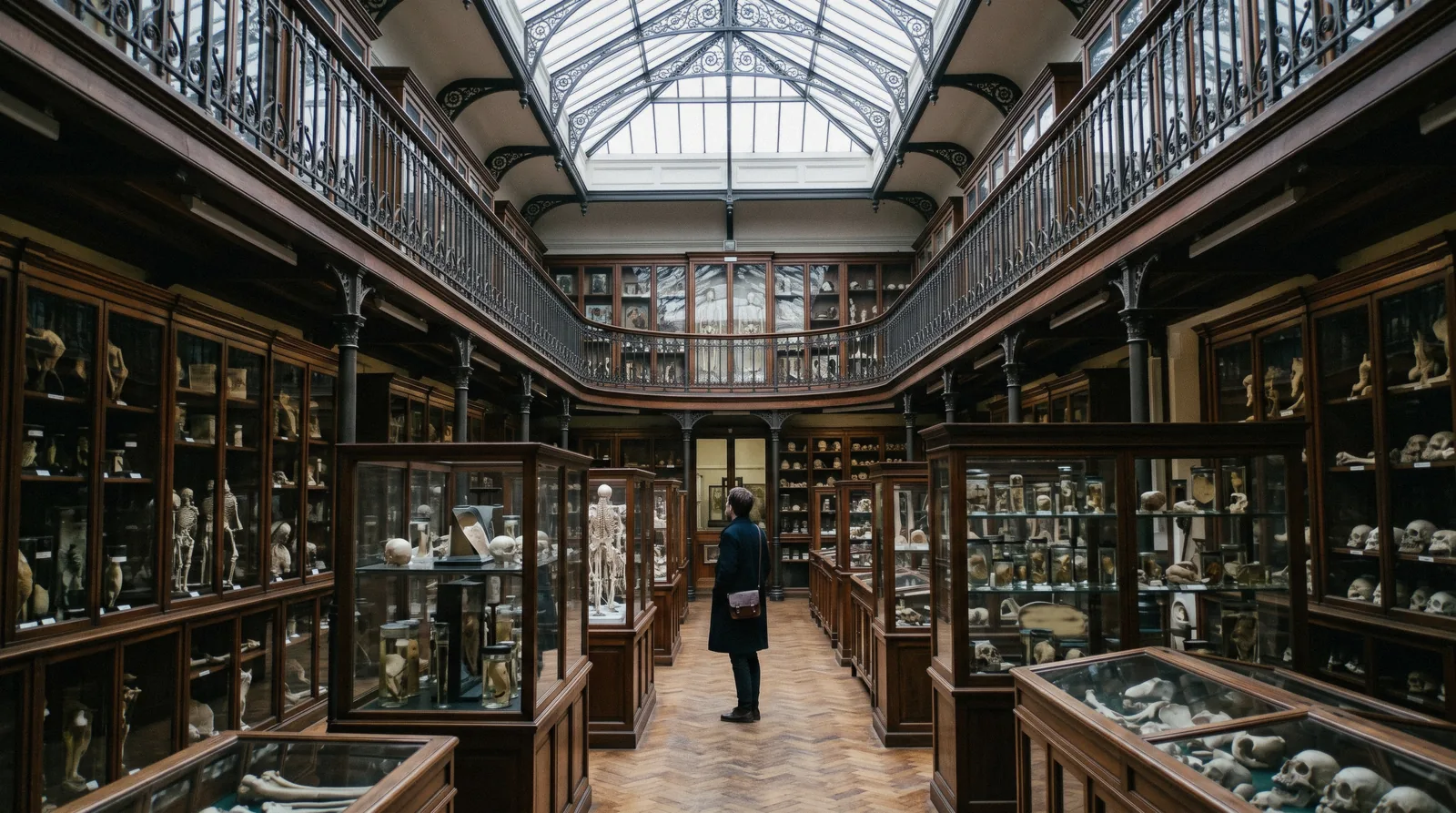
Surgeons' Hall Museums
Surgeons' Hall Museums is a working medical collection that happens to be open to the public: £10 for an adult, seven days a week, 10:00 to 17:00 with last entry at 16:30, in the Royal College of Surgeons' own building on Nicolson Street. Inside are one of the world's largest collections of human pathological anatomy, laid out on William Henry Playfair's original 1830s shelving, a history-of-surgery gallery running from a barber-surgeons' guild founded in 1505 to Lister and chloroform, a dental collection, and a robotics gallery where you are asked whether you would let a machine operate on you. It is also where Edinburgh's body-snatching story is actually kept: the pocketbook said to be made from William Burke's skin, and his death mask. The museum recommends allowing at least two hours, sets an age guidance of 10+, and states plainly on every page that its displays contain human remains. This page has the prices, the hours, what each gallery holds, and the one ticket that is cheaper than the door. It is one stop in our guide to Edinburgh attractions.
Quick answer £10, seven days, last entry 16:30, and no ticket sold online
Surgeons' Hall Museums is open seven days a week from 10:00 to 17:00 with last entry at 16:30, and an adult ticket is £10 (about $13.60). There is no online booking for a standard visit: you buy at the Museum Reception on Level 3 when you arrive. The museum recommends allowing at least two hours, sets an age guidance of 10 and over, and states on every relevant page that the displays contain human remains.
Key takeaways
- The cheapest way in is not the door. The museum's own Blood and Guts walking tour starts at £9.95 and includes free museum entry for the whole of that day — the arithmetic is the single most useful thing on this page.
- Two visits inside a year beat one: the annual ticket is £26 (about $35.36) against £10 for a single adult entry, and there is a £15 concession version — every rate is in the table.
- The Burke and Hare material here is the pocketbook said to be made from Burke's skin and his death mask, in the History of Surgery gallery. His skeleton is not here — where it actually is is a different building with a different opening arrangement.
- If you want the surrounding streets explained rather than the specimens, a two-hour Old Town history walk covers the grave-robbing ground for £16, and Greyfriars Kirkyard is the graveyard the bodies came from.
Key facts
Opening hours
| All year, seven days a week | 10:00–17:00 |
|---|---|
| Last entry, every day | —–16:30 |
| Christmas closure 2026–27 | Closed from 17:00 on 23 December–Reopens 10:00 on 5 January |
| Blood and Guts walking tour | 14:00 Saturdays and Sundays–Until 29 November 2026 |
Closed The museum closes from 17:00 on Wednesday 23 December 2026 and reopens at 10:00 on Tuesday 5 January 2027. No other closed days are stated
Admission
- Adult
- £10 (about $13.60)
- Reduced
- £6.50 (about $8.84) for students with valid ID, NHS staff with valid ID, over-60s and visitors with disabilities; child 5–15 £5.50 (about $7.48); under-5s free; carers and personal assistants supporting visitors with disabilities go free. Blue Light Cards are not accepted
- Free
- Under-5s, and carers or personal assistants accompanying a visitor with a disability. Everyone else pays at the desk
Planning it
- Time needed
- The museum's own recommendation: "we recommend allowing at least 2 hours to fully experience the collections"
- Address
- Nicolson Street, Edinburgh EH8 9DW — enter through the glass atrium; Museum Reception is on Level 3, by lift or stairs
Five ways through the door, and the order in the table is the order of value rather than price: the tour row costs less than the adult ticket and includes it. Museum prices come from museum.rcsed.ac.uk, read on 30 August 2026; the tour prices are from the museum's own Eventbrite page and from GetYourGuide the same day.
The rows are ordered by value rather than price, because the walking tour costs less than the adult ticket and includes museum entry that day. The question is whether you want the galleries alone or the streets they came from.
| Way in | Price | What it covers | Book ahead? | Book |
|---|---|---|---|---|
| Adult, at the deskFor a straight visit to the galleries, paid at reception on the day | £10 (about $13.60) | All four galleries and the temporary exhibition, on the day | No pre-booking offered; pay at Level 3 reception | Official site |
| Blood and Guts walking tourThe best value on this page: the walk and the museum for less than entry alone | From £9.95 (about $13.53) | A 75–90 minute guided walk of medical Old Town plus free museum entry that day | Booked on the museum's own Eventbrite; refunds up to 7 days before | Official site |
| Concession or childFor students and NHS staff with ID, over-60s, disabled visitors and children | £6.50 / £5.50 (about $8.84 / $7.48) | Students and NHS staff with ID, over-60s, disabled visitors; child 5–15. Under-5s free | Same desk, same day; carers go free | Official site |
| Family or annual ticketFor two adults with children, or anyone likely to come back within the year | Family from £17; annual adult £26 (about $23.12 / $35.36) | Two adults and two children at £25, or twelve months of visits for £26 | At the desk; the annual pays for itself on the second visit | Official site |
| Guided Old Town history walk, 2 hoursFor the body-snatching streets when you are not going inside | £16 (about $22) | The streets and kirkyards of the body-snatching era; museum entry is not included | Free cancellation up to 24 hours before | Check Availability |
The official rows link straight to the museum's own pages and to the museum's own Eventbrite listing, with nothing added to the URLs. The final row is an affiliate link to GetYourGuide: the price is the operator's, we take a commission if you book through it, and it costs you nothing extra. Prices read on 30 August 2026. Dollars at £1 = $1.36.
Walks that cover the same history, from the streets
Nobody resells a Surgeons' Hall ticket, and the museum sells its own tour directly, so what booking platforms offer here is the surrounding story: the Old Town closes where the anatomists worked, the kirkyards their suppliers robbed, and the vaults under South Bridge. None of these includes museum entry — the museum's own tour is the only ticket that does. Prices, ratings and review counts are the operators' own, read on 30 August 2026.
 from £16
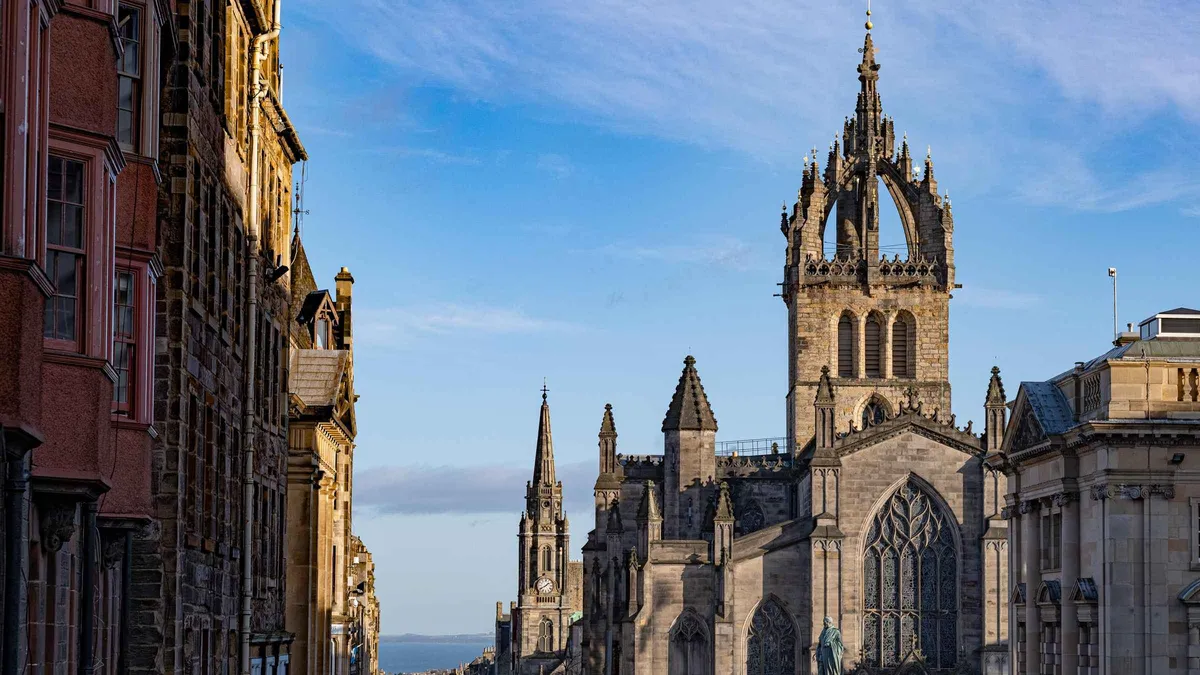
Edinburgh: Old Town History Walking Tour
The cheapest Old Town walk on the site, two hours past St Giles', Victoria Street and Greyfriars Kirkyard with the Greyfriars Bobby statue. Runs in four languages rather than English only.
Check Availability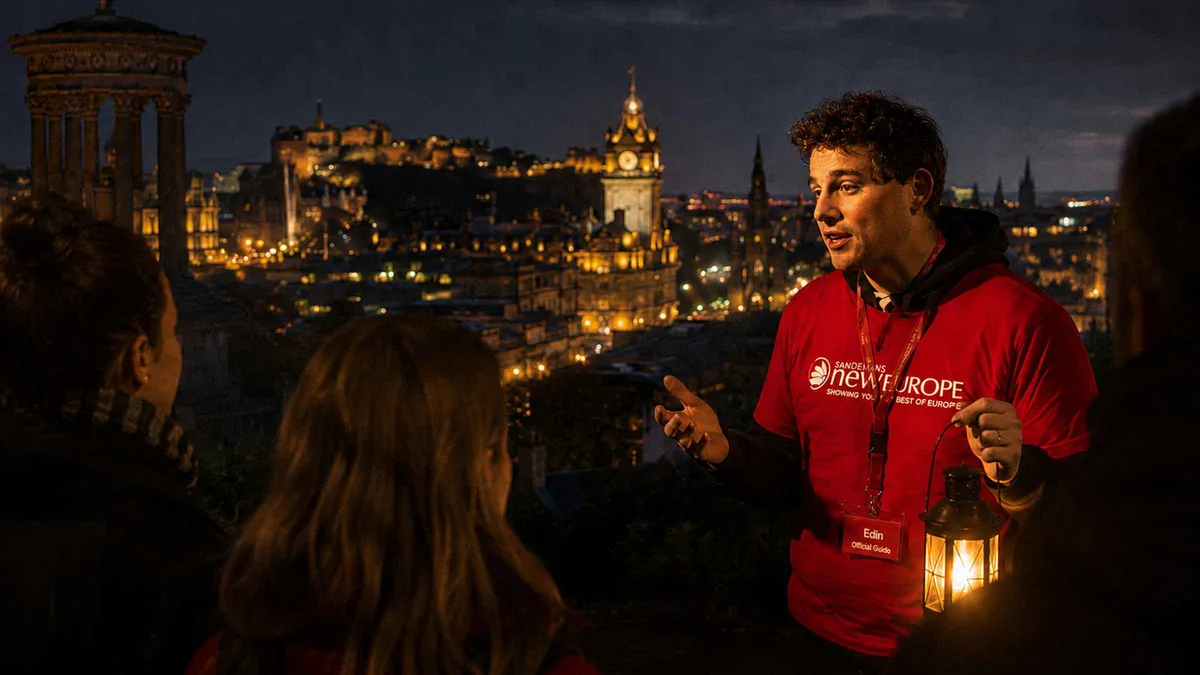 from £17.60
Edinburgh Darkside Ghost Tour of Mysteries Murder & Legends
A street-level dark-history walk that climbs Calton Hill and ends in Canongate Kirkyard, covering witch trials and the Anatomy Act. It talks about the vaults but does not go inside them.
Check Availability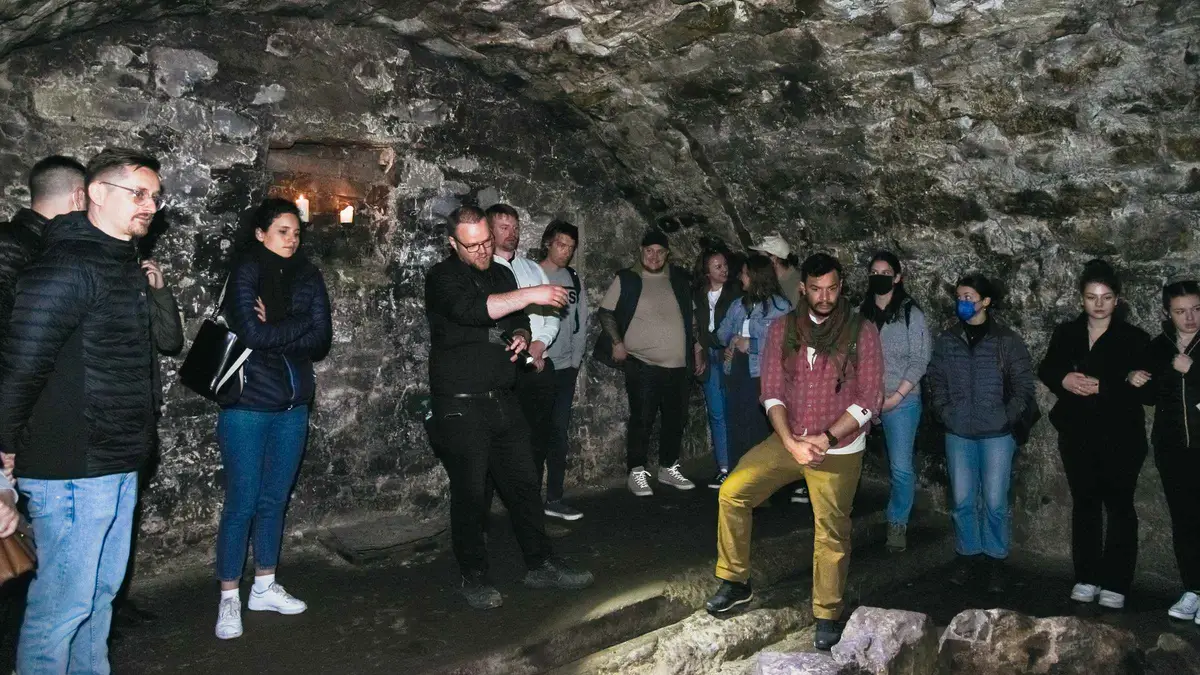 from £19.44
Edinburgh: Underground Vaults Tour
An hour in the South Bridge vaults with the Burke and Hare murders and the witch trials, and the Torture Exhibition as a paid-up option. The shortest of the vault tours here.
Check AvailabilityPrices, ratings and details are the platform's own. Pound figures are the listed prices. The platform bills in your account's currency.
Surgeons' Hall Museums tickets: every rate, and the one that is cheaper than the door
There is no online ticket for a standard visit, which changes how you plan the afternoon. Every figure below is from the museum's own tickets page, headed "Standard Admission 2026" and read on 30 August 2026, with dollars at £1 = $1.36.
The museum's sentence is unambiguous: "We currently don't offer pre-booking for standard Museum visits." You buy at the Museum Reception on Level 3 when you arrive, which has two consequences.
| Ticket | Price | Approx. USD | The condition |
|---|---|---|---|
| Adult | £10 | $13.60 | Bought at Level 3 reception on the day |
| Student, NHS staff, over 60, disabled visitor | £6.50 | $8.84 | Valid ID required; Blue Light Cards not accepted |
| Child 5–15 | £5.50 | $7.48 | Under-16s must be accompanied by an adult |
| Under 5 | Free | — | Age guidance for the museum is 10+ regardless |
| Family, 2 adults and 2 children | £25 | $34.00 | Also £21 for 2 adults + 1 child, £17 for 1 adult + 2 children |
| Annual ticket, adult | £26 | $35.36 | Concession annual £15; beats two single visits in twelve months |
There is no skip-the-line ticket to sell you and no dynamic pricing to game — but there is also no way to guarantee entry on a busy afternoon, and last entry is 16:30 whatever the queue is doing. Large groups are asked to contact the museum in advance rather than turn up.
One thing we went looking for and did not find: any published price change tied to the VAT-reduction reversal that pushes three other Edinburgh attractions up on 1 September 2026. The tickets page is headed "Standard Admission 2026" and prints no future rate, no effective-from date and no notice of an increase. So the figures above are what the museum published on 30 August 2026, and if that changes it will be after this reading rather than on a date the museum has announced.
The decision we would make
Book the Blood and Guts walking tour instead of buying a museum ticket. It starts at £9.95, it runs at 14:00 on Saturdays and Sundays until 29 November 2026, and the museum's own listing states it "include[s] free museum access from 10am-5pm on the day of your tour". That is a guided 75 to 90 minutes through the medical Old Town for less than the £10 adult admission, with the admission attached. The only reasons not to are the days it does not run and the age guidance of 10+ — the tour in full covers both.
If you are going twice, or if you live within reach of the city, the annual ticket at £26 is the other easy call: a second visit inside twelve months makes it cheaper than paying twice, and it is £15 for concessions. Carers and personal assistants supporting a visitor with a disability go free, which the museum states plainly rather than burying in a form.
What is inside: four galleries and one exhibition
The displays are the Wohl Pathology Gallery, the History of Surgery Gallery, the Dental Collection and Body Voyager, plus a temporary exhibition. Descriptions below follow the museum's own gallery pages, read on 30 August 2026.
Four permanent galleries share one ticket, and they are not variations on a theme: a pathology collection, a history of surgery, a dental collection and a gallery about robots operating on people. Take them in that order if you can, because the first is the one that needs a fresh head.
The Wohl Pathology Gallery, on Playfair's own shelving
The Wohl Pathology Gallery is the reason people call this one of the strangest museums in Britain, and it is also the most serious room in it. It occupies a purpose-built nineteenth-century museum space designed by William Henry Playfair — the architect responsible for much of the city's neoclassical skyline — and holds one of the world's largest collections of human pathological anatomy. The ground floor explains where medical collections came from, starting with the cabinets of curiosity of the 1500s, how remains were prepared and preserved, how consent in medicine changed, why body donation matters now, and what war did to surgery from Waterloo to the Second World War.
The upper floor keeps Playfair's original shelving and presents the specimens roughly as they were taught from in the 1800s, arranged by cardiothoracic, maxillofacial and vascular surgery. A 2015 redevelopment funded by the Maurice Wohl Charitable Foundation improved the access to it.
The history of surgery, the dental collection and the robots
The History of Surgery Gallery runs from 1505, when the Royal College of Surgeons of Edinburgh was founded as the guild of Barber Surgeons, through James Syme operating before anaesthesia, Joseph Lister working out antisepsis and James Young Simpson finding what chloroform did. Its centrepiece is a recreated Anatomy Theatre with an interactive dissection table, staged on the first public dissection held in Scotland in 1702. It is also where the social history sits: Arthur Conan Doyle studied at the College here, and his professor, the surgeon Joseph Bell, was the man he credited as the model for Sherlock Holmes — Bell's 1896 portrait is in the collection.
The Dental Collection is one of the most comprehensive in the UK, built around the bequest of John Menzies Campbell, a Glasgow dentist and dental historian, and full of instruments you will be glad are historical. Body Voyager is the modern counterweight: three zones — head, torso, limbs — on robotic and computerised surgery, with simulations, working surgical instruments and audiovisual displays built with Intuitive Surgical, Freehand Surgical, Stryker and B. Braun. The questions painted on its walls are the point of it: can technology make patients safer, how would you feel about a robot operating on you, could the surgeon of the future be a data programmer.
The temporary exhibition: 300 years of Edinburgh Medical School
Edinburgh City of Medicine: 300 Years of Edinburgh Medical School runs until Easter 2027 and is included in the ticket. It is made with the University of Edinburgh's Anatomical Museum to mark the medical school's founding in 1726, and much of the material on display comes from the University's collection and has rarely been shown publicly — a Shetland blood horn, Charles Darwin's class card from his abandoned medical studies here, and a cranial cast of William Burke.
The exhibition does not only celebrate. The museum's own description says it examines "the shared challenges of who was excluded, the ethics involved in medical teaching collections and the challenges these present today in recognising the past", which is an unusually direct sentence for a museum to write about its own holdings.
The collections here were awarded Recognised Collection of National Significance status in 2009, and there is a free digital guide on the Bloomberg Connects app with images, video, audio, 37 languages and a built-in screen reader. Download it before you arrive if your data is thin — there are no handsets to borrow.
Burke and Hare: what is held here, and where the skeleton actually is
The most-searched question about this museum has a two-part answer, and getting it wrong sends people to the wrong building. Both halves were checked on the institutions' own websites on 30 August 2026.
William Burke and William Hare killed at least sixteen people in Edinburgh in 1828 and sold the bodies to the anatomist Robert Knox for dissection. Hare turned king's evidence and walked. Burke was hanged on 28 January 1829 and — with a symmetry the court intended — his body was publicly dissected.
What Surgeons' Hall holds: the museum's own History of Surgery gallery page states that its displays "explore the historical case of Burke and Hare" and that the collections shown include "a pocketbook said to be made from Burke's skin and his death mask". That is the material here, it is in a gallery about the darker side of medicine and about dissection used as a punishment, and it is displayed with labels rather than sound effects.
What it does not hold: the skeleton. Burke's skeleton is at the University of Edinburgh's Anatomical Museum in the Old Medical School on Teviot Place, five minutes' walk away, and the University says so in its own words — the museum "has one of the largest and best preserved collections of anatomy in Scotland, as well as the skeleton of the serial killer William Burke". That museum is not a walk-in: it is "open to the public on select days only", free, with advance booking required, and at other times it is a study space for medical students with no visitor access. Its open-day dates are published on the University's own page and change through the year, so we are not printing a date here that would be wrong by the time you read it. Check before you build an afternoon around it.
So the honest summary: if you want the Burke and Hare objects that are reliably on public display any day of the week, they are at Surgeons' Hall for £10. If you specifically want the skeleton, you need one of the University's open days, and the two museums are a five-minute walk apart. Burke and Hare are only one of the city's darker chapters, and the guided tours of Edinburgh that cover the rest of that story pair naturally with a visit here.
Where the story happened, rather than where it is kept
The murders were in the West Port, off the Grassmarket, and the graves that Edinburgh's resurrectionists actually robbed are in the kirkyards. Greyfriars Kirkyard still has its mortsafes and the watchtower built to guard the newly buried, and that page covers the body-snatching ground properly — it is free to walk into and ten minutes from here.
This is also the part of the city's history that gets loudest treatment on the evening tours. If you want it told as a story on the street after dark, the ghost tours page compares the vault and graveyard operators honestly, including which ones actually go underground. Our own view is that the museum and the kirkyard between them give you the documented version, and a tour gives you the telling — different products, and the £10 one is the one with the objects in it.
Human remains, photography and who this museum is for
The museum states its position in its own words on several pages, and repeating them plainly is more useful than either flinching or playing it for horror. Quotations are from museum.rcsed.ac.uk, read on 30 August 2026.
The content advisory appears on the home page, the tickets page and the collections page: "Please note that the Museum contains displays of human remains, which some people may find sensitive or distressing." The collections page goes further, and it is worth quoting because it sets the register the whole building uses: the remains "are the physical remains of individuals who were once, or are still, living people", visitors "are encouraged to consider whether engaging with these displays is right for them", and the College "openly acknowledge[s]" that many of the remains were acquired before modern standards of consent existed and that "not all individuals gave informed consent".
That is not a disclaimer bolted on for a tourist audience. It governs the labels, the photography rule and the returns procedure — the museum publishes a process for repatriating remains where that is appropriate, "guided by respect, dialogue, and proportionate decision making".
- Age guidance — "The recommended age for visiting is 10+, and children under 16 must be accompanied by an adult." It is a guidance, not a bar, but it is there for a reason.
- Photography — not allowed except with specific approval: "Due to the sensitive nature of human remains collections, photography and filming in the Museum is allowed only with specific approval." Requests go to [email protected]. This is the one attraction in the city where the phone stays in the pocket.
- Time needed — the museum's own recommendation is "at least 2 hours to fully experience the collections", which is longer than most visitors allow and about right for the pathology gallery alone.
- Last entry — 16:30, half an hour before closing, and there is no pre-booked slot to fall back on if you miss it.
- Squeamishness — a real consideration. The pathology gallery is specimens in jars, systematically arranged. If that is not for you, the History of Surgery and Body Voyager galleries carry most of the storytelling and the least of the anatomy.
Is it right for children?
The museum's answer is 10+, and under-16s must have an adult with them. Ours would be the same, with the addition that a curious ten-year-old who likes science will get more out of Body Voyager and the Anatomy Theatre than out of the jars — and that the no-photography rule is easier to enforce on a child if you explain why before you go in rather than at the case.
For a family day that does not require any of that, the National Museum of Scotland is six minutes' walk away, free, and has Dolly the sheep. Our page on Edinburgh with kids sorts the rest by age.
Surgeons' Hall opening times, last entry and the Christmas closure
Seven days a week, one long winter closure, and a last-entry time that decides late afternoons. All of these are the museum's own, read on 30 August 2026.
The museum's standing line is "The Museum is open 7 days a week, 10am-5pm, last entry is 4.30pm", and it prints it on every page of the visit section.
| What | When | Cost | The catch |
|---|---|---|---|
| Museum, general admission | Daily 10:00–17:00 | Adult £10 (about $13.60) | Last entry 16:30; tickets only at Level 3 reception |
| Christmas and New Year | Closed 23 December 17:00 – 5 January 10:00 | — | Nearly a fortnight; the longest closure of any museum on our list |
| Blood and Guts walking tour | 14:00, Saturdays and Sundays to 29 November 2026 | From £9.95 (about $13.53) | Includes museum entry that day; extra Fridays run 19 June–28 August |
| Edinburgh City of Medicine | Until Easter 2027 | Included in admission | Borrowed University material, rarely shown, goes back afterwards |
| Café 1505, next door | Not published by the museum | Menu prices, 10% off with a museum ticket | The museum has no cafe of its own |
There are no seasonal hours and no weekday closure — unusual among the paid attractions here, several of which shut one day a week in winter.
The exception is the turn of the year. The museum closes from 17:00 on Wednesday 23 December 2026 and reopens at 10:00 on Tuesday 5 January 2027, which is nearly two weeks and catches people planning a Hogmanay trip around indoor things to do. Nothing else is listed as a closed day.
When it is quiet, and what we cannot tell you
No crowding data exists for this museum. It publishes no visitor numbers, no busy-times chart and no queue information, and neither does the College — so anyone who tells you the best hour to arrive is guessing.
What is structurally true: every visitor is processed at one reception desk with no advance sales, so the pressure point is whenever a lot of people decide at once that they want to be indoors. In this city that means wet August afternoons and the middle of the day. If you want the pathology gallery quiet, the first hour after opening is the obvious bet, and it also leaves you the full two hours the museum recommends. Leave the last hour alone: arriving at 16:15 buys you fifteen minutes before last entry and forty-five before the doors.
*Blood and Guts*: the museum's own walk, and why it undercuts its own door price
The museum runs one guided tour and sells it only through its own Eventbrite page. Details and price read from museum.rcsed.ac.uk and that listing on 30 August 2026.
Blood and Guts: The Twists and Turns of Edinburgh's Medical History is a guided walk through the Old Town led by museum staff and drawn from the College's own archives: the sites where anatomists, surgeons and physicians worked and argued, chloroform tea parties, pioneering women in medicine, grave robbing, and Burke and Hare. It lasts 75 to 90 minutes — the museum says it aims to finish inside 75 but recommends allowing an hour and a half — and it meets at the museum entrance, in front of the sculptures.
The number that matters: tickets start at £9.95, and the ticket includes free museum access from 10:00 to 17:00 on the day of your tour. A standard adult admission is £10. So the guided walk with entry attached costs less than entry alone, which is not a mistake in our reading — we checked both pages on the same day — but it does mean the obvious purchase is the tour.
The conditions are worth reading before you assume it fits. Public tours run at 14:00 on Saturdays and Sundays until Sunday 29 November 2026, with extra Friday departures from 19 June to 28 August. The age guidance is 10+. It runs outdoors all year, so dress for the weather. Only assistance dogs are admitted, because not every site on the route allows dogs. Maximum group size is 30. Refunds are available up to seven days before, and the Eventbrite booking fee — 6.95% plus £0.59 — is included in the price and is not refundable. The museum also states that it sells through no other channel and will not admit re-sold tickets, so buy it from its own Eventbrite page and nowhere else.
How it compares with the commercial walks
The independent operators cover overlapping ground at similar money: a two-hour Old Town history walk is £16 (about $22) and rated 4.8 from 848 reviews, a two-hour darker-side walk is £17.60 (about $24) at 4.8 from 1,488 reviews, and an hour underground in the South Bridge vaults is £19.44 (about $26) at 4.6 from 12,496 reviews. None of them includes museum entry.
What the museum's own tour has that they do not is the archive: the guides work for the institution that holds the documents they are quoting, and the ticket puts you inside the collection afterwards. What the commercial walks have is departures every day and evening slots. If your weekend includes a Saturday or Sunday afternoon, take the museum's. If it does not, take one of the walks and pay the £10 at the desk — and if the vaults are what you actually want, the ghost tours page compares those operators properly.
Getting to Nicolson Street, and what is not there
Ten minutes from the station, on one of the busiest bus corridors in the city. Fares are Lothian's own, read on 30 August 2026.
The museum is on Nicolson Street, inside the Royal College of Surgeons' campus, about a ten-minute walk from Waverley station by the museum's own reckoning: up onto the Royal Mile, south over the North Bridge and South Bridge, and Nicolson Street is the same road continuing past the University. From the National Museum of Scotland on Chambers Street it is six or seven minutes east.
Buses 3, 5, 7, 8, 14, 29, 30, 31, 37 and 49 all pass the door — the museum lists them itself — and a Lothian adult single is £2.40 (about $3.26), a day ticket £6.00 (about $8.16), with the Tap Tap Cap daily cap at £5.70 (about $7.75). Cash on board must be the exact fare; capping only works through the operator's own contactless product. How the fares and cards work is on its own page.
By car, there is nothing for you: the museum has no car park, on-street parking is controlled by the council, and the museum notes that its discounted NCP arrangement no longer runs. Entry is through the glass atrium on Nicolson Street, and Museum Reception is on Level 3 — take the lift or the stairs, which reach every floor of the museum.
Facilities, and the two things the building does not have
There is no cloakroom and there are no lockers, in the museum's own words — which matters if you are arriving with luggage on a travel day, because there is nowhere to put it. And there is no cafe inside. What there is instead is a 10% discount at Café 1505, part of the College and immediately next to the museum entrance on Nicolson Street, on production of a museum ticket.
Toilets are in the basement and on Level 5, fully accessible, with baby-changing. Accessible toilets are in the basement. Lift and stairs serve all floors, but the museum flags one honest limit: "Due to the historic nature of the building, there is a portion of the upper gallery that may not be accessible to wheelchairs wider than 66cm." It publishes a full accessibility guide and a visual storyboard for anyone who wants to know the route before arriving, and the Bloomberg Connects guide includes a screen reader and enlarged text. Our accessibility page puts this alongside the other central attractions.
Surgeons' Hall Museums map: the door, and the Burke skeleton five minutes away
The museum entrance, the University museum that holds the skeleton, and three places within about ten minutes on foot. Museum position from Wikidata; the other pins are approximate to within a minute's walk.
Next stop from Nicolson Street
Walking times are our estimates from the museum's atrium door.
The National Museum of Scotland
Free, open every day, and the obvious pairing: pay £10 for the specimens here, then spend nothing on Chambers Street. Its page has the two-hour route and the roof terrace.
7 min walk westGreyfriars Kirkyard
Where the resurrectionists worked, with the mortsafes and watchtower still in place. The kirkyard page covers the body-snatching ground, and a two-hour Old Town walk links the two on foot.
10 min walk westThe Royal Mile
Straight up South Bridge and you are on the Mile at the Tron. The Royal Mile page runs the street end to end, with the closes worth turning into.
8 min walk northSurgeons' Hall Museums questions
How much does Surgeons' Hall Museums cost?
An adult ticket is £10 (about $13.60), bought at the Level 3 Museum Reception when you arrive. Concessions for students and NHS staff with ID, over-60s and disabled visitors are £6.50 (about $8.84), a child aged 5 to 15 is £5.50, under-5s are free and carers accompanying a disabled visitor go free. Family tickets start at £17 and an annual ticket is £26 — every rate is in the table, and the museum's own walking tour at £9.95 includes entry.
Do you need to book Surgeons' Hall Museums in advance?
No, and you cannot: the museum states "We currently don't offer pre-booking for standard Museum visits." Tickets are sold at the Museum Reception on Level 3 on arrival, so on a busy afternoon the only queue is the real one at the desk. Large groups are asked to email the museum first. The one thing you can book ahead is the Blood and Guts walking tour, which is sold through the museum's own Eventbrite page.
What are Surgeons' Hall opening times?
Seven days a week, 10:00 to 17:00, with last entry at 16:30 — the museum prints that line on every page of its visit section. The exception is the turn of the year: it closes at 17:00 on 23 December 2026 and reopens at 10:00 on 5 January 2027. No other closed days are stated. The hours table has the tour times and the exhibition dates alongside.
Is Burke's skeleton at Surgeons' Hall Museums?
No. Surgeons' Hall holds the pocketbook said to be made from William Burke's skin and his death mask, in the History of Surgery gallery, and the current temporary exhibition includes a cranial cast of him. The skeleton is at the University of Edinburgh's Anatomical Museum on Teviot Place, five minutes' walk away, which is free but open to the public on select days only with advance booking. The full answer, and where each object is, is above.
How long do you need at Surgeons' Hall Museums?
The museum recommends allowing at least two hours to see the collections properly, which is its own figure rather than our estimate. That is about right: the Wohl Pathology Gallery alone absorbs an hour if you read the labels, and the History of Surgery gallery, the Dental Collection, Body Voyager and the temporary exhibition are all in the same ticket. Last entry is 16:30, so a two-hour visit needs to start by 15:00 at the latest.
Can you take photographs in Surgeons' Hall Museums?
Not without specific approval. The museum's rule is explicit: "Due to the sensitive nature of human remains collections, photography and filming in the Museum is allowed only with specific approval", and requests go to [email protected]. It is the one central attraction here where the phone genuinely stays in your pocket, and the museum's position on human remains explains why.
Is Surgeons' Hall Museums suitable for children?
The museum's own age guidance is 10 and over, and under-16s must be accompanied by an adult. It also carries a content advisory on every relevant page: the displays contain human remains, which some visitors find distressing. A science-minded ten-year-old will do well in Body Voyager and the Anatomy Theatre; younger children are better served at the National Museum of Scotland seven minutes away, which is free.
The version of this that works
If your trip includes a Saturday or Sunday afternoon, book the museum's own Blood and Guts walk from £9.95, do the 14:00 departure, and use the free entry it carries to walk back into the galleries afterwards — the tour lasts 75 to 90 minutes, which leaves you inside well before the 16:30 cut-off. That is a guided hour and a half plus a £10 museum for under a tenner, and it is the best-value combination we have found in central Edinburgh.
If your days do not line up, come at opening instead, pay the £10 at the Level 3 desk, and give the Wohl Pathology Gallery the first hour while it is empty. Two hours is the museum's own recommendation and it is not padding. Leave the phone in your pocket — photography needs specific approval — and expect to be moved rather than entertained.
Then go west. The National Museum of Scotland is seven minutes away and free, Greyfriars Kirkyard with its mortsafes is ten, and between the three you have the documented version of the story the evening tours dramatise. If you want the dramatised version too, the ghost tours page says which operators actually go underground. The rest of the city, with the same hours-price-map treatment on every page, starts from our guide to things to do in Edinburgh.
Surgeons' Hall on film: the galleries, the specimens, the objects
Three films that show what a written page cannot: how the Playfair galleries read at full height, how the specimens are actually presented, and how the museum itself talks about a single object. Ids copied from our verified list, embedded without cookies.
The Surgeons' Hall Museum in Edinburgh — one of the largest pathology collections in the UK
A recent walk-through of the pathology galleries, and the fairest preview of whether the specimens are for you.
Video: Stone-Age ProductionsSurgeon's Hall Museum, Edinburgh UK — exploring Edinburgh
A visitor's film of the route through the building, useful for seeing how the levels connect from the Level 3 reception.
Video: Aura Rose TurbanadaTales from Surgeons' Hall: The Culloden Skull
The museum's own curators on a single object, which is the register the whole building uses on its labels.
Video: Surgeons' Hall MuseumsThird-party videos except where the channel is the museum's own. Neither the channels nor the videos are connected to this site.
Prices, hours and terms are set by the venue or operator and confirmed at checkout.
We may earn a commission if you book through one of our links, at no extra cost to you. Full affiliate disclosure